
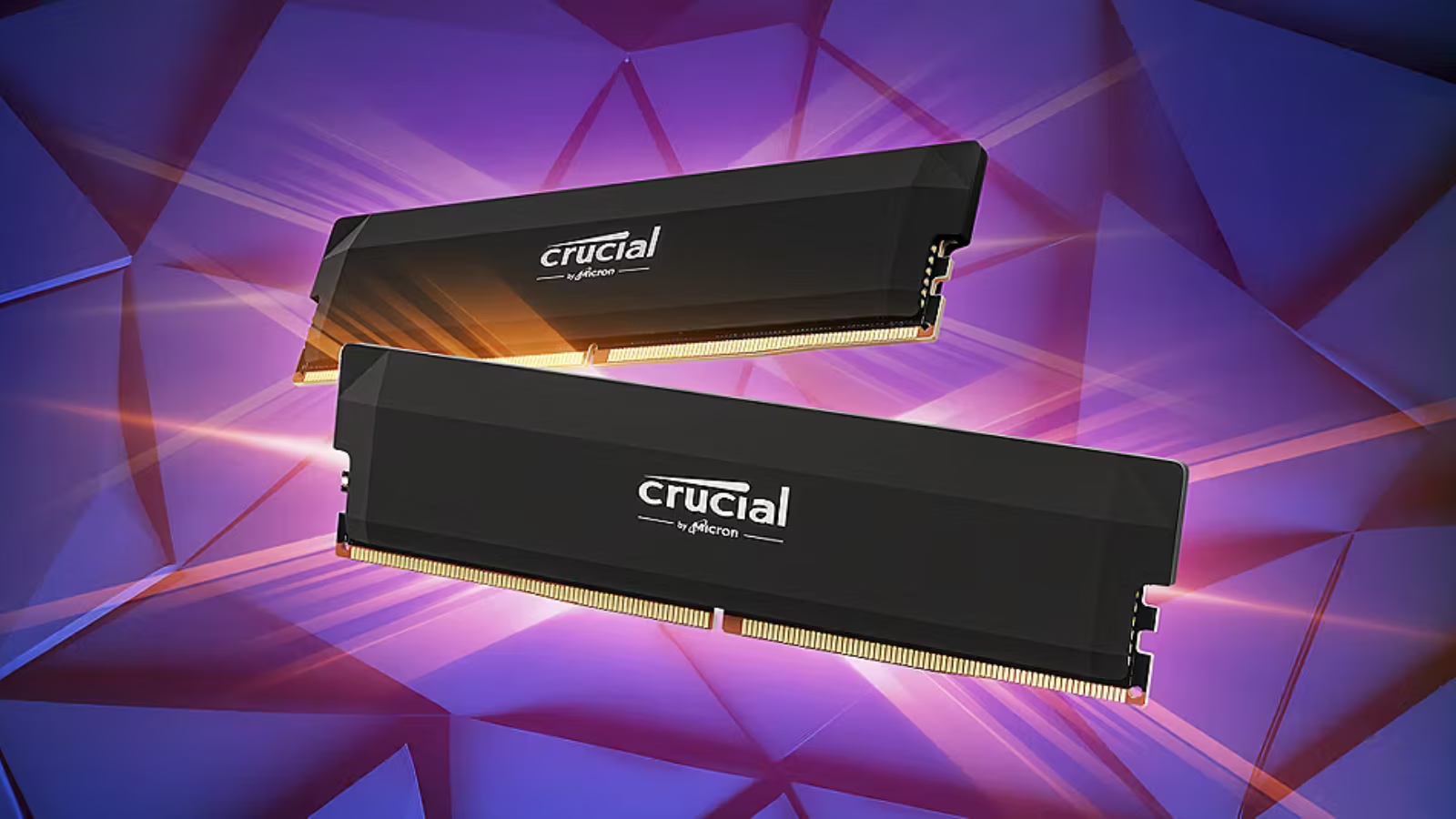

Micron, the third largest supplier of RAM in the world, has announced that it is shutting down Crucial, its consumer-focused brand that sold budget-friendly RAM and SSDs. In an announcement, Micron said Crucial’s exit from the consumer RAM business was “to improve supply and support for our larger, strategic customers in faster-growing segments.”
Micro said that while they will continue to support Crucial’s consumer product shipments till February 2026, the company has stopped the sale of products at “key retailers, e-tailers and distributors worldwide.” However, the company plans to support the sale of Micron-branded enterprise products to commercial channel customers globally.
“The AI-driven growth in the data center has led to a surge in demand for memory and storage. Micron has made the difficult decision to exit the Crucial consumer business in order to improve supply and support for our larger, strategic customers in faster-growing segments,” said Sumit Sadana, EVP and Chief Business Officer at Micron Technology.
Why did Micron shut down Crucial?
Despite being the third largest RAM manufacturer in the world, Micron has a market share of just 25 per cent, while Samsung and SK Hynix account for 40 per cent and 29 per cent respectively. A few months ago, a report by TrendForce claimed that suppliers like Micron were shifting their focus from consumers to server-grade memory, leading to the storage of DDR4 and DDR5 RAM.
Following in the footsteps of Samsung and SK Hynix, Micron said that the decision was taken because it wanted to focus on AI companies, which are powered by huge data centres that buy RAM in bulk.
Another factor is profit. While manufacturers like Samsung and SK Hynix do earn by selling consumer-grade RAM, the profit margin is much higher when it comes to High Bandwidth Memory, popularly known as HBM. According to Micron’s last reported financial results for Q4 2025, Micron’s DRAM revenues increased to 68.7 per cent year over year, most of which was supported by the company’s HBM3E, high-capacity DIMMS and advanced data centre products.
What does it mean for consumers?
Micron’s Crucial brand focused on the consumer market, offering RAM at lower margins than its enterprise segment. Although Crucial held a smaller share of the market compared to Samsung and SK Hynix, Micron’s decision to discontinue the brand now leaves the consumer RAM space effectively a duopoly.
This effectively puts Samsung and SK Hynix, who already control most of the market, in a position to set memory prices with greater freedom, potentially pushing them even higher. Innovation might also take a hit as these companies are now in a comfortable position and don’t necessarily need to bring new products to the market.
Micron’s exit from the memory market leaves a hole in the consumer segment, which will effectively deprive PC builders and companies like Dell, HP and others of an almost 30-year-old brand.
Also, it is still unclear if any other company plans to fill the gap at a time when analysts suggest that the recently induced memory shortage may last for years. A similar trend was seen a few years ago during the cryptocurrency boom, where high demand for graphics cards (GPUs) resulted in a severe shortage, pushing prices to almost double and triple the retail price.
Currently, the RAM market is in a tight spot are AI companies and data centres powering AI chatbots like Gemini, ChatGPT and others are hoarding up RAM but still aren’t able to buy enough memory for their computing needs. A report also said that the two major players – Samsung and SK Hynix had a fulfilment rate of just 70 per cent, while others were able to supply only 40 per cent of the total demand.

Comments are closed.