
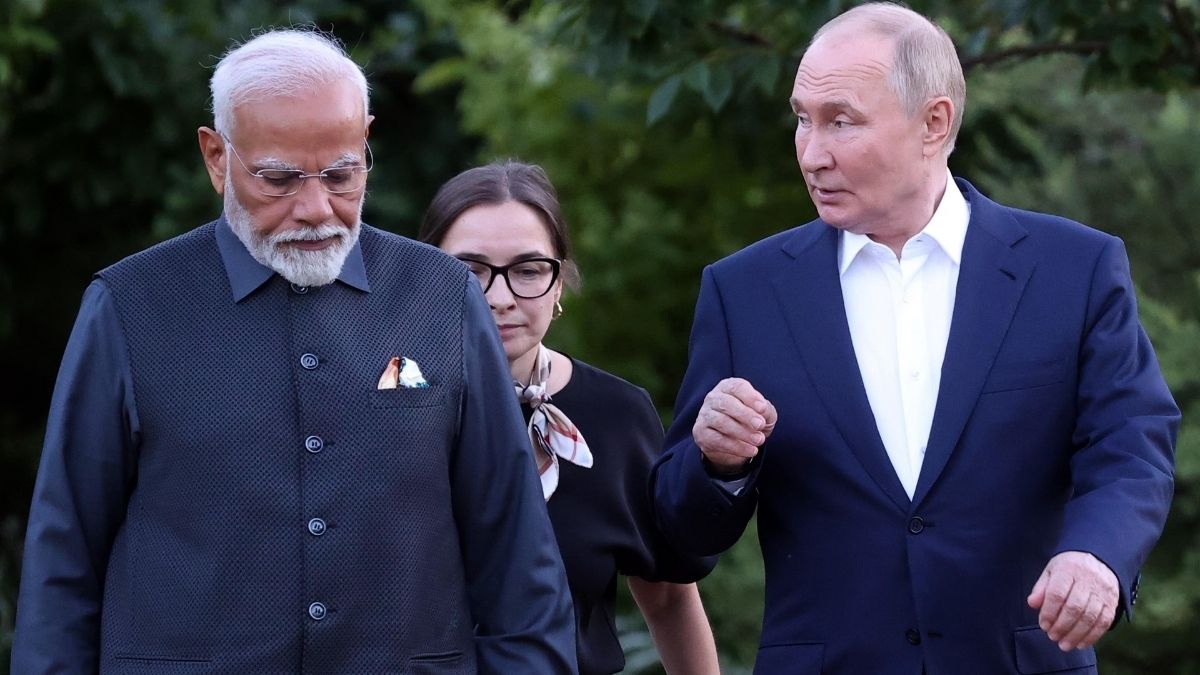
Putin to meet PM Modi tomorrow at 11:50 AM: What to expect from the high-stakes India–Russia summit

Russian President Vladimir Putin will land in New Delhi for a two-day visit, during which he will meet Prime Minister Narendra Modi at 11:50 AM tomorrow. The visit marks the annual India–Russia summit — a mechanism both countries have continued despite global geopolitical turbulence.
The Modi–Putin meeting comes at a crucial time: tensions over the Ukraine war remain unresolved, the United States has renewed pressure on India’s Russian oil imports, and the Trump administration is currently holding parallel talks with both Moscow and Kyiv.
Why this visit matters for the Kremlin
Russia’s relationship with India remains one of its most significant strategic partnerships, and the motivations are both economic and political.
1. India is a massive market Russia cannot ignore
Population: nearly 1.5 billion
GDP growth: above 8%making India the world’s fastest-growing major economy
India’s scale and demand make it a critical buyer of Russian resources — especially crude oil.
Before the Ukraine conflict, Russia accounted for only 2.5% of India’s oil imports. That number surged to 35% as India capitalised on discounted Russian crude following sanctions that blocked Moscow from Western markets.
India benefited; Washington was displeased.
In October, the Trump administration imposed 25% tariffs on Indian goodsarguing that Indian oil purchases indirectly supported Russia’s war effort. Since then, India’s Russian oil orders have dipped — a trend Putin is expected to address directly with PM Modi.
2. Defence ties remain a backbone of the partnership
India has historically relied on Russian weapons and defence systems. Ahead of the summit, reports indicate India may procure new-generation Russian fighter jets and air-defence platforms — a major diplomatic win for Moscow.
3. Manpower and economic cooperation
Facing domestic labour shortages, Russia also sees India as a source of skilled workers and a partner for long-term industrial projects.
Geopolitics: A signal to the West
Putin’s arrival in Delhi is not just diplomacy—it is messaging.
The Kremlin wants to reinforce that Western attempts at isolating Moscow have failed. Putin’s recent visits to Beijing and now New Delhi, coupled with his informal interactions with Xi Jinping and Modi, project an image of a Russia still influential in a “multipolar world.”
Russia frequently praises its “no-limits partnership” with China and its “special and privileged strategic partnership” with Indiain sharp contrast to its fractured ties with Europe.
Analysts note that the Kremlin sees Asia and the Global South as its future economic partners, even if parts of Russia’s elite still hope for eventual economic reconnection with Europe.
What to expect from the Modi–Putin summit
Over the next two days, India and Russia are expected to discuss:
Trade expansion and payment systems
Energy cooperation, including oil and LNG
Defence procurement and joint manufacturing
Skilled workforce exchange
Geopolitical issues including Ukraine, Indo-Pacific dynamics and US pressure
Strengthening bilateral ties amid global realignments
Multiple agreements are likely to be signed, reaffirming the continuity of Delhi–Moscow ties despite international headwinds.
For now, the spotlight remains on tomorrow at 11:50 AMwhen Modi and Putin sit down for one of the most closely watched bilateral meetings of the year.

Comments are closed.