
Modi and Putin Showcase Strategic Unity as India Balances Pressure From the United States – Obnews

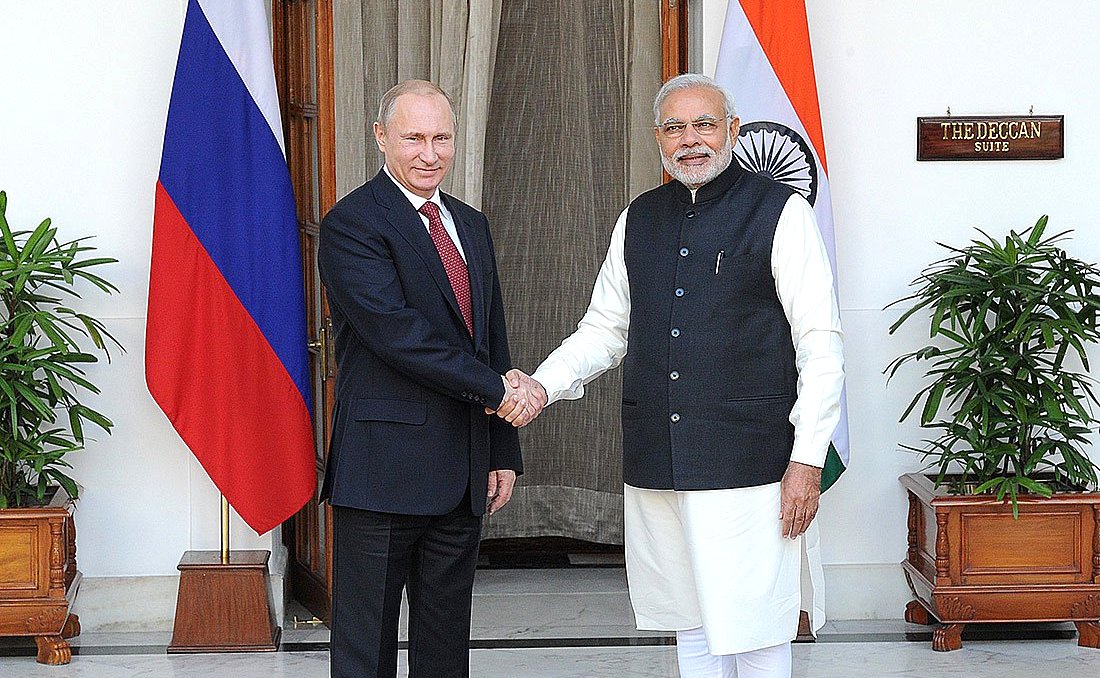
Indian Prime Minister Narendra Modi and Russian President Vladimir Putin presented a carefully choreographed display of warmth and solidarity during Putin’s two-day visit to New Delhi, even as India faces rising tensions with the United States over its continued trade and energy ties with Moscow. Modi personally greeted Putin at the airport, embracing him on the tarmac before the two departed together for a private dinner. The optics underscored a deep, decades-long partnership that both leaders were eager to highlight at a moment of geopolitical friction. Their meeting, marked by praise and symbolism, came as New Delhi confronts new U.S. tariffs and mounting pressure from the Trump administration to reduce its reliance on Russian oil.
The summit, held during a politically sensitive period for both countries, produced several agreements aimed at strengthening cooperation in defence, trade and energy. Modi thanked Putin for what he described as unwavering friendship, while Putin emphasized the stability of their partnership and the frequency of their private communications. Both leaders framed their relationship as one that has endured shifting global dynamics, with Modi calling it a “guiding star.” Russia’s message was clear: despite sanctions, an International Criminal Court arrest warrant, and strained relations with the West, Moscow still maintains important allies. For India, the moment required a delicate balance of reaffirming ties with Russia while avoiding further deterioration in its increasingly fraught relationship with Washington.
A significant point of friction has been India’s purchase of discounted Russian oil. The Trump administration responded with steep tariff hikes, doubling import duties to 50 percent and publicly criticizing New Delhi for actions it claims help fund Russia’s war effort in Ukraine. These measures, described by Indian officials as unreasonable and unjustified, have sparked anger domestically and fueled a broader debate about India’s strategic autonomy. Even so, Russia remains India’s largest defence supplier, and both countries used the summit to reiterate their intent to reshape defence cooperation and expand joint production of military systems. A new economic program aims to increase bilateral trade to 100 billion dollars by 2030, despite an imbalance that heavily favors Russia.
Energy cooperation remained a central theme throughout the visit. Putin declared that Russia was prepared to continue uninterrupted fuel shipments to India’s fast-growing economy, a statement widely seen as a direct challenge to Western efforts to constrict Moscow’s energy revenue. Modi avoided explicit mention of Russian oil but emphasized energy security as a cornerstone of the partnership. Indian officials were more cautious in their public response, stressing that energy companies make procurement decisions based on market realities rather than political commitments. Still, the reaffirmed partnership suggests that India is unwilling to abandon Russian energy sources, even as it increases purchases of American oil and gas in an attempt to ease tensions with Washington.
Strategic calculations involving China also shaped the tone of the summit. Both India and Russia maintain complex relationships with Beijing, and analysts note that New Delhi is wary of an overly tight Moscow-Beijing axis. Strengthening ties with Russia allows India to maintain leverage in a region where China’s influence is rapidly expanding. At home, Modi’s warm reception of Putin also plays well politically, reinforcing India’s long-standing public sentiment that views Russia as a reliable partner dating back to the Soviet era. The visit sends a message to Indian voters that their leadership will not bend under external pressure, particularly from the United States.
Despite the public unity displayed, analysts agree that India’s strategic trajectory still points toward deeper cooperation with the United States over the long term. The two nations conduct more joint military exercises than India does with any other country, and the U.S. remains a far larger market and technological ally than Russia can offer. Yet, recent tensions under the Trump administration have reminded Indian policymakers of the volatility that can accompany alignment with Washington. For now, India appears committed to maintaining a careful equilibrium. As one analyst noted, Russia remains a reliable partner, the U.S. an indispensable one, and New Delhi will continue navigating the narrow path between them as global power dynamics evolve.

Comments are closed.