
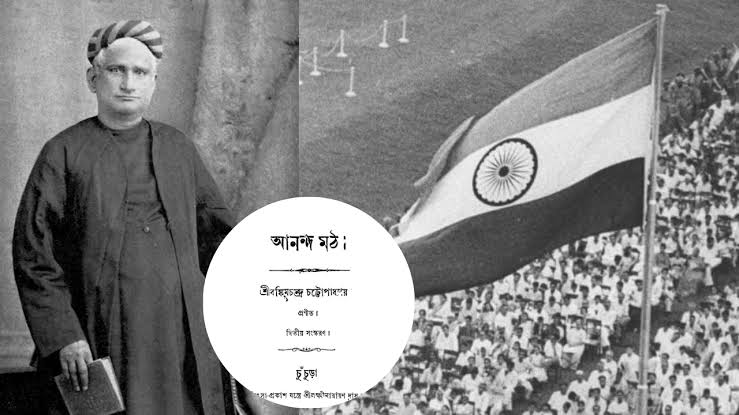
Parliament Debates 150-Year-Old Vande Mataram: Historical Legacy, Controversy, and Political Clash

On December 8, 2025, the Lok Sabha witnessed a 10-hour debate on India’s national song, Vande Mataram, marking 150 years since its composition by Bankim Chandra Chattopadhyay in 1875.
Prime Minister Narendra Modi opened the discussion, followed by Defence Minister Rajnath Singh. The opposition Congress fielded Gaurav Gogoi and Priyanka Gandhi Vadra to participate.
The Rajya Sabha will hold a parallel debate on December 9, with Union Home Minister Amit Shah expected to address the house.
Why Now: 150 Years of Vande Mataram
The debate coincides with the 150th anniversary of the iconic national song, first published in Bangadarshan in 1875 and later included in Chattopadhyay’s novel Anandamath (1882). Nobel laureate Rabindranath Tagore popularized it by singing it at the 1896 Congress Session in Calcutta.
Initially a literary piece, Vande Mataram evolved into a political slogan during India’s freedom struggle, inspiring the Swadeshi movement and protests against British rule. On January 24, 1950, it was officially adopted as India’s national song by the Constituent Assembly.
The Controversy: Truncated Verses and Allegations
The debate reignited after Prime Minister Modi accused the Congress of removing significant stanzas of the song in 1937, claiming that the action “sowed the seeds for partition.”
Historical Background: The original poem had six stanzas, but only the first two were adopted by Congress in 1937 to avoid the religious imagery invoking Hindu goddesses.
BJP Allegation: BJP leaders, including Sambit Patra, criticised Nehru’s “false sense of secularism” and suggested the truncated adoption diluted the song’s original spirit.
Congress Response: Congress leaders, including Jairam Ramesh, countered that Nobel laureate Tagore recommended adopting only the first two stanzas and defended the decision as secular and inclusive, made collectively by the Congress Working Committee including Gandhi, Nehru, Sardar Patel, Netaji Subhas Chandra Bose, and others.
Legacy and Political Implications
The parliamentary debate is not just about history but reflects ongoing discussions on national identity, secularism, and cultural legacy. Historians and descendants of Bankim Chandra Chattopadhyay, like Sajal Chattopadhyay, have emphasised the need to revisit his legacy beyond political narratives.
Prime Minister Modi framed the debate as a lesson for the younger generation, stating, “Today’s generation needs to understand why such injustice was committed against this great mantra of nation-building. Because that same divisive mindset continues to pose a major challenge to the nation even today.”

Comments are closed.