
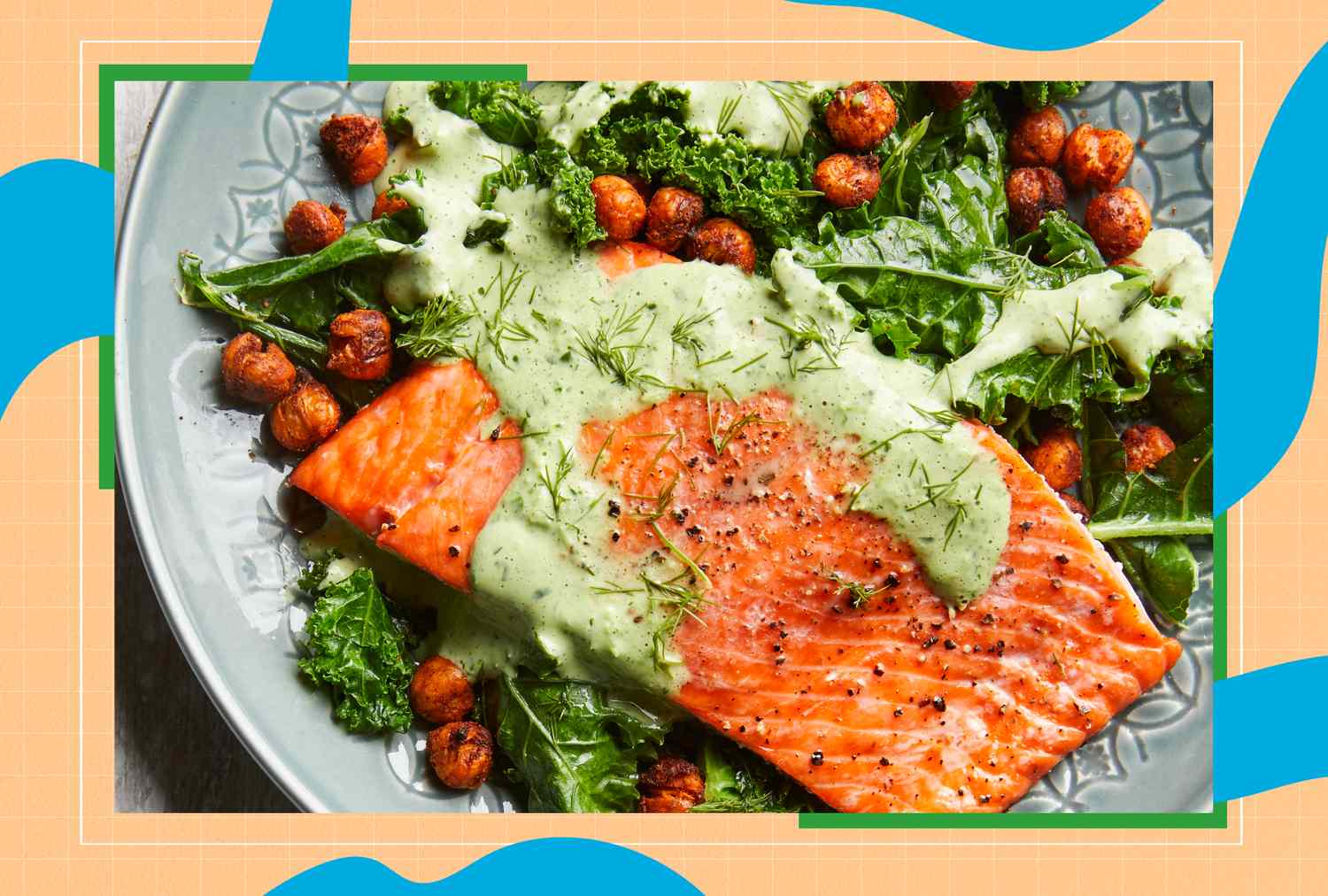

- Roasted Salmon with Smoky Chickpeas & Greens is our top pick for a heart-healthy dinner recipe.
- This dinner is rich in omega-3s, low-sodium and packed with fiber for a healthy heart.
- Eat plenty of healthy fats and veggies, exercise daily and minimize stress for overall health.
When it comes to keeping your heart healthy, diet plays a big role. Genetics matter, and so do other lifestyle habits like not smoking, minimizing stress and exercising, but the foods you eat and limit are important. Kunal Lal, MDa cardiologist, points out that while your overall diet is key, “it is more important to make sure that the foods being eaten are effectively heart-healthy. The goal is to ultimately follow a diet that is low in sodium, trans fat and saturated fats, which will reduce significant adverse effects such as high cholesterol, elevated blood pressure or cardiovascular disease.”
What does that actually look like on your dinner plate? We chatted with Lal, dug into the science and found an EatingWell recipe that fits the bill for the best dinner for heart health. Read on to see what it is and how you can apply these heart-healthy principles to your plate.
Why This Dinner Is Great for Heart Health
A heart-healthy dinner limits nutrients that aren’t great for your heart and delivers on the ones that are. This Roasted Salmon with Smoky Chickpeas & Greens is one of the best dinners you can make for your heart. It delivers healthy fats, is lower in sodium, contains fiber and gives you some nutrient-rich plants. Here’s why Lal loves this dinner for heart health.
Rich in Omega-3s
Salmon is one of the best sources of dietary omega-3 fatty acids. Eating two to three servings of fish per week is linked with less cardiovascular disease. Lal loves salmon for dinner because “omega-3-rich fish is a great addition to your diet because of its well-known property of reducing triglyceride levels in the body, which can be correlated to the amount of fats in your blood.”
Omega-3s are a type of polyunsaturated fat that can also help reduce inflammation, which Lal notes may reduce the progression of your arteries clogging. The anti-inflammatory impacts of omega-3 fats have a positive impact on blood pressure, total cholesterol, insulin resistance and triglycerides.
Low in Sodium
There isn’t a lot of salt in this dinner, but it’s still big on flavor. Lal states, “Sodium is a silent killer in a person’s diet, and limiting it as much as possible will go a long way to improve one’s cardiac health.” This salmon dinner clocks in at 557 milligrams of sodium. EatingWell’s limit for a heart-healthy combination meal is 600 mg of sodium, to keep sodium within the American Heart Association’s recommended optimal daily limit of 1,500 mg.
“Sodium does its most damage by increasing blood pressure via water retention, which may also exacerbate a patient’s condition with a history of congestive heart failure,” notes Lal. While we should limit sodium for heart health, salt does add a lot of flavor to foods. Instead of relying on salt, the chickpeas are seasoned with smoked paprika and the homemade dressing with fresh herbs and garlic powder.
A Good Bit of Fiber
We know you’ve heard the song about beans being good for your heart (we’ll spare you the chorus, but it’s true!). This dinner not only serves up salmon, but also rounds out the meal with chickpeas and kale, which balance the dinner and deliver some fiber. Lal says, “A fiber-rich diet is also important for heart health due to its ability to reduce the incidence of cardiovascular disease by reducing our ‘bad’ cholesterol levels, or LDL, and blood pressure.”
Most Americans don’t eat enough fiber, which is found in whole grains, beans, nuts, seeds, fruits and vegetables. Making sure you include fiber-rich foods on your dinner plate is key to building a heart-healthy dinner.
Packed with Plants
Salmon is the star of this dinner, but you’re also getting dark leafy greens and chickpeas. Plant-based diets have been shown to help reduce your risk of dying from cardiovascular disease. You don’t have to be fully plant-based to get the benefits. Whole grains, vegetables, fruits and legumes are all rich in anti-inflammatory properties. Lal notes that anti-inflammatory nutrients help prevent clogged arteries. Eating an anti-inflammatory diet helps lower waist circumference and reduce HDL (“bad”) cholesterol levels.
Practical Tips for Building Heart-Healthy Dinners
- Include vegetables: Most Americans don’t eat enough vegetables. They add fiber and antioxidants to your plate and can help reduce your risk of heart disease. Aim to make half your plate vegetables.
- Balance your plate: A giant plate of steak or a massive bowl of pasta may not do your health any favors, but that doesn’t mean you can’t eat those foods. Aim to make half your plate nonstarchy vegetables, one quarter protein and one quarter carbohydrates. This way, you get a variety of nutrients and don’t load up too much on one thing.
- Stick to heart-healthy fats: When it comes to your heart health, omega-3 fatty acids, along with other mono- and polyunsaturated fats, are linked with better outcomes. Try cooking with olive oil, adding avocado to your salad and limiting foods like butter and cream.
- Add flavor without salt: Too much sodium isn’t great for your heart, but that doesn’t mean you should eat bland foods. Cook with citrus, vinegar, herbs and spices for a flavor boost with no extra sodium.
Recipes to Try
18 Most Popular Heart-Healthy Dinner Recipes
Our Expert Take
There are many ways to build a heart-healthy dinner plate, but this Roasted Salmon with Smoky Chickpeas & Greens stands out as a cardiologist’s pick. With salmon delivering omega-3s, chickpeas for crunch and fiber, and kale delivering anti-inflammatory nutrients, this dinner is an all-around win. You can build your own heart-healthy plate by following similar principles. “When it comes to planning for heart-healthy dinners, I like to stress to my patients the importance of low-sodium and low-fat meals and increasing the amount of vegetables, whole grains, fruits and healthy unsaturated fats daily,” says Lal. He adds that dinner can still be interesting and tasty, even when you eat to live as long and healthy as possible.

Comments are closed.