
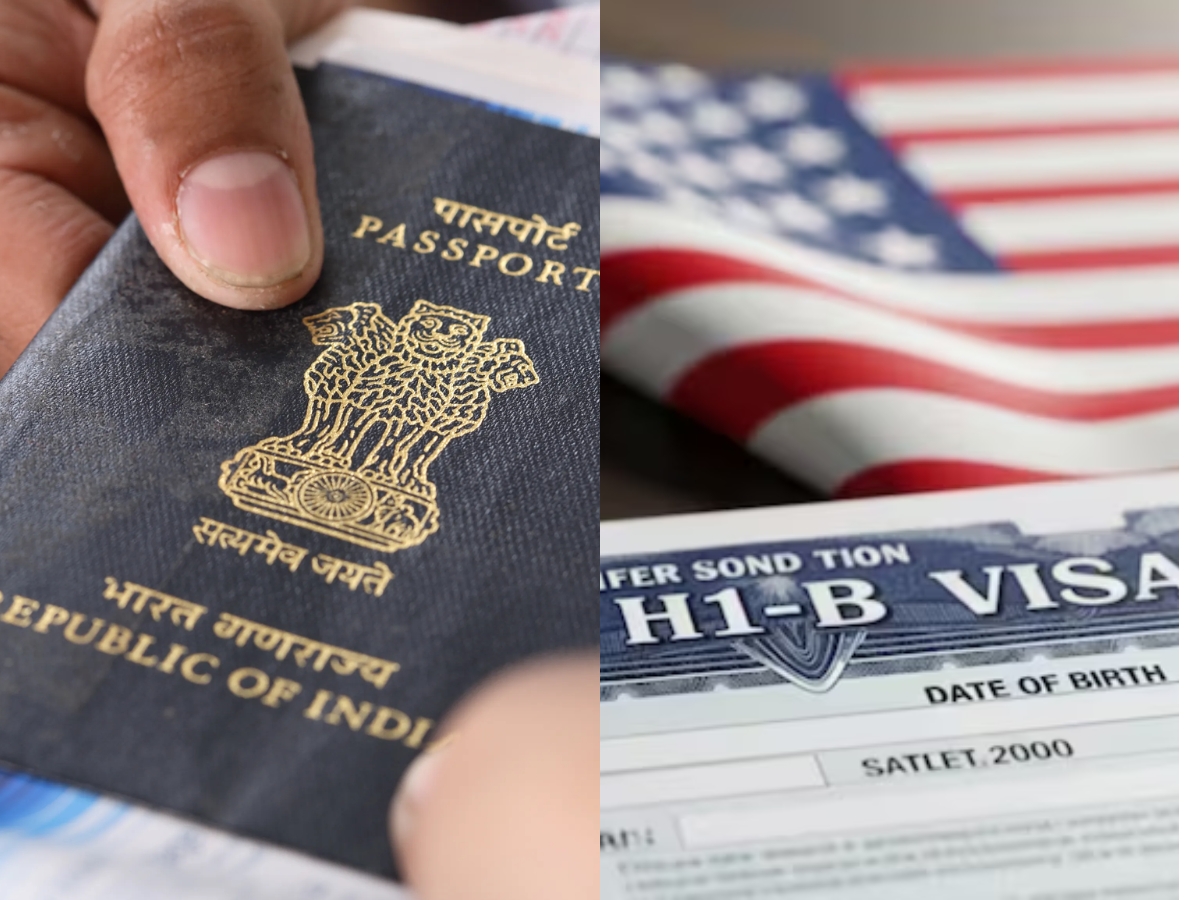
H-1B Interviews Postponed As US Tightens Screening – Every New Visa Rule Under Trump Administration Explained And How It Hits Indian Applicants

The Trump administration in the US has taken a radical step regarding the procedure of issuing visas, leading to an unprecedented disruption for the applicants in India. Thousands of people scheduled for interviews in December received abrupt notifications on Tuesday stating that their appointments had been pushed to next year. The rescheduling affects a significant share of H-1B applicants. The new US policy mandates deeper scrutiny of applicants’ online activities and past professional roles.
Mandatory Social Media Screening For Visa Applicants
From December 15, 2025, US consular officials will begin examining an applicant’s social media accounts to identify posts considered “negative” toward the United States. The process has forced consulates in India to push most H-1B visa interviews to March 2026 as they prepare to implement the new vetting system.
ATTENTION VISA APPLICANTS – If you have received an email advising that your visa appointment has been rescheduled, Mission India looks forward to assisting you on your new appointment date. Arriving on your previously scheduled appointment date will result in your being denied…
— U.S. Embassy India (@USAndIndia) December 9, 2025
The US Embassy in India confirmed the rescheduling and issued a strict warning, “If you have received an email advising that your visa appointment has been rescheduled, Mission India looks forward to assisting you on your new appointment date. Arriving on your previously scheduled appointment date will result in your being denied admittance to the Consulate.”
Also Read: Trump Draws Line For Zelenskyy On Peace Deal Over Ending Russia-Ukraine War, What Lies Ahead?
Applicants across India received messages overnight informing them that their long-awaited slots were no longer valid. Anyone who turns up on the old date will be refused entry, the Embassy said.
Why The US Is Tightening Online and Professional Background Checks
The tightening builds on earlier directives issued this year, when US immigration authorities clarified that social media posts can lead to visa denial or revocation. The Trump administration also instructed consular staff to reject applicants who have worked in various fields, including fact-checking, content moderation, compliance, misinformation or disinformation review, and online safety roles.
A State Department memo states consular officers must deny visas to people deemed “responsible for, or complicit in, censorship or attempted censorship of protected expression in the United States.”
An internal cable sent to all US missions on December 2 outlined stricter screening requirements for H-1B applicants, triggering a wave of rescheduling in India.
What Is the H-1B Visa and Why It’s Under Political Scrutiny in US
The H-1B visa is a temporary, employment-based program that allows US companies to hire highly skilled foreign professionals, largely in technology, engineering, healthcare, and research.
Within the Republican Party, the program is contentious.
Some MAGA-aligned lawmakers argue it threatens American jobs, is prone to fraud, and can be exploited by outsourcing firms.
Others highlight that H-1B workers fill critical shortages in technology and specialized sectors, making them essential for US competitiveness.
H-1B Visa Approvals Fall Sharply
The debate has intensified as major tech firms conduct mass layoffs while continuing to employ H-1B workers, raising questions about wage suppression and workforce displacement.
The Trump administration earlier proposed further tightening, including a $100,000 fee on new H-1B applications.
Meanwhile, the number of H-1B visas approved for India-based companies has fallen sharply, according to an analysis by the National Foundation for American Policy.
How Many Indians Avail H-1B Visa
According to the Office of Homeland Security, India remained the largest source of non-immigrant residents in the US in FY 2024:
33% of the total non-immigrant population
A much larger 47% share of temporary workers
Nearly 70% of Indian non-immigrants were temporary workers
30% were students
In total, 11.9 lakh (1,190,000) Indian non-immigrant residents were in the US in FY 2024.
Also Read: Did JD Vance And Usha Vance Get Into An ‘Argument’ Publicly? VP Responds To The Viral Image
How Trump Admin Visa Restrictions Affect Indians: A Full Breakdown
The social media screening delay adds to a list of policy shifts introduced over the past months. Here’s a detailed look at each change and its impact on Indian applicants.
1. Worker Visas for Truck Drivers Halted After Fatal Crash
On August 21, President Trump abruptly stopped issuing US visas for truck drivers. The move came after a deadly crash involving an Indian driver living illegally in the US drew national attention.
Federal data shows that the number of foreign-born truckers more than doubled between 2000 and 2021. Significant numbers come from India and Eastern Europe. Foreign drivers have helped fill critical shortages in the US trucking industry. The halt means many Indians who had invested in the visa process now face uncertainty.
2. New Student Visa Policy: Fixed Duration and More Restrictions
In late August, the administration proposed changes to F visas (students) and J visas (cultural exchange visitors), including a fixed maximum stay of four years, mandatory extensions to remain in the US, and tighter rules for international students, exchange workers, and foreign journalists.
Indian student arrivals to the US had already halved this year, and the proposal is expected to further depress numbers.
3. Tougher Rules on Visa Interview Appointments
On September 6, the State Department updated interview scheduling rules. The new rules state that the applicants must schedule interviews in their country of residence. Booking in another country will make approval significantly harder, while the interview fees are non-refundable.
For Indians, this eliminates the earlier workaround of securing interviews abroad to avoid long wait times. Now, applicants may wait months for an appointment in India.
4. H-1B Fee Hike to $100,000
President Trump signed a proclamation on September 19 raising the H-1B application fee to $100,000, effective September 21.
The White House later clarified that it is a one-time fee, not annual, while the current H-1B holders are not affected.
Nevertheless, the announcement triggered widespread panic among Indian applicants and employers.
5. End of Automatic Work Permit Renewals
On October 29, the Department of Homeland Security announced sweeping changes to work permit renewals.
If a renewal is not approved before expiry, work authorisation automatically ends, the memo states.
Previously, workers could continue employment after applying for renewal.
What Comes Next?
The US visa environment is entering its most restrictive phase in years, and the social media screening rollout is expected to add months of processing delays. With India constituting nearly half of the US’s temporary workforce, the impact will be significant across families, universities, and major industries.
Also Read: US Visa Policy Update Prompts Worry Among Indians Nationwide Amid Social Media Scrutiny
Zubair Amin is a Senior Journalist at NewsX with over seven years of experience in reporting and editorial work. He has written for leading national and international publications, including Foreign Policy Magazine, Al Jazeera, The Economic Times, The Indian Express, The Wire, Article 14, Mongabay, News9, among others. His primary focus is on international affairs, with a strong interest in US politics and policy. He also writes on West Asia, Indian polity, and constitutional issues. Zubair tweets at zubaiyr.amin
The post H-1B Interviews Postponed As US Tightens Screening – Every New Visa Rule Under Trump Administration Explained And How It Hits Indian Applicants appeared first on NewsX.

Comments are closed.