
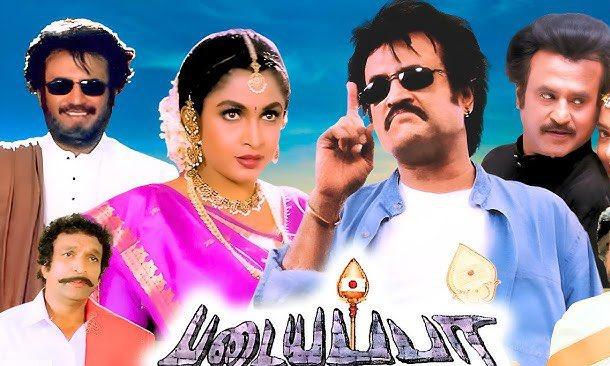

As superstar Rajinikanth turns 75, his 1999 blockbuster Padayappadirected by KS Ravikumar, is getting re-released in theatres.
The film, where Rajini essays the titular role, also stars the late Sivaji Ganesan and Soundarya, and gave veteran actor Ramya Krishnan a well-appreciated role as the female antagonist. However, the film is peppered with dialogues that would be considered grossly misogynistic today—on how women shouldn’t aspire too high, should know their ‘limits’, not lose their temper, and so on (the men, apparently, can).
How does today’s generation view the film? What does the film reveal about the way Tamil cinema has long framed women, ambition and “ideal” femininity? The Federal spoke to senior journalist Kavitha Muralidharan on this topic.
Should Padayappa’s misogyny be discussed today despite its iconic status?
Misogyny is something that we need to discuss every time it happens. It is all-pervasive, and we need to keep discussing it.
We should have discussed it even before Padayappa. I would not say Padayappa is the first film to have this misogynistic tendency — it has always been there, so it should have been discussed earlier, when Padayappa first happened, and now, when it is being re-released.
It is a dialogue for all times. It needs to be discussed, debated and spoken about, and we need to constantly remind people why films like Padayappa should not enjoyed an iconic status.
I am a Rajinikanth fan. I really like his screen presence and think he is a phenomenal actor, especially before he became “the superstar”. But to see him move from a film like Mullum Malarum (1978, ‘Thorn and Flower’) to roles like this is difficult. He has definitely appeased his fan base, but as a fan of a different kind, I think we have lost a phenomenal actor in this transition.
Can Padayappa be excused as a product of its time?
I do not agree with that argument because misogyny is a product of every era. It has always been there and we need to keep questioning it whenever it appears.
To dismiss something as “a product of another era” is simply pushing the issue under the carpet and refusing meaningful discussion. It is a very bad thing to do, especially on issues like misogyny or caste.
We cannot brush them aside by saying they are irrelevant today. They are absolutely relevant. Even when we speak about caste in Tamil cinema, people ask, “Is there caste today?” Of course there is. We see caste oppression everywhere, in every form.
So these discussions must continue. If the film is being re-released and still gets the same reception today, then why should we not debate the issues it has — issues that were not debated earlier?
It is even more meaningful now because an entire generation had not seen the film or were not born when it released. They are watching it today, and that makes the conversation more important.
And misogyny has not disappeared from Tamil cinema. A recent film like Aan Paavam Pollathathu (2025, ‘Wronging Men is Dangerous’) again packages misogyny differently, according to the era. So we must keep asking why these things are still being done.
If a Rajinikanth film had to be re-released, I would have preferred Johnny (1980). There are phenomenal Rajinikanth films that showcased him as an actor, not just a superstar delivering punch dialogues. Those films could have been released instead of Padayappa.
Padayappa does not deserve the iconic status being bestowed on it today simply because it packages misogyny according to the era.
What does Padayappa’s portrayal of Nilambari and Vasantha reveal about Tamil cinema’s attitude toward women with agency?
This has always been the case with Tamil cinema. The first film I remember in this line is Arrival (1963, ‘Genius’), a Sivaji Ganesan–Bhanumathi film. Bhanumathi had tremendous screen presence. She could hold her ground.
That film, based on Shakespeare’s The Taming of the Shrew, has the hero meet an “arrogant” woman and tame her. That has been the entire idea of Tamil cinema for long when portraying women.
In Padayappaand even in Rajinikanth’s Mannan (1992, ‘King’), you see the same pattern. Vijayashanti plays an assertive businesswoman, but in the end becomes a docile housewife. That is a sad thing to happen to a character written as strong.
Tamil cinema has relied heavily on this “Taming of the Shrew” trope. MGR did it in several films. I remember a song from Vivasayee (1967, ‘Farmer’), with Saroja Devi portrayed as an arrogant woman. MGR plays many roles to win her over, then reveals himself as a poor farmer after marriage.
Actors who wanted to become superstars perfected this trope. They always showed a binary: one “arrogant” woman to be humiliated, and another submissive woman — usually a mother or sister figure — to be praised.
This trope helped build the hero’s image: humiliating strong women on one hand, while maintaining a warm relationship with a submissive woman so as not to lose female audiences. This continued until newer directors and actors wanted to portray women differently — strong, grounded, and positive.
Aan Paavam Pollathathu also falls into this category. It humiliates a woman because she has strong political opinions, framing her as someone who does not understand ideology and is “just doing it for the sake of it”. We never question a man who does not understand politics. But women are humiliated or made to feel worthless for the same thing. That narrative is harmful, especially if we want an equal society.
Have films like Padayappa normalised regressive gender roles in real life?
I certainly do think so. Tamil cinema has a very strong cultural influence in Tamil Nadu. We had progressive films like Parasakthi (1952). Decades years later, it still resonates. The Dravidian movement itself was strongly influenced by cinema.
Even MGR, during his DMK years, acted in progressive films and scenes. Cinema and Tamil society have always had an organic connection.
That is why this discussion is so important. Today we also welcome films by Pa Ranjith or Mari Selvaraj that portray women as strong, grounded and positive. Yes, regressive trends get attention, but I also see social media comments celebrating progressive portrayals — that balance exists too.
Films have also normalised stalking and harassment. Many films show men harassing women until they agree to their demands. These heroes are worshipped by fans who try to emulate them. That is why Tamil cinema’s heroes and creators have a responsibility to portray women well.
If Padayappa released today exactly as it was in 1999, how would audiences react?
I do not think the film is being edited for re-release. Recently, I even saw Rajinikanth glorifying that dialogue, so I doubt it would be released differently.
If a new film came out exactly like this, I would really want people to question it more.
The premise of Padayappa itself is exaggerated. I cannot imagine a woman shutting herself away for 18 or 20 years just to take revenge, when she could simply move on, fall in love with a better person and live happily. She could be like Vijayashanti’s character in Mannan — do something on her own, be more successful than the man, live differently and be happy.
Instead, Padayappa shows a woman locking herself away for revenge. That is an absurd, exaggerated idea of women and their motivations.
It is clear that no real thinking about women went into the film. You need a woman in the room to say, “No, this is not how we think.” That perspective is missing.
I do not expect the film to be fully rejected, but I do hope people ask more questions. I have already seen YouTube comments supporting more progressive efforts, so I hope sense prevails and more people challenge these narratives.
The content above has been transcribed from video using a fine-tuned AI model. To ensure accuracy, quality, and editorial integrity, we employ a Human-In-The-Loop (HITL) process. While AI assists in creating the initial draft, our experienced editorial team carefully reviews, edits, and refines the content before publication. At The Federal, we combine the efficiency of AI with the expertise of human editors to deliver reliable and insightful journalism.

Comments are closed.