
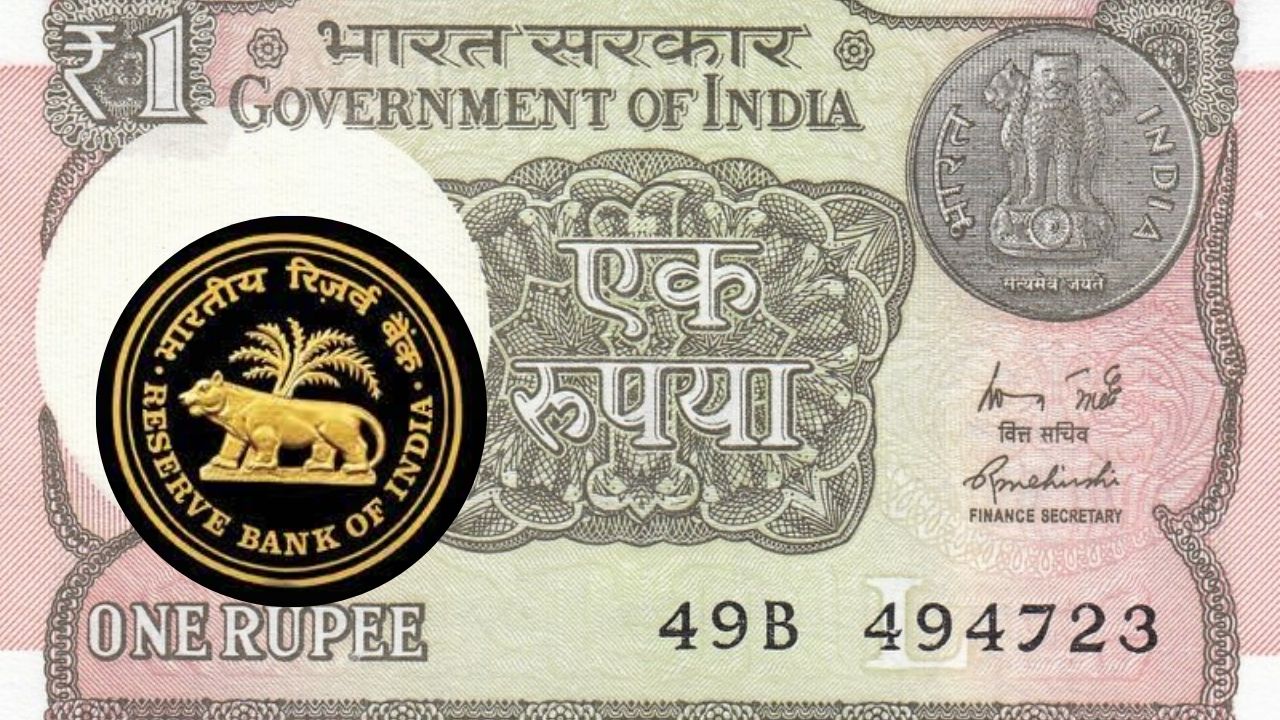
RBI Currency Printing: Do you know the most unique thing about Indian currency? Not the RBI, it issues these notes

- India’s only note which is not printed by RBI
- Why is only this note signed by the government?
- Special government status for 1 rupee note
RBI Currency Printing: Printing and distribution of Indian currency across the country RBIis the responsibility of India’s monetary system is one of the most tightly regulated financial frameworks in the world and the Reserve Bank of India has the sole authority to issue notes in the country. RBI prints Indian currency. However, this includes a note that is issued by the Ministry of Finance, not the RBI. And that note is signed by the Finance Minister. Let’s see the complete information about this special note..
Apart from all other Indian notes ranging from Rs.2 to Rs.2000, 1 RupeeIt is the only note which is not issued by RBI. Because the Finance Ministry has said that the RBI has no authority over this particular value. This 1 rupee note is issued by the Ministry of Finance, Government of India. Therefore, this note bears the signature of the Finance Secretary instead of the RBI Governor.
Also Read: RBI’s Repo Rate 2025: RBI cuts rates ‘so many’ times this year? Borrowers got a big relief
The special status of Rs 1 has been conferred by Section 22 of the RBI Act, 1934, which states that the Reserve Bank has the sole authority to issue notes of Rs 2 and above. The Act deliberately excludes the Rs 1 note from this category. The power to issue it rests only with the Central Government.
Furthermore, the Indian Coinage Act, 2011 classifies the 1 rupee note as a coin. That is, despite being made of paper, it legally functions as a coin. Hence the government controls its design, printing and supply, while RBI merely acts as an agent to help in its distribution across the country.
Also Read: Indian Airline losses: Earnings in rupees, expenses in dollars! Falling Rupee Hits Indian Airlines
Every currency issued by the RBI bears the words “I undertake to pay the bearer … Rs. However, the Rs 1 note does not include a promissory note. Because it is considered as primary currency or coin. Therefore, RBI is not required to guarantee its value. It is clarified that its value is dedicated directly by the Government of India and not by the central bank. Ministry of Finance It is the issuing authority, but Rs 1 notes are printed in government-owned printing presses. The RBI then distributes these notes and coins as part of its responsibility to maintain the currency supply across the country.

Comments are closed.