
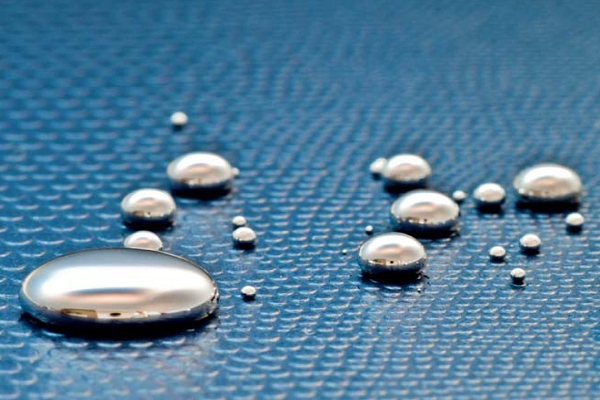

IT Scientists from Guwahati had said that they have developed a special type of nanomaterial which can accurately detect dangerous metals like mercury. This technology will help in detecting the presence of mercury not only in the cells of the human body but also in the environment. Mercury is a toxic metal that can enter the body through contaminated water, food, air or skin contact and cause serious damage to organs such as the nervous system, kidneys and heart. In such a situation, researchers at IIT Guwahati have prepared a special metal halide perovskite nanocrystals, which not only recognize mercury but also do not cause any harm to human cells.
• How does this nanomaterial work?
Professor Saikat Bhowmik of the Physics Department of IIT Guwahati had said that these nanocrystals are very sensitive and can detect even small amounts of mercury. Conventional imaging techniques often fail to capture clear images deep inside cells, but these nanocrystals have high multiphoton absorption capabilities, allowing the capture of clear and detailed images deep inside cells.
These nanocrystals emit a distinct green light, making the mercury easy to detect. To make it more stable, it is coated with silica and polymers so that it retains its shine and water resistance for a long time. This nanomaterial is not limited to just finding mercury. It can also be used to detect other toxic metals, deliver drugs, and monitor the effectiveness of treatments in real time.

Comments are closed.