
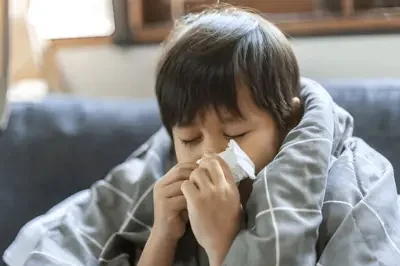

Low temperature, dry indoor air and poor ventilation make children more vulnerable to winter infections.
Winter often feels like peak “cold-and-cough season” for parents, and science backs that instinct. Experts explain that winter infections rise due to a mix of viral behaviour, a child’s immune readiness and environmental conditions. Low humidity allows certain respiratory viruses to survive longer, while dry indoor air weakens the nose’s natural defenses. Crowded indoor spaces and reduced ventilation further increase the spread.
Public-health data shows that respiratory infections in children consistently peak worldwide during winter months. But the risk can be reduced with simple, low-cost measures at home and school.
hand hygiene remains the strongest defense. Washing hands with soap removes viruses picked up from toys, surfaces or another child’s sneeze. Large studies show that regular handwashing in homes and classrooms reduces respiratory infections and improves school attendance. Children should wash hands before eating, after play, after using the toilet and on returning from outside.
teaching children basic respiratory etiquette also helps. Coughing into a sleeve or using a tissue that is thrown away immediately prevents droplets from landing on hands or shared surfaces. Schools that follow these practices see lower transmission.
Maintenance comfortable indoor humidity levels can protect the nasal lining, which is the body’s first line of defense. Very dry air helps viruses survive and makes the nose more prone to infection. Experts say a humidifier may help, but humidity should stay comfortable, not excessive, to avoid mold growth.
Vaccinations remain important in winter. While they do not prevent every cold, influenza and other vaccine-preventable infections can be severe in children. Keeping routine immunizations updated and taking the annual flu shot where recommended reduces hospitalizations and complications.
Doctors caution parents against unnecessary antibiotics use. Because colds and most coughs are viral, antibiotics offer no benefit and contribute to resistance. Parents should seek medical care only if symptoms worsen, there is breathing difficulty or fever persists.
A balanced dietproper sleep and physical activity support children’s immunity and help faster recovery. In cases where vitamin D deficiency is likely due to low sunlight exposure, pediatricians may advise supplementation after testing. High-dose supplements should not be started without medical guidance.
Cleaning high-touch surfaces and toys regularly also reduces transmission. Studies show that viruses remain on tabletops, handles and toys, and routine disinfection lowers spread in homes and daycare centers.
Winter naturally increases the chances of respiratory infections because environmental conditions favor viruses. But consistent hygiene, updated vaccinations, proper indoor air management and balanced daily habits can significantly reduce both risk and severity for children.
Disclaimer: This article provides general information and is not a substitute for medical advice. Please consult a doctor for personalized guidance.

Comments are closed.