
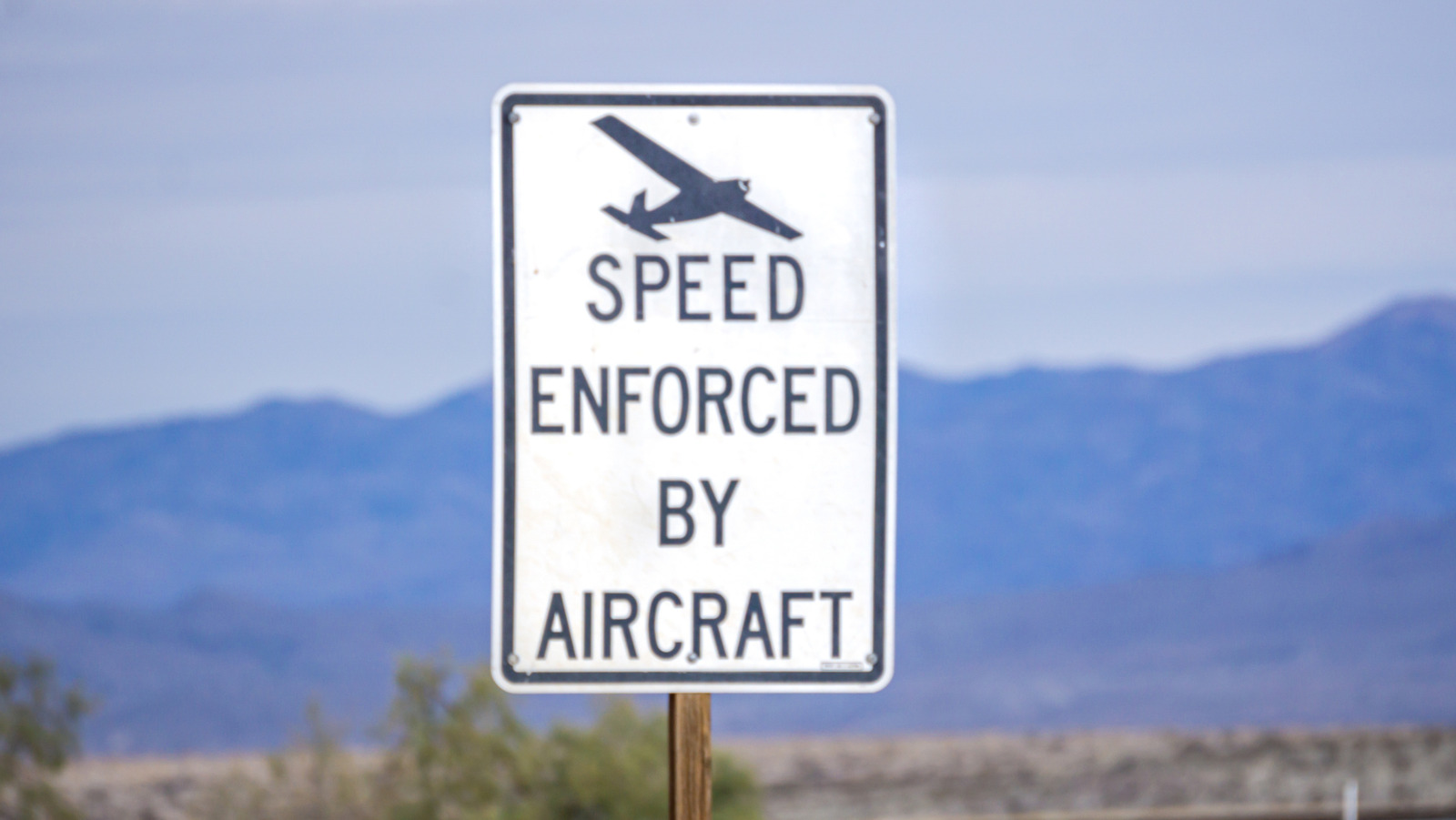

Many of us have spotted those “Speed enforced by aircraft” signs on busy highways and freeways and scoffed, unbelieving that the state has the budget to put planes or helicopters in the air simply for speed enforcement. And surely law enforcement has better ways to spend their time, right? Most of us expect the police to enforce speed with their feet firmly on the ground, using radar or LIDAR, with speed traps, or even with automated speed cameras.
It turns out those signs aren’t just meant to scare you into following the speed limit — the police do indeed enforce speed from the air. The California Highway Patrol has a dedicated unit of fixed-wing airplanes that partner with units on the ground to nab speed demons. In Colorado, the police use two Cessna 182 planes that keep an eye on state highways, and don’t be in too much of a rush to get to Disney World — the Florida Highway Patrol has also been known to nab drivers using its fleet of fixed-wing planes. Other states are in on the air action as well, including Ohio and Wisconsin.
The Missouri State Highway Patrol has an aircraft division that has been using planes to enforce speed on the ground since the latter part of the 1950s. Police are looking to enforce the speed limit in multiple counties, and they see success with every flight. But how do police nab lawbreakers from 2,000 feet up?
How Missouri catches speeders from the air
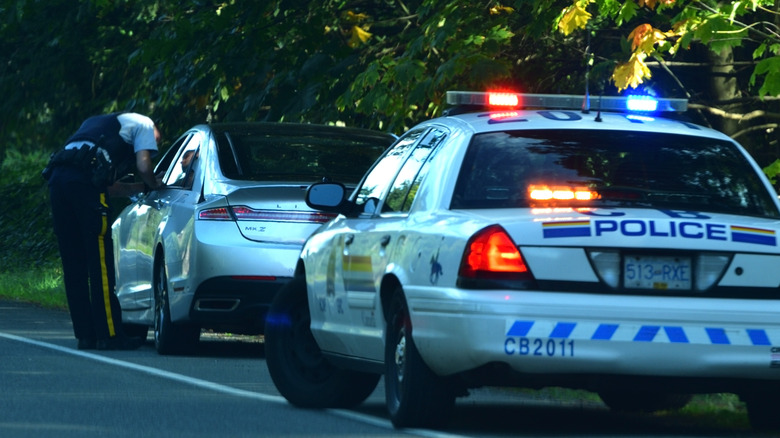
The Missouri State Highway Patrol completed at least 40 aerial surveillance flights in 2025 to enforce speed in construction zones. To patrol from the air, air patrol partners with ground troopers, but the process also needs one other partner — Missouri Department of Transportation (MoDOT) workers that paint lines on the road.
Here’s how it works. MoDOT employees visit planned speed enforcement sites ahead of time to paint white blocks on the road one eighth of a mile apart using a certified tape measure for precise measuring. Once the road is marked, troopers in the air only need a stopwatch and a radio to nab speeding motorists. They set their stopwatch to ⅛ of a mile, and simply watch for when a vehicle hits the first block and reaches the second block. The stopwatch provides a car’s speed, and the troopers radio that information along with a detailed vehicle description to their partners on the ground, who are able to pull over the offending vehicle to issue a ticket.
A spokesperson for the Missouri State Highway Patrol told the local ABC17 station that if they’re not 100 percent certain they started and stopped the stopwatch at the necessary moments, they will not pull over a suspected offender. Most flights see an average of about seven speeding tickets, and most offenders were clocked going 11-20 mph over the speed limit, so keep an eye out for those warning signs, even if this is a rather antiquated way of catching speeders. Several states, including Virginia and New York, have given up on their aerial programs due to high operating costs.

Comments are closed.