
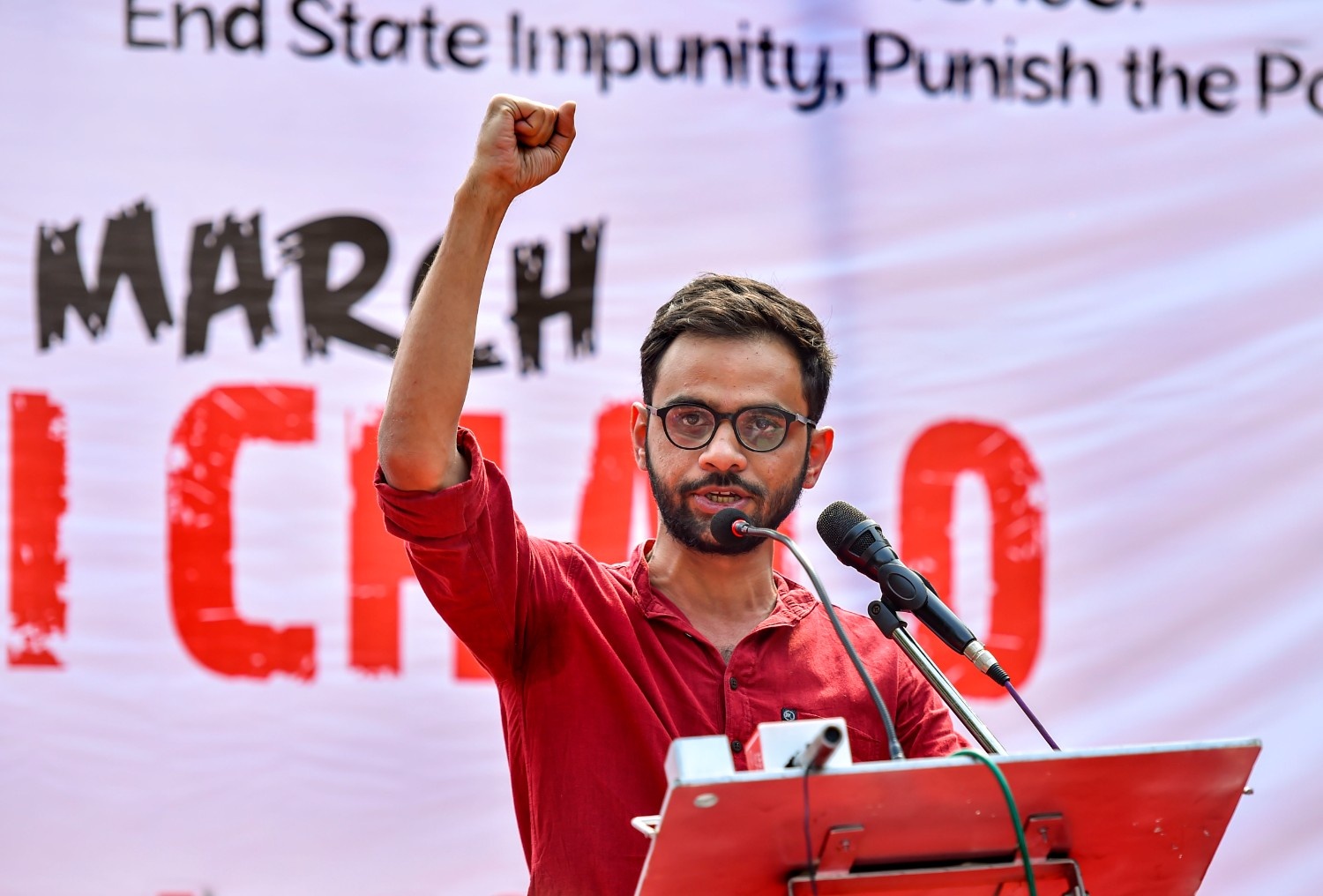

The police have finally concluded their arguments, and the court has reserved the case for judgment on Umar Khalid’s bail application, a former doctoral student at Jawaharlal Nehru University and a prominent critic of the Citizenship Amendment Act, who was arrested under the Unlawful Activities (Prevention) Act (UAPA). His continued incarceration without bail is a case of legal curiosity and surely requires a detailed analysis of the legal architecture of our Republic.
Whether or not one agrees with his political positions is beside the point. What matters is that a young Indian citizen has been deprived of liberty for half a decade without trial, held under a law whose conviction rate hovers at two to three per cent, on the basis of evidence that many seasoned jurists, scholars, and civil liberties groups have described as tenuous and speculative.
Also read: SC reserves verdict on bail for Umar Khalid, Sharjeel Imam in Delhi riots case
The Supreme Court has for decades affirmed that bail is the rule and jail the exception, and yet in cases like these, we find the principle turned on its head, as though the very presumption of innocence had been quietly reversed.
Charges rest on conspiracy theory
The charges against him rest on a sweeping theory of conspiracy, tying together speeches, WhatsApp groups, and a set of witness statements that have repeatedly been challenged for their credibility. No act of violence has been attributed to him.
Beyond the legal and institutional dimensions lies the human cost, which remains largely invisible. Five years lost in prison is not measured in numbers but in the silence of family homes, in parents who age quietly, in friendships that wither, in careers that die before they are born.
Indeed, one of the speeches cited against him explicitly called for peaceful democratic protest. Yet the UAPA’s extraordinary bail provisions, which prevent courts from evaluating the evidence with any meaningful scrutiny, have created a situation where one can be imprisoned indefinitely not for what one has done, but for what the State claims one may have meant.
The process becomes indistinguishable from the punishment.
Also read: Umar Khalid tells Supreme Court no evidence links him to 2020 Delhi riots violence
In examining the deeper logic of this case, it is impossible to ignore the communal shadows that hang over it.
Young Muslim and Dalit men in India today — whether students, activists, or simply residents of neighbourhoods that the police view with suspicion — find themselves disproportionately caught in the web of pre-trial detention.
NCRB’s Revelation
The National Crime Records Bureau’s (NCRB) data show a disproportionate number of Muslims arrested under the UAPA and related provisions, while many riot cases across the country reveal an unmistakable pattern of early arrests and delayed investigations that fall far more heavily on one community than another.
Dalits suffer from the same problem. The question, uncomfortable but inescapable, is whether dissent originating from a Muslim or Dalit citizen is increasingly interpreted through a presumption of guilt. When identity predetermines how an investigation proceeds, the constitutional promise of equal citizenship is hollowed out from within.
A philosophical crisis, not just legal
This is not merely a legal crisis but a philosophical one. The Indian Republic was imagined as a place where the dignity of the individual would not depend on his faith, caste, or ideological orientation. Our freedom fighters had seen the world sliding into authoritarian darkness, and they erected the Constitution, precisely to prevent India from becoming a place where dissenters vanish into the shadows of the State.
Also read: Sanjay Hegde exclusive | Indefinite prison for Umar Khalid, Sharjeel Imam?
Around us, we see countries where critics disappear into prisons or are abducted by agencies operating beyond scrutiny; places where the State’s word becomes truth. India was founded as a counterpoint to such traditions. The imprisonment of Khalid without trial for these many years tests our commitment to that founding idea.
If we begin to normalise the prolonged detention of dissenters, particularly those belonging to minority communities, Dalits or dissenters of government views, we edge closer to the models we once rejected, states like Iran, Pakistan, Saudi Arabia—where the logic of power overwhelms the sanctity of law and liberty.
Ultimately, the question is not merely about Khalid. It is about us — about what we believe India should be. Are we prepared to allow prolonged incarceration without trial to become normalised?
Much of this flows from the character of India’s policing itself, still shackled to its colonial roots. Designed originally as a force of control rather than service, it has been slow to adapt to the demands of a constitutional democracy. A series of commissions — from the National Police Commission to the Supreme Court’s Prakash Singh judgement — have reminded us that political interference, communal and caste stereotyping, and the absence of accountability combine to create an environment where the vulnerable are seldom protected.
Also read: Prisoner No. 626710 is Present review: The story of Umar Khalid’s incarceration
Investigations often reflect not the facts of a case but the narrative the State wishes to advance, and in this lies the tragedy of many men like Khalid, who become symbols rather than subjects of justice. A system in which investigations differ depending on the religion or caste of the accused is not merely unjust; it is corrosive to the social contract that binds a nation together.
The human cost
Beyond the legal and institutional dimensions lies the human cost, which remains largely invisible. Five years lost in prison is not measured in numbers but in the silence of family homes, in parents who age quietly, in friendships that wither, in careers that die before they are born. No acquittal, however honourable, can return these years.
The inspirational words of Faiz Ahmad Faiz: “The lips of the words are free, the words are free till now” become meaningless in a moment when speech itself becomes the basis for disappearance into the labyrinth of the criminal justice system.
And yet, the lesson of this case need not be one of despair alone. It offers us a reminder — a constitutional whisper — that the Indian Republic must constantly renew itself. We must rethink laws such as the UAPA, whose bail provisions invert the logic of justice, and hold investigative agencies to standards of neutrality that transcend identity and politics.
Also read: Sharjeel Imam tells SC that he is not a terrorist, seeks bail in Delhi riots case
Our police must be retrained in the ethos of constitutional morality rather than the imperatives of control. Trials, especially under extraordinary laws, must be conducted swiftly, for justice delayed is not only justice denied — it is justice mocked.
The question is about India
Ultimately, the question is not merely about Khalid. It is about us — about what we believe India should be. Are we prepared to allow prolonged incarceration without trial to become normalised? Are we willing to accept a Republic where the accident of birth determines how the law sees you? Or do we remain committed to the grand experiment that our founders set in motion—the belief that liberty, equality, and dignity are not gifts of the State but rights inherent in every citizen?
India’s future will not be decided by economic ambition or geopolitical aspiration alone. It will be determined by whether we preserve the moral centre of our democracy. The incarceration of Khalid is a moment of reckoning, a reminder that even the strongest constitutional traditions require vigilance. If we wish liberty to survive — not as a slogan but as lived experience — this case must compel us to reflect, to resist, and to rebuild faith in the institutions meant to protect us all.
(The Federal seeks to present views and opinions from all sides of the spectrum. The information, ideas or opinions in the articles are of the author and do not necessarily reflect the views of The Federal)

Comments are closed.