
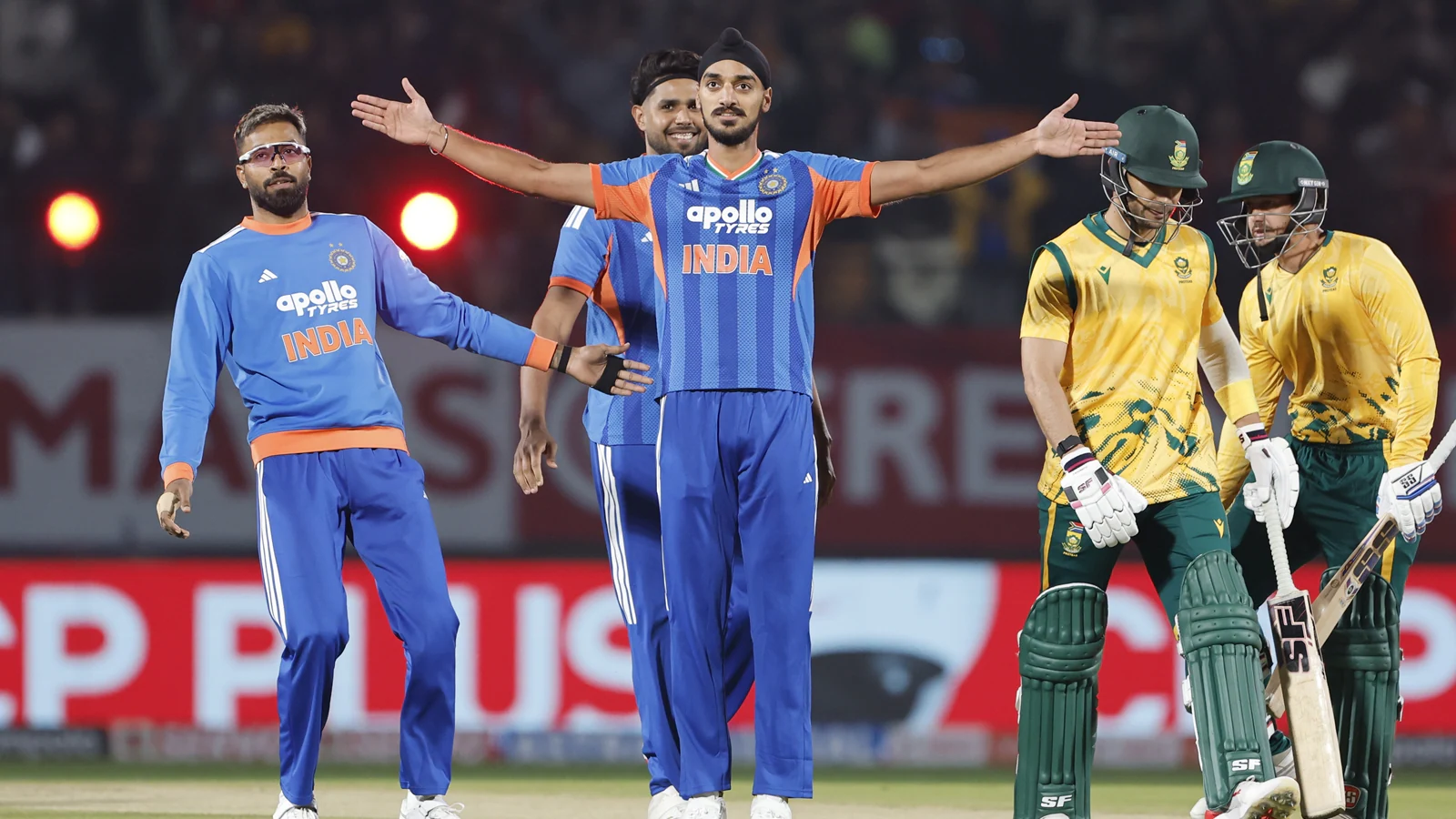

If it had been India’s batting that had let them down in the second T20I in Mullanpur earlier this week, it would be their bowling that stood up to the task of proving the 51-run hammering as being nothing more than an anomaly. In their show of all-round dominance – a seven-wicket victory to take a 2-1 series lead in the five-match series – the hosts delivered a response fitting of the No. 1 T20 side in the world, defending world champions gearing up for a title defence at home.
Snow has only yet touched the peaks of the Dhauladhar mountain range that overlooks this picturesque stadium – robbed, an inch, of its serenity in the nighttime – even as North India braces for a harsh cold wave. Evening temperatures were hovering around 10 degrees, adding a layer of cold weather not quite seen for T20 games in these parts. The overwhelming expectations were that this would be a batting paradise, given the HPCA Stadium’s reputation of being a high-scoring ground for limited-overs games that take place here in warmer climes. But the chilly air and a fair wicket had more than enough in it for the seamers, wholeheartedly exploited by the hosts that won a crucial toss and sent the visitors to bat first.
It was kicked off by a brilliant, Test-match quality opening spell spearheaded by left-arm quick Arshdeep Singh. Arshdeep masterfully used the devilish swing on offer thanks to the colder, lighter air. The Punjab pacer had a nightmare outing in his home ground in Mullanpur, leaking a wide-ridden spell of none for 53. The comeback came immediately here, and it persisted throughout his spell of 2/13, even if it was interspersed with a dropped regulation catch at long-on.
He had Reeza Hendricks gone in the first over after bowling a selection of brilliant deliveries. The first one, on a length but moving out to the right-hander, swinging away viciously. The next pitched up but taking similar shape, Hendricks left planted on his crease, prodding cautiously as it missed his edge again. The next one, on a length again but moves into him rather than turning out, and Arshdeep catches the back foot pad, with the umpire not sure but DRS definitively giving Hendricks his marching orders.
Sustained pressure
Rana had De Kock, fresh off a match-winning 90 in the previous game, in the next over; a length ball that snuck into the left-handed opener after picking up some extra pace. That was not to say that the Delhi pacer did not also find the right movement from the surface. Playing in place of Jasprit Bumrah, who urgently had to go home for personal reasons, he would shape up as Arshdeep’s able partner with the new ball, the two wreaking havoc as they evenly split the powerplay overs. Rana’s two wickets – the second coming thanks to Dewald Brevis chopping on a quick wide on while attempting the drive – may have been gifts but they spoke to the sustained pressure on the Proteas early in the innings.
And the bowling returns were not restricted to the new ball. By the time Shivam Dube came in midway through the innings, the Proteas were already in trouble and he put his back into his bowling to find the crucial seam movement that his bowling partners were finding. Figures of 1/21 are not accurate representation, the wicket of Corbin Bosch, a wobble-seamer that landed around off and castled his middle stump, was.
South Africa were so sure of the seam-friendly conditions here that they played only one spinner, an allrounder. But Varun Chakaravarthy’s tight spell of 2/11 in four overs showed his ability to apply the squeeze with his array of lengths and spins, irrespective of conditions. It augured well for India on a day their seamers stole the show, and displayed the strength of their bowling lineup.

Comments are closed.