
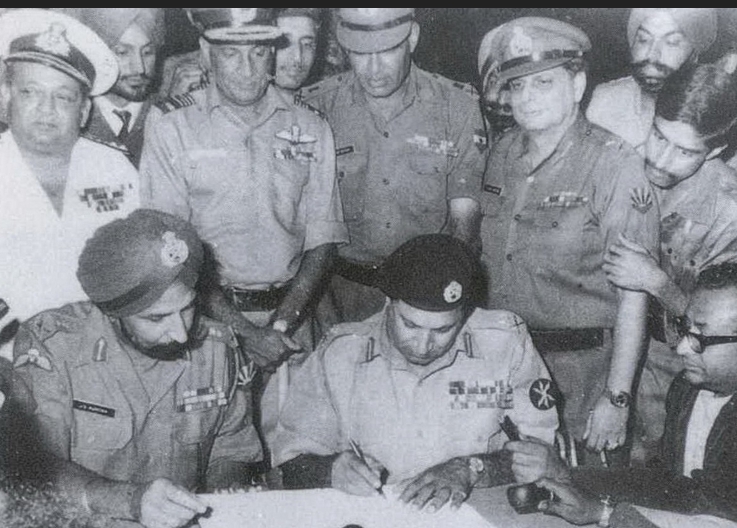

The Hamoodur Rehman Commission (HRC), appointed by Zulfikar Ali Bhutto in December 1971 and submitting its supplementary report in 1974, investigated the surrender of Pakistan Army in East Pakistan on ** December 16, 1971**, leading to the creation of Bangladesh and the capture of over 90,000 soldiers.
Citing political failures, strategic mistakes and command failure as the main reasons for the defeat, the HRC’s supplementary report emphasized the serious **moral degradation** among senior officers due to prolonged martial law duty. This weakened professional standards, discipline and leadership.
President **General Yahya Khan** faced criticism for his heavy drinking (witnesses reported that he was often “not well”) and his affairs with influential women, including the middleman for favors **Akalim Akhtar** (“General Rani”) and the singer **Noor Jahan**, who he frequented during the critical period of the war. These things were symbolic of corruption in governance, although they were not always named directly in the reports.
Chief of Eastern Command **Lieutenant General A.A.K. Niazi**, who had signed the surrender, faced condemnation for being “notorious for sexual immorality”, including relations with a Lahore-based woman who ran a brothel (allegedly helping to collect bribes) and smuggled betel leaves. Witnesses testified that his behavior undermined authority, with soldiers reportedly saying, “How could they have been stopped when the commander himself was a rapist?” This led to a decline in discipline.
The HRC recommended court-martial against Yahya, Niazi and others on charges including negligence, cowardice and moral lapses. However, no major trials took place: Yahya remained under house arrest until his death in 1980; Niazi was deported, forcibly retired and stripped of his honours, leading to his death in 2004.
The report, made public in 2000, is stark evidence of how personal corruption contributed to military and political failures.

Comments are closed.