
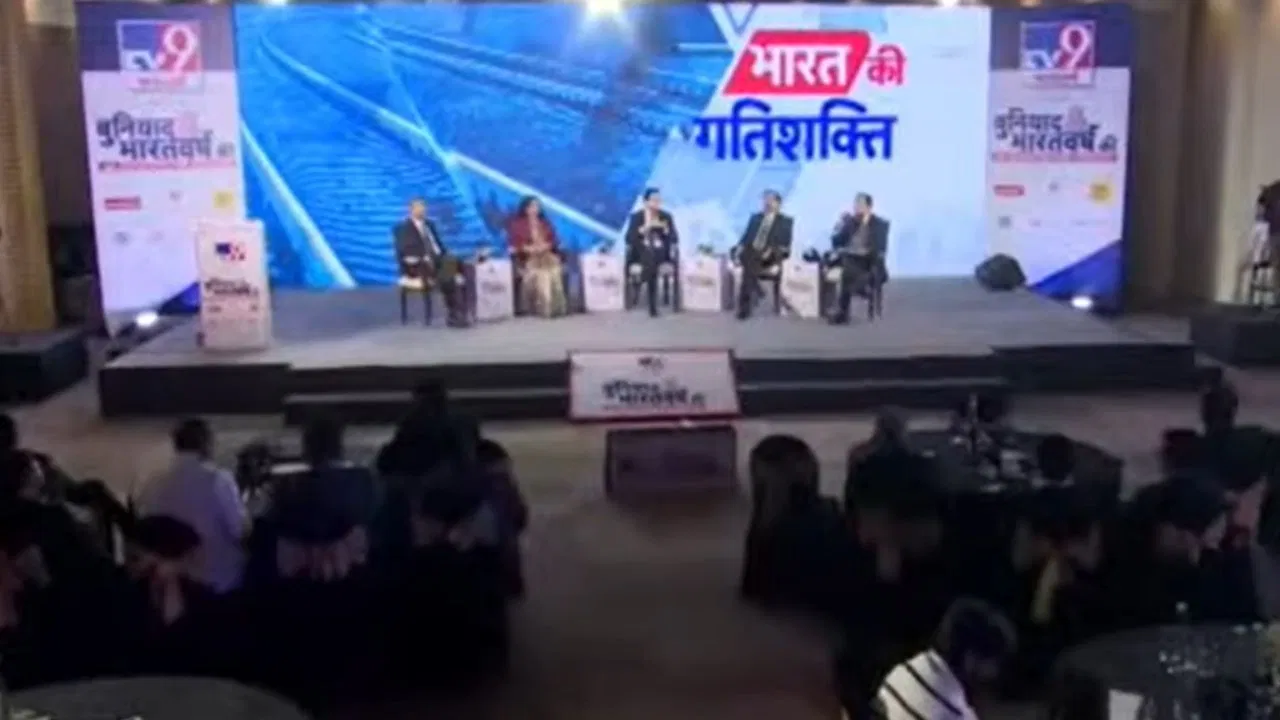
Buniyaad Bharatvarsh Ki: Indian Railways key to Viksit Bharat 2047, say former railway officials

New Delhi: Indian Railways will play a crucial role in achieving the government’s vision of Viksit Bharat @2047, with major reforms, capacity expansion and dedicated freight corridors transforming the transport landscape, former senior railway officials said on Tuesday.
Speaking at a TV9 Network conclave in the capital, former Member (Traffic) of the Railway Board Mohammad Jamshed described the last decade as a “golden period” for the railways, citing the merger of the railway budget with the Union Budget as a landmark reform. He said revenue allocations had risen to nearly Rs 3 lakh crore, while freight traffic output had increased from around 8,000 million tonnes to 12,000 million tonnes.
Bullet train section by 2027, total by 2029
On high-speed rail, Jamshed said the bullet train project is expected to be fully operational by 2029, with a section likely to be opened by August 2027. Addressing overcrowding at stations and trains during peak seasons, he said passenger services generate only about one-third of railway earnings and are largely subsidised by freight operations. He added that around 55,000 coaches were inducted over the past year, though further expansion is required.
Former IRCTC Chairman and Managing Director Rajni Hasija highlighted improvements in online ticketing, saying daily bookings rose from eight lakh in 2019 to 14.5 lakh in the last financial year. Nearly 89 per cent of tickets are now booked online, with system capacity enhanced from 14,000 to 37,000 tickets per minute. The IRCTC Connect app accounts for 58 per cent of total bookings, she said, adding that over 2.5 crore suspicious user IDs have been deactivated to curb misuse.
Demand-supply gap during Tatkal bookings
Hasija said the key challenge remains the demand-supply gap, especially during Tatkal bookings, though measures such as restricting agent access during the first 15 minutes have helped. She also noted a reduction in complaints related to food quality following multiple corrective steps.
Former DFCCIL Director (Project Planning) Pankaj Saxena underlined the importance of the eastern and western dedicated freight corridors, saying they have improved coal supply to Punjab and Haryana and revolutionised container movement. Freight trains now operate at speeds of up to 60 kmph on these corridors, contributing to lower logistics costs. He said the segregation of freight and passenger traffic enabled the operation of 13,000–14,000 special trains during the recent Maha Kumbh.
TV9 Network’s conclave Foundation of Bharatvarsh
Former Indian Railway Traffic Service officer Ravi Valluri pointed to congestion and punctuality as key challenges ahead. He said targeted interventions improved punctuality in the Prayagraj division from about 30 per cent to nearly 90 per cent. Valluri added that catering services are being strengthened through private participation and e-catering models.
The discussions were part of the TV9 Network’s conclave Buniyaad Bharatvarsh Ki, held at the Hyatt Regency, which focused on infrastructure-led development and the role of transport networks in shaping India’s growth trajectory towards 2047.

Comments are closed.