

Kolkata: There is not enough logic to why multiple franchises didn’t go nuts over David Miller at the IPL mini auction in Abhu Dhabi on Tuesday. Or Quinton de Kock. Or Ben Duckett for that matter, having played a crucial part in revolutionising England’s high-risk, high reward batting approach in Tests. Sri Lankan allrounder Wanindu Hasaranga could fall in the same bracket as well, as does the lesser known Allen Finn, a sensational hitter of the cricket ball. Each of them going for their base price was a curveball to all the theories that had priced them much higher than what they had signed up for.
Smarter was how some franchises chose to wait for the round of accelerated bidding to shop for players they were sure would have gone unsold otherwise. A 22-ball 73 potentially set up Sarfaraz Khan for a massive payday but he was going unsold before Chennai Super Kings brought him back from the wilderness by clinching him his base price of ₹75 lakh. But it was Delhi Capitals who once again aced this trick, picking Kyle Jamieson for ₹1 crore and Lungi Ngidi for ₹2 crore but more remarkably, getting Prithvi Shaw for only ₹75 lakh. KKR showed prudence too, bagging New Zealand opener Rachin Ravindra and home boy Akash Deep for their base prices after they had gone unsold in the main rounds.
For a while it seemed Miller was going that way. His stint with Lucknow Super Giants last season hadn’t gone too well but truth be told they probably couldn’t utilise him very well. But Miller is still extremely fit, has won an IPL with Gujarat Titans only recently, and almost got South Africa home in the T20 World Cup final against India in 2024. These are compelling factors to at least place a bid on a proven match winner… which Capitals did just when the emcee was about to pass his card to the unsold category.
This last-second bid is a strategy used by many franchises, potentially to get that player at the base price bargain. But many other franchises too subscribe to the same ploy, effectively leading to a situation of who will blink first, followed by fervent counterbidding. That’s where Miller’s solo bid was a shocker. It also explained why the Delhi Capitals table looked mighty pleased after the deal was sealed.
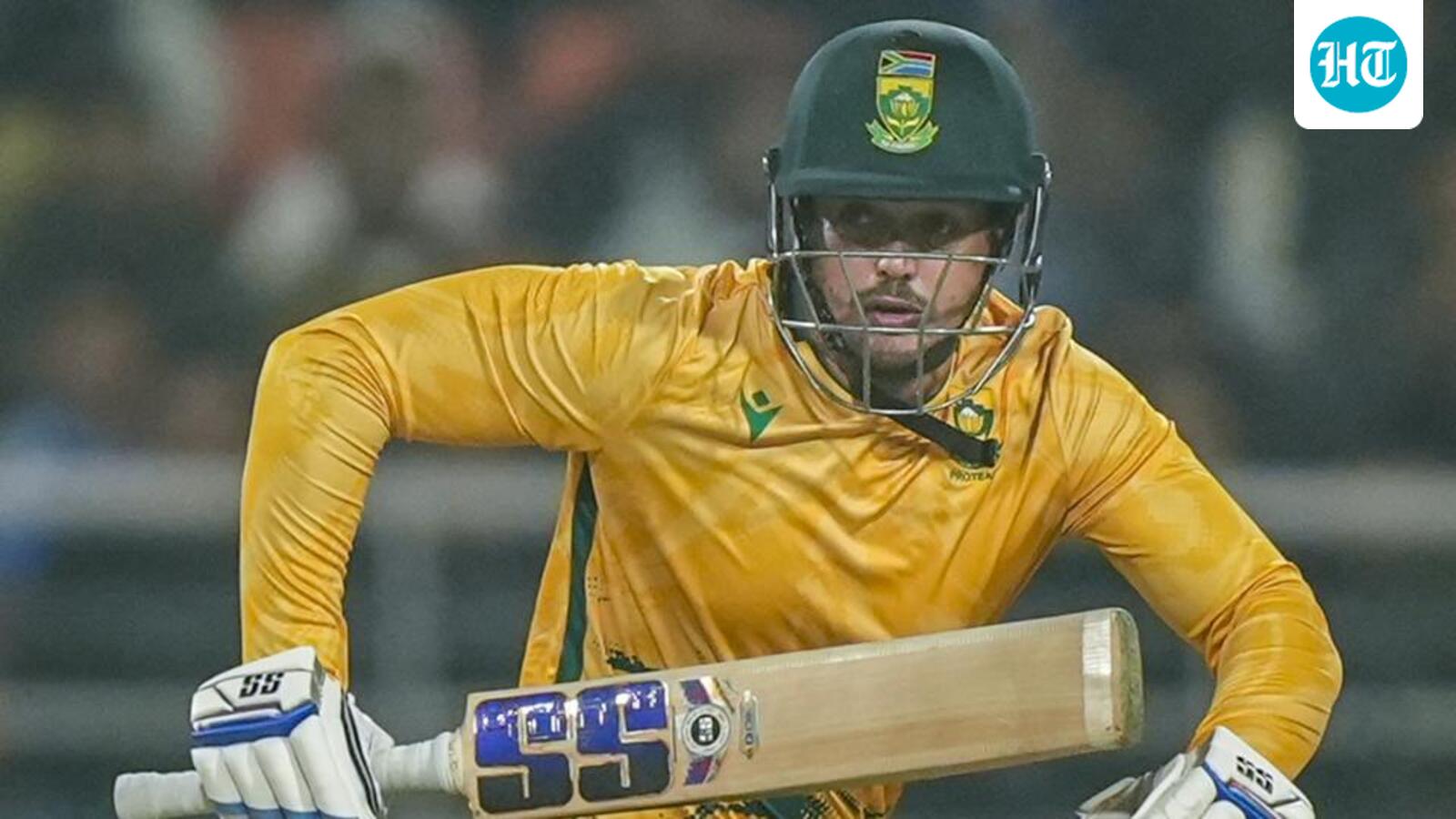
No franchise was perhaps more pleased than Mumbai Indians, bagging de Kock for only ₹1 crore. It was less than a third of what KKR had paid for him last year. And even though de Kock did return a strike rate of 130 last season, he also scored a 61-ball 97, is still 32, and the familiarity with the Mumbai Indians dressing room means that he fits right back with a definite plan.
Head coach Mahela Jayawardene confirmed that as well. “Quinny was part of MI in most of the franchises and also in the past. We wanted to ensure we have depth in that crucial spot at the top of the order. It gives us flexibility in the playing XI,” he said.
What stood out over and above everything was the confidence with which Mumbai Indians bid for de Kock with a purse of only ₹2.75 crore. They had adopted a similar strategy with Cameron Green as well, though it seemed pretty bold given there was no way MI could have kept up with the bigger purses of KKR or Chennai Super Kings. De Kock’s bid, however, carried a sense of inevitability to it.
Also surprising was how KKR managed to land Allen at his base price of ₹2 crore. His brief IPL exposure — Finn was brought in by RCB as a replacement player in 2021 — possibly contributed to his low visibility. But in 2024 he had hit 16 sixes to smash a 48-ball hundred against Pakistan. His career strike rate in T20s is nearly 174, making Finn hot property in Major League Cricket where he hit a 35-ball 78 and a 51-ball 151 opening the batting for San Francisco Unicorns this year. If he reproduces even a shade of that form in this IPL, KKR would know they have got a great bargain.

Comments are closed.