

India’s National One Health Mission (NOHM) is among the country’s most forward-looking health initiatives. By recognising that human, animal, and environmental health are deeply intertwined, it marks a decisive shift from siloed public health to a systemic approach.
Yet, to fully deliver on its promise of early warning and integrated disease control, the Mission must incorporate a powerful but underutilised tool: wastewater surveillance.
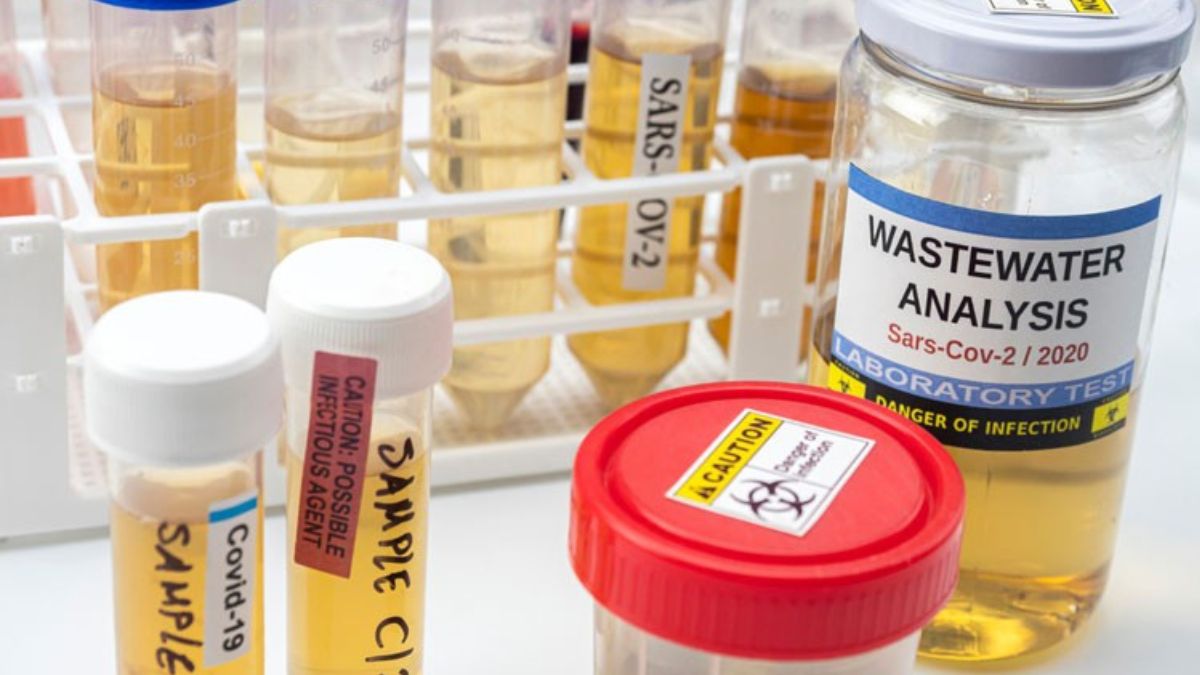
Wastewater-based monitoring has emerged as one of the most effective early-detection systems in public health. During COVID-19, it gave cities worldwide an early signal of rising infections well before hospitals filled up. By testing raw sewage for traces of pathogens, health authorities can detect viral and bacterial circulation even among asymptomatic individuals. It is low-cost, scalable, and ideal for densely populated settings, precisely the conditions that make India vulnerable to outbreaks.
NOHM envisions stronger surveillance across human and animal health through sentinel sites and laboratory networks. Integrating wastewater surveillance helps monitor the environment, completing the triad that defines One Health. It would create a continuous feedback loop where environmental signals complement clinical and veterinary data, giving agencies more lead time to act on emerging risks.
A giant step in that direction has now been taken by ICMR with its recent announcement to expand wastewater surveillance to 50 cities, covering 10 pathogens beyond SARS-CoV-2, building on their earlier pilots. A galaxy of prestigious government led by the Centre for Cell and Molecular Biology in Hyderabad, have now come together as the Alliance for Pathogen Surveillance Innovations (APSI)-India Consortium, with partners including the National Centre for Biological Sciences (NCBS), DBT–InStem, Indian Institute of Science Education and Research (IISER)–Pune, and others. APSI has done some pioneering work in the field, with 150 sites across India.
Robust systems have been developed for environmental sampling, genomic sequencing, and data integration that together form scalable models for early pathogen detection. So far, around 48,000 pathogens have been sequenced and over 15,000 wastewater samples analysed for pathogens such as SARS-CoV-2, influenza, RSV, and AMR-related bacteria. In parallel, about 4,500 dengue and 450 chikungunya virus genomes, along with 900 bacterial genomes from clinical samples, were mapped to assess evolving pathogen patterns and archived into national databases.
To make the surveillance more cost-effective, APSI has worked with Indian manufacturers to develop indigenous multi-detection kits for SARS-CoV-2, influenza, RSV, chikungunya, and zika, as well as AMR-linked bacteria. These kits have been validated using wastewater samples from APSI sites.
Data generated through these efforts feeds into the Integrated Health Information Platform (IHIP) portal, ensuring that environmental insights complement official health data streams. Through targeted training and outreach, the next goal is capacity building amongst health professionals, municipal workers, researchers, etc., strengthening surveillance readiness at both urban and regional levels.
Together, these initiatives show how environmental intelligence can enhance clinical and veterinary surveillance, giving cities an additional layer of situational awareness.
Taking the next step
NOHM has rightly prioritised zoonotic and human surveillance in its initial phase, building the institutional muscle required for cross-sector collaboration. The next frontier is to institutionalise environmental intelligence, while the Mission’s architecture is still taking shape to yield long-term dividends in preparedness and response.
ICMR’s push for wastewater surveillance could give India a real-time network capable of detecting outbreaks before they escalate, while also tracking antimicrobial resistance and seasonal enteric diseases.
The challenge now is to ensure these efforts do not remain standalone experiments. Wastewater surveillance must be woven into the formal fabric of the National One Health Mission, its governance, data systems, and state-level implementation.
This requires clear coordination among municipal agencies, health departments, and laboratories; standardised sampling and interoperable data platforms that feed into public-health dashboards. It will also need investment in laboratory capacity, training, and sustainable funding at both the central and state levels.
The approach must also adapt to India’s infrastructural diversity. In large cities, sampling at sewage treatment plants or pumping stations can yield reliable community-level data. In smaller towns or rural areas, surface drains or septic systems can provide comparable insights. Flexibility in the protocol will ensure that surveillance complements existing systems rather than being confined to urban enclaves. If executed well, this integration could mark a turning point in how India anticipates and manages health threats.
ICMR’s announcement should therefore be viewed not just as a technical expansion but as a strategic inflexion point. It offers the chance to translate the One Health ideal into practice, where environmental surveillance is not an afterthought but a frontline sensor. With the NOHM, providing the architecture and wastewater intelligence supplying the signal, India can build one of the world’s most comprehensive and forward-looking detection systems.
In public health, timing matters as much as intent. The Mission has arrived at the right moment; the science and tools are ready. What remains is to connect the dots, and wastewater may well be the missing link that completes India’s One Health vision.
(Abantika Ghosh and Anuj Pattanayak work with Chase Advisors)
The opinions expressed in this article are those of the author and do not purport to reflect the opinions or views of Buzz.

Comments are closed.