
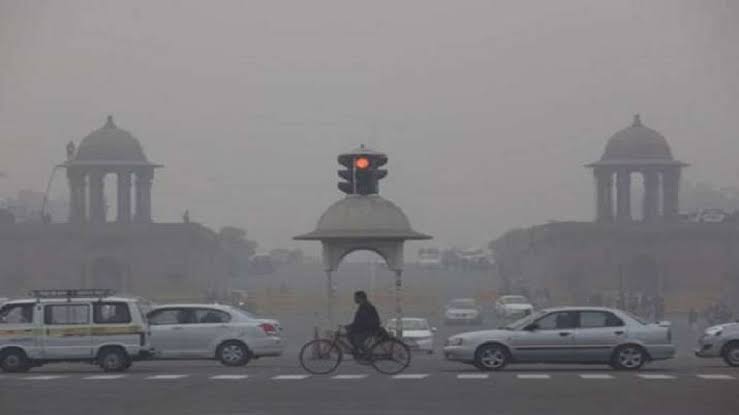

In response to worsening air quality levels, the Delhi government has mandated work from home (WFH) for 50 per cent of employees across both public and private sector organisations. The directive will come into effect from Thursday as part of emergency pollution-control measures under Stage III and Stage IV of the Graded Response Action Plan (GRAP).
Delhi Labour Minister Kapil Mishra said the move is aimed at reducing daily commuting and cutting vehicular emissions, a major contributor to the city’s air pollution crisis. He warned that strict action will be taken against institutions that fail to comply with the order.
The government acknowledged the economic impact of these restrictions, particularly on daily wage earners. To provide relief, the minister announced ₹10,000 financial assistance for construction workers who have lost work due to GRAP-related activity restrictions. The compensation will be extended for the duration of GRAP Stage IV as well.
According to reports by PTI, Stage III of GRAP has been in force for the past 16 days, during which construction and certain industrial activities were halted, affecting livelihoods. The compensation will be available to workers registered with the government, and the registration process is currently ongoing.
Employees engaged in essential services, including hospitals, emergency response units, fire services, and departments directly involved in pollution control, are exempted from the work-from-home mandate, officials clarified.
The minister also criticised the Aam Aadmi Party (AAP) for staging protests, accusing it of politicising the air pollution crisis. He stated that air pollution is a long-standing issue that cannot be resolved within a few months and reiterated the government’s commitment to addressing the problem on the ground.
Delhi continues to remain under ‘very poor’ to ‘severe’ Air Quality Index (AQI) levels, prompting authorities to enforce stringent measures to protect public health.

Comments are closed.