
‘Insurance for all, protection for all’ bill passed by Rajya Sabha, approval had already been received from Lok Sabha

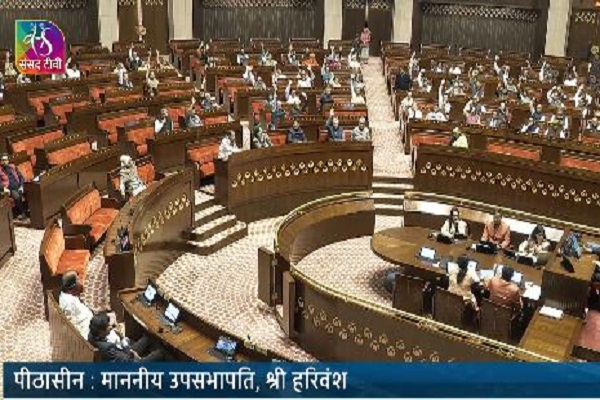
New Delhi, 17 December. Rajya Sabha on Wednesday passed the ‘Sabka Bima Sabka Raksha (Amendment in Insurance Laws) Bill, 2025’ by voice vote. This bill has provisions for many important reforms including increasing the limit of Foreign Direct Investment (FDI) in the insurance sector from 74% to 100%. It aims to modernize the insurance industry and achieve the goal of ‘Insurance for All by 2047’.
The Sabka Bima Sabki Raksha (Amendment of Insurance Laws Bill, 2025 ) passed in #RajyaSabha #WinterSession @FinMinIndia @nsitharaman pic.twitter.com/4TiBud3z05
— SansadTV (@sansad_tv) December 17, 2025
This bill was passed in the Lok Sabha on 16 December
Earlier this bill has been passed in the Lok Sabha on 16 December. Under this, the Insurance Act, 1938; Life Insurance Corporation of India (LIC) Act, 1956; And amendments have been made in the Insurance Regulatory and Development Authority of India (IRDAI) Act, 1999. The bill aims to increase ease of doing business, attract global capital, strengthen policyholder protection and widen access to insurance.
The government is continuously taking steps to strengthen public sector insurance companies.
Finance Minister Nirmala Sitharaman defended the bill and said that the government is continuously taking steps to strengthen public sector insurance companies. He said Rs 17,450 crore was invested in three non-life public sector insurance companies, resulting in record profits for LIC, GIC and Agriculture Insurance Company of India Limited (AICIL) last year.
"Since assuming office in 2014, our govt has introduced significant reforms in the #insurance sector, recognizing that true national development requires broader coverage for our people, businesses, and #agriculture,"
FM @nsitharaman while replying to the discussion on Sabka The… pic.twitter.com/Oh8ihtdIQ4
— SansadTV (@sansad_tv) December 17, 2025
Number of insurance companies increased from 53 to 74
Referring to the progress made in the insurance sector after 2014, Sitharaman said that the number of insurance companies has increased from 53 to 74. Insurance penetration has increased from 3.3% to about 3.8%, per capita insurance density has increased from $55 to $97, total premiums have increased from Rs 4.15 lakh crore to Rs 11.93 lakh crore, while assets under management have tripled to Rs 74.43 lakh crore.
FDI limit increased in a phased manner
The Finance Minister said that increasing the FDI limit in a phased manner from 26% to 49% and then to 74% opened branches of foreign reinsurance companies and strengthened domestic capacity. Advisory services also improved by allowing 100% FDI for insurance intermediaries in 2019.
GST on health insurance premium reduced from 18% to zero
The Finance Minister appreciated the decision of the 56th GST Council to reduce GST on individual life and health insurance premiums from 18% to zero, thereby making insurance more affordable.
‘Your capital, ‘Your Rights’ campaign through Unclaimed amount of more than Rs 1,000 crore returned to the people
Referring to the ‘Your Capital, Your Rights’ campaign, he said that unclaimed amount of more than Rs 1,000 crore has been returned to the people through camps organized at the district level. Also, ‘Bima Bharosa’ portal is proving helpful in settlement of claims.
Appeal to MPs to increase awareness about insurance
Sitharaman appealed to the MPs to increase awareness about insurance and assured that mandatory responsibilities related to rural and social sectors will remain for all insurance companies. He also said that the maximum amount of penalty is being increased from Rs 1 crore to Rs 10 crore, which will be used for the education of the policyholders. It was also made clear that regulatory control on premiums will remain in place and private companies will not be able to decide the premium arbitrarily.
Opposition alleges – Foreign boards can control premiums
However, the opposition strongly opposed the bill. DMK MP Dr Kanimozhi NVN Somu alleged that foreign boards could control premiums, which would increase the menace of black money and affect the autonomy of states. He said that this bill will harm co-operative insurance companies and public sector undertakings like LIC. He said sarcastically, ‘This is not everyone’s insurance, but everyone’s nonsense.’
insurance as a means of social security
Trinamool Congress MP Saket Gokhale described insurance as a medium of social security and said that in this sector, the interests of policyholders should be given priority over those of shareholders. He also accused the bill of being brought in a hurry. Opposition parties demanded the bill be referred to a select committee and raised concerns over data privacy, overseas repatriation of profits and potential impact on sovereignty.
With 100% FDI, cheaper and better insurance products will be available to consumers.
At the same time, supporters of the bill say that 100% FDI will bring global expertise and cheaper and better insurance products will be available to consumers. This debate highlights the challenge of balancing liberalization and protection of domestic interests in a vital sector like insurance.

Comments are closed.