
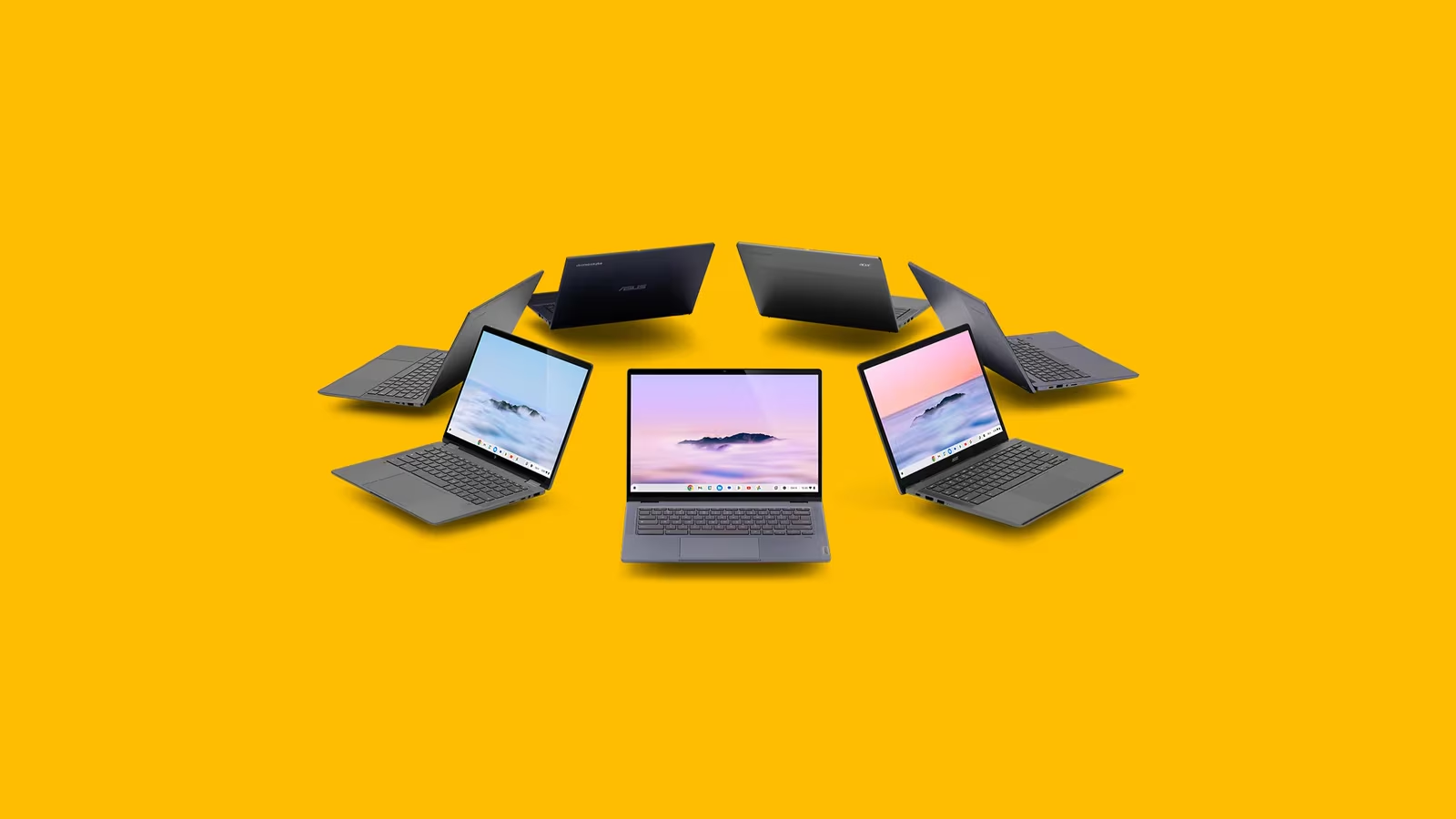

For years, Google has tried and failed to crack the personal computer market, becoming a distant third compared to Microsoft and Apple, which dominate the mainstream PC space. Microsoft rules the market with its Windows operating system, powering billions of PCs globally, while Apple has fought hard to increase its market share and has succeeded with macOS, which powers the Mac.
Despite its dominance in the smartphone market with the Android OS, Google hasn’t achieved the same success in the PC space. At one point, ChromeOS managed to climb in sales numbers, but Chromebooks were quickly overshadowed by Windows-powered laptops. Google also tried to compete with Microsoft and Apple through Android tablets, but the strategy never worked.
However, Google isn’t ready to give up. In fact, it has devised a plan to make a comeback by merging its two platforms into a brand-new operating system. It is rumoured to be called Aluminium OS and is reportedly expected to launch in a few months.
Here’s everything we know so far about Google’s Aluminium OS, its new Android-based operating system for PCs that will replace ChromeOS.
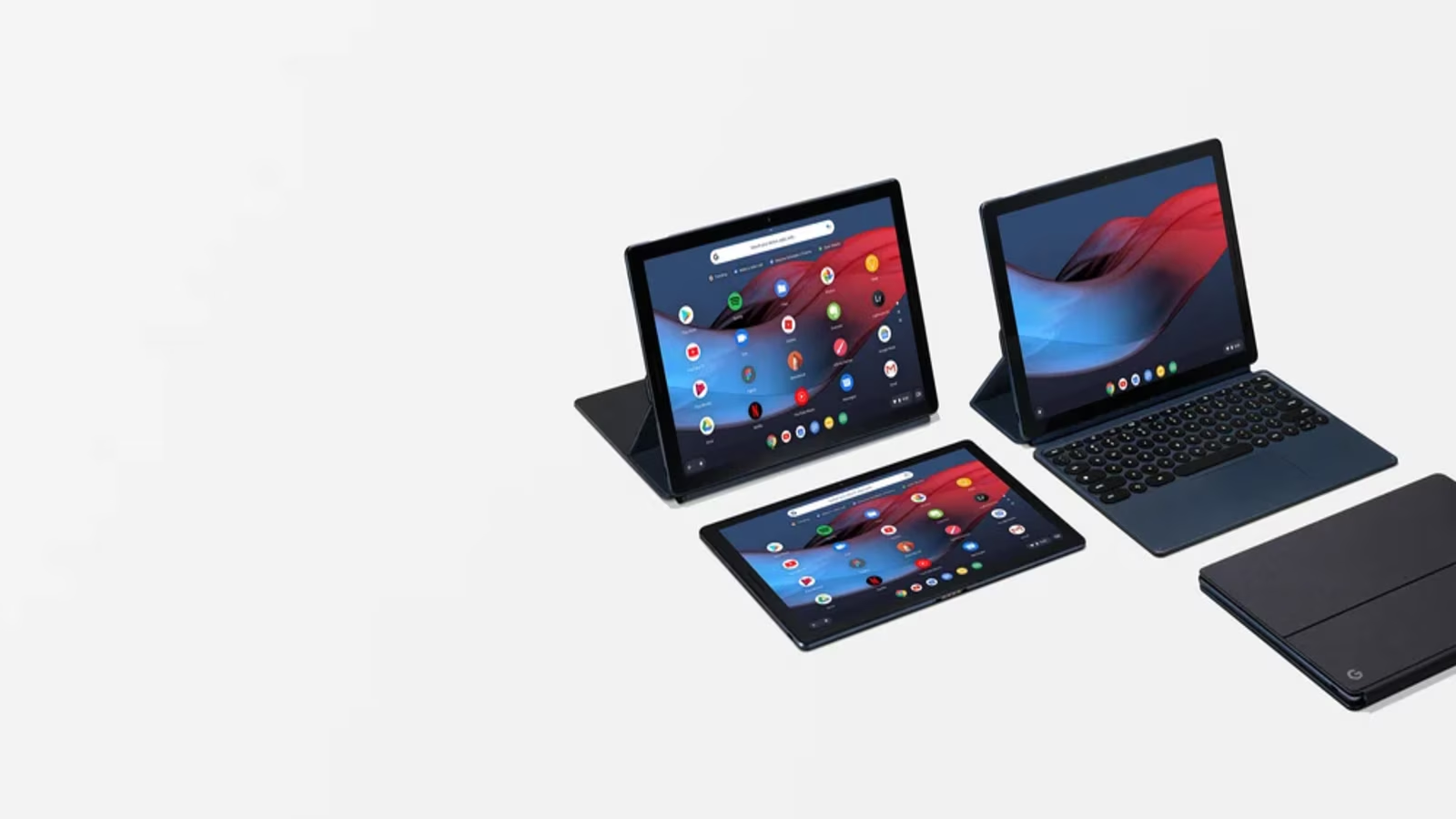 Google tried its hand at making a ChromeOS tablet in the form of the Pixel Slate, but it was a critical and commercial failure. (Image credit: Google)
Aluminium OS will merge Android OS and ChromeOS
No wonder Google has been teasing its unified desktop operating system for months. Earlier this year, a Google executive revealed for the first time that the company plans to merge ChromeOS and Android into a single platform. In fact, Google openly discussed interoperability improvements between ChromeOS and Android at Google I/O 2025, hinting that a new desktop operating system might be in the works.
In September, during Qualcomm’s Snapdragon Summit in Hawaii, Google confirmed that ChromeOS and Android will merge, ending months of speculation that a long-rumored desktop operating system was on the way. Google’s hardware chief, Rick Osterloh, took to the stage to share details about the new OS, which he described as “bringing Android to the PC market,” and confirmed a partnership with Qualcomm on the platform.
Osterloh indicated that Google is building a common technical foundation for PCs, referencing the initiative to merge ChromeOS and Android. He explained that Google and its partners are creating a shared technical foundation for PCs and desktop systems, enabling the company to bring its AI stack, including Gemini models, the Assistant, as well as its apps and developer ecosystem into the PC space.
Osterloh mentioned Android by name, though he did not mention ChromeOS, which itself confirms that the new unified platform will still be Android at heart. “We’re really excited about this, and I think this is another way Android is going to be able to serve everyone in every computing category.”
Qualcomm CEO Cristiano Amon echoed the sentiment, saying, “I’ve seen it. It’s incredible. I think it delivers on the vision of convergence between mobile and PC.”
Google has likely been working on a unified desktop operating system for years, as can be gauged from the number of steps it has taken to integrate the two systems, such as bringing Android apps to Chromebooks. That said, Google’s past initiatives are not very different from Apple’s. Apple, too, has resisted bringing macOS to iPads, instead keeping iPadOS and macOS separate.
But we still don’t know much about the new unified desktop operating system. However, from time to time, bits of information surface online, offering clues about what Google may be cooking up with Aluminium OS. Some time ago, a leaked job listing appeared for a role described as a “senior product manager in Android, laptops, and tablets.” The listing went on to reveal several interesting details about what’s in store.
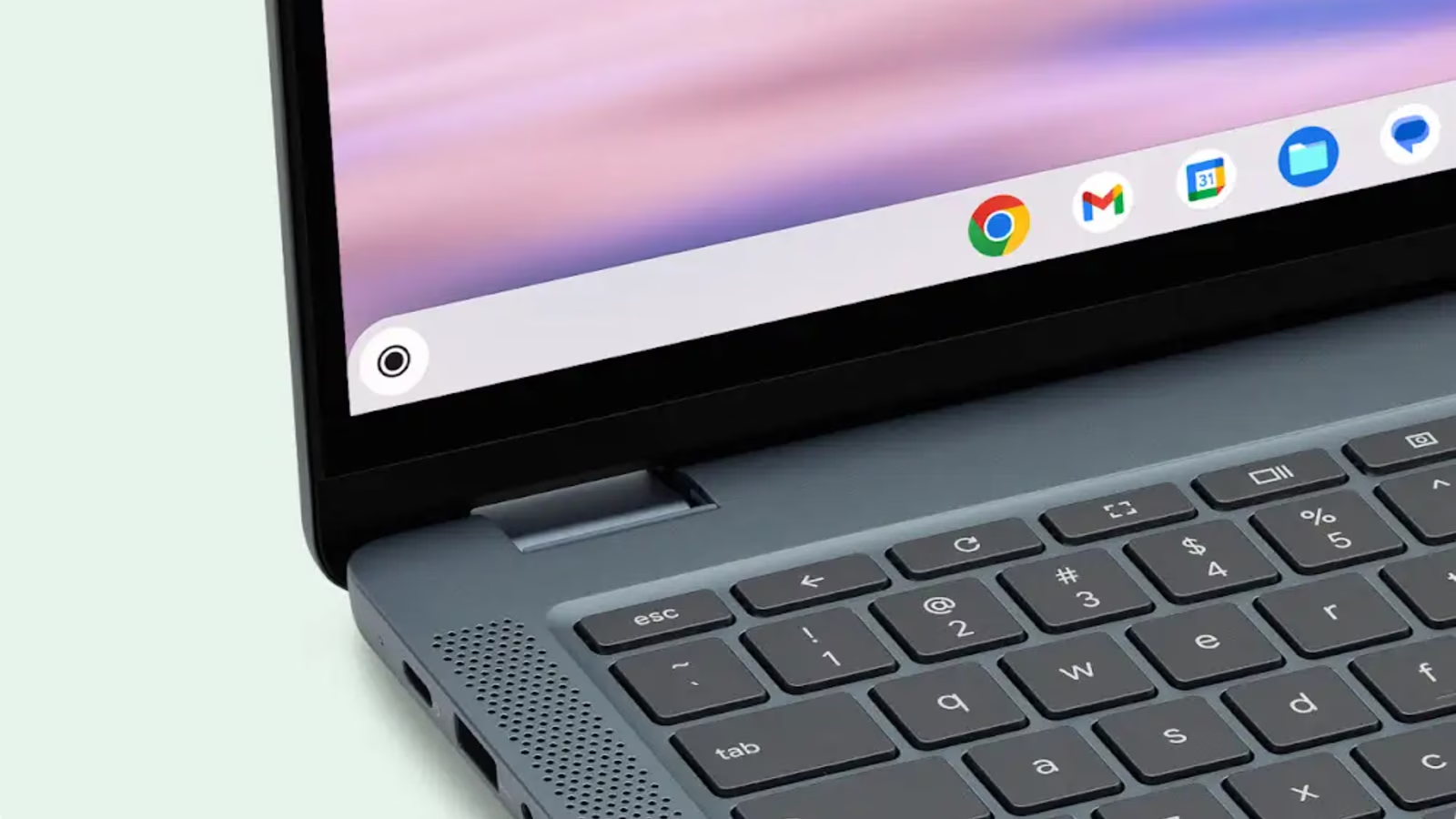 Google’s ChromeOS is a cloud-based operating system and powers Chromebooks. (Image credit: Google)
For example, Google appears to be preparing a wide range of devices and form factors powered by Aluminium OS, including laptops, detachables, tablets, and boxes (likely mini PCs). It also mentions three product tiers: “AL Entry,” “AL Mass Premium,” and “AL Premium.” The listing explicitly describes Aluminium as “Android-based” and focused on “premium devices and experiences.”
This suggests that, much like smartphones, upcoming Aluminium OS–powered devices will launch across multiple price points, including high-end models. That would mark a key difference from Chromebooks, which have traditionally targeted the budget segment. Google did attempt to make premium Chromebooks with the Chromebook Plus program, which launched in 2023, but it ultimately failed to gain traction among consumers. Apple’s MacBook Air dominates, especially previous generation models, in the premium consumer segment.
ChromeOS will co-exist
One thing that is already clear ahead of Google’s launch of Aluminium OS is that ChromeOS will not be phased out. “If you think about the laptop form factor, we’ve had ChromeOS for a long time, and we’re super committed to that platform, and it’s been really successful for us,” Android chief Sameer Samat said during the Qualcomm Snapdragon Summit.
Samat added that the ChromeOS experience will remain, but its underlying technology will switch to running on Android. This means we may continue to see Chromebooks on the market alongside Aluminium OS–powered devices.
Story continues below this ad
…but questions remain about how Aluminium OS will be different
One thing that is not clear is how Google’s Aluminium OS will differ from existing forms of Android or ChromeOS. Will the new OS have an interface similar to Windows or macOS, or will Google take a completely different approach? We also don’t know how powerful the operating system will be, or whether it will resemble iPadOS.
Google has described Aluminium OS as being “built with artificial intelligence at the core.” Essentially, Google’s AI assistant, Gemini, will drive new experiences on Aluminium OS–powered devices. One wonders how much Google sees the iPad as a potential threat to these devices. Even though Android will be at the heart of the upcoming desktop operating system, Google will need to ensure that Aluminium OS delivers the best of Android on tablets while maintaining a traditional desktop OS approach. While Aluminium OS will merge both Android and the aspects people like about ChromeOS, Google could learn from Apple. Apple is increasingly bringing features from macOS to iPadOS. For example, adding proper windowing to make iPadOS behave more like macOS,though the company continues to insist it has no plans to merge iPadOS and macOS.
A good way to get a glimpse into the capabilities of Aluminium OS is Google’s new experimental Disco AI browser, which helps turn your open tabs into custom applications. With Disco, users can create what Google calls “GenTabs,” a tool that proactively suggests interactive web apps to help complete tasks related to what you’re browsing and allows you to build your own apps via written prompts. Disco is a Gemini-powered web browser. If Google says the OS is built with AI at its core, it is quite possible that Aluminium OS will be a smart operating system that understands users and reimagines features like Virtual Desks – going far beyond simply running Android apps on a computer.
There’s a lot of curiosity about Aluminium OS, a new desktop operating system that is AI-ready from the ground up. It not only merges Android and ChromeOS but also aims to provide real competition to the iPad and even the Mac. Hopefully, we won’t have to wait too long to learn more about Aluminium OS, as Google executives have confirmed that the platform is expected to launch sometime in 2026. Our best bet is to expect a formal launch at Google I/O 2026, which usually happens in May.

Comments are closed.