
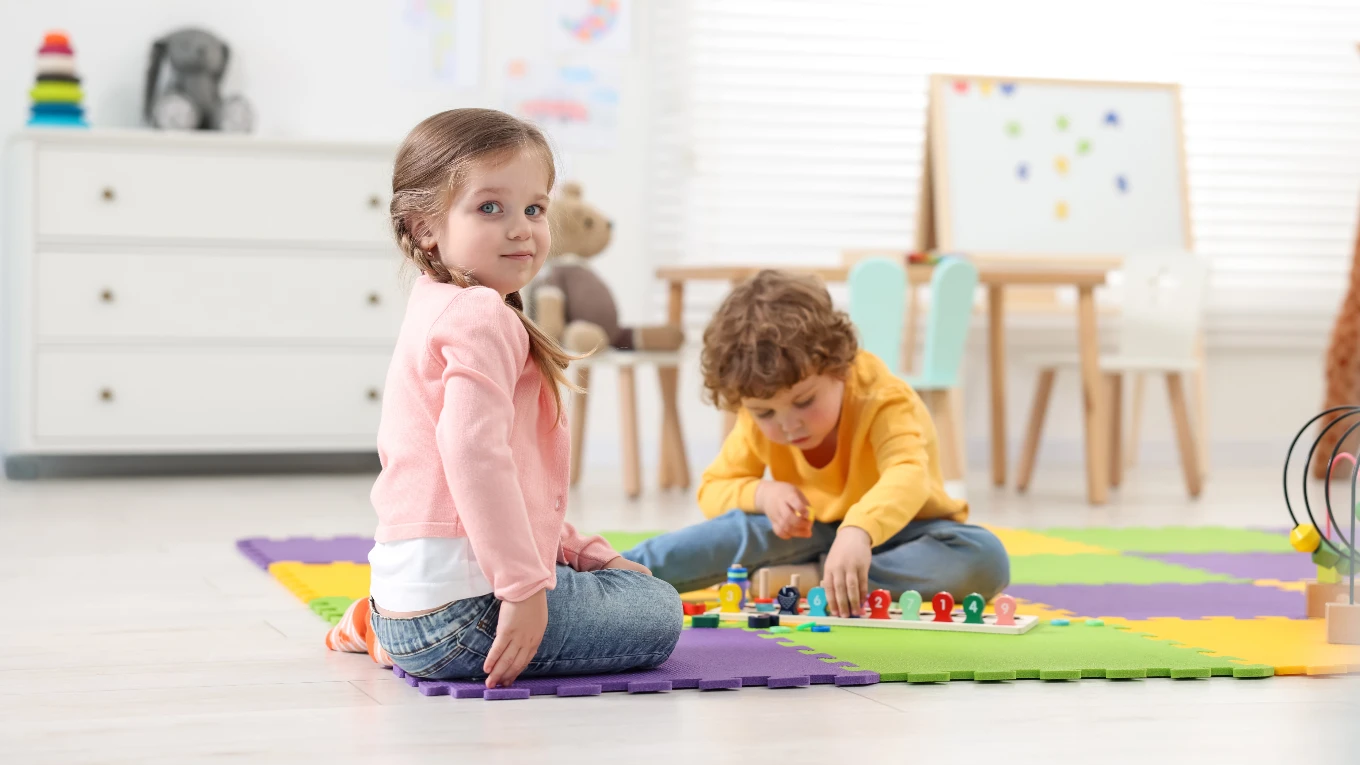

A study from Pennsylvania State University found that your social competence levels in Kindergarten could actually indicate how you will perform in school, work, and life later on. So, if you were the kid who was friends with everyone, I imagine you’re doing pretty well right about now.
What were you like when you were in Kindergarten? Did you play a lot with other children, or mostly keep to yourself? If you look back at yourself then and at yourself now, how much of a difference can you see? I was one of those kids who never colored within the lines, and I’d like to say that reflects on me today, whatever that means.
A child’s social skills in Kindergarten can predict how successful they will be in life.
The researchers studied 700 student participants over 20 years, mostly from lower socio-economic backgrounds. Poverty, stress, race, neighborhood crime, kindergarten reading levels, and aggression levels were all additional factors taken into account.
Brocreative | Shutterstock
While they were in Kindergarten, teachers rated the students’ social competence on a 5-point scale in 8 categories, such as “shares with others” and “is helpful to others.”
Every point doubled a student’s chances of graduating and increased the likelihood of getting a full-time job by age 25 by 46%, the research concluded. Every one-point decrease, meanwhile, increased a student’s risk of arrest by 67% and the chance of being wait-listed for public housing by 82%.
The participants were re-evaluated in their early 20s, and the two scores were compared.
Years later, as young adults, their occupational and social success was assessed in five categories, including education, occupational status, and criminal record. The results showed that students who were more socially active in kindergarten were more likely to be well-employed and to graduate from college, and were less likely to have been arrested.
However, senior research associate Damon Jones said in a press release that the research itself doesn’t prove that higher social competence at a young age automatically leads to better outcomes later on in life.
“But when combined with other research, it is clear that helping children develop these skills increases their chances of success in school, work, and life,” said Jones, who is a research associate at the Bennett Pierce Prevention Research Center.
The good news is, you’re not permanently stuck as the person you were in Kindergarten.
Jones clarified that this study is a way to measure social competency at an early age; social and emotional skills can still be developed and improved, so don’t assume that your toddler who doesn’t like to share is going to struggle in adulthood. If you were a bit more introverted and antisocial back then, there’s always time to shift your social tendencies in adulthood.
 PaeGAG | Shutterstock
“Evidence from numerous intervention studies indicate that social and emotional learning skills can be improved throughout childhood and adolescence,” Jones asserted. Consistent practice and stepping outside your comfort zone can help you develop stronger emotional intelligence.
Are you remembering what you were like as a kindergartner? Did this study accurately reflect your current academic and occupational success? Are you going to look up your former kindergarten classmates and see how successful they are now?
Caithlin Pena is an editor and former contributor for YourTango. Her work has been featured on Thought Catalog, Huffington Post, Yahoo, Psych Central, and BRIDES.

Comments are closed.