
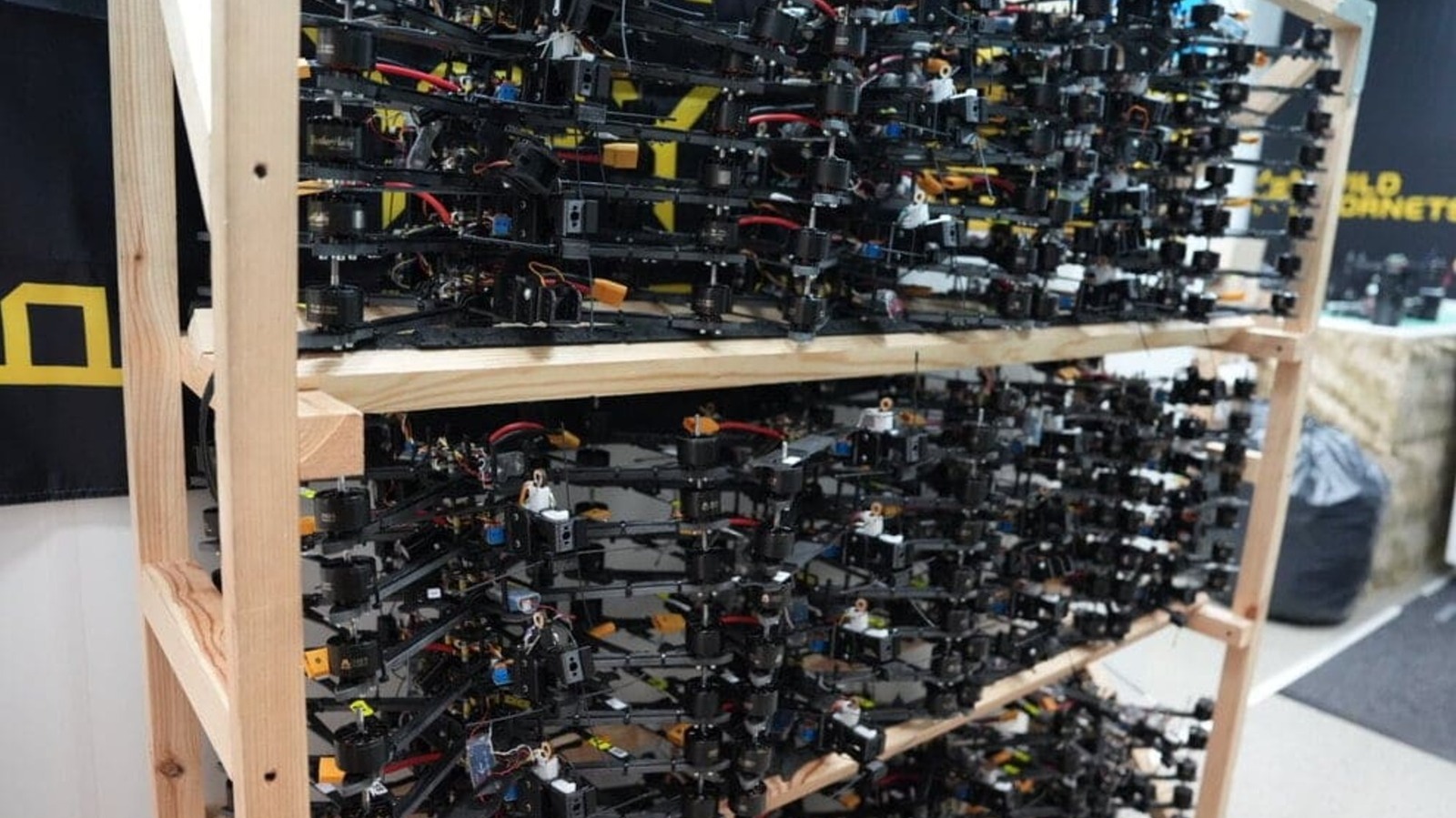

They might seem to be new players, but military-grade drones have been in use as far back as between the first and second World Wars. An example lies in the “Queen Bee,” a British-made radio-controlled biplane used as a live target to sharpen anti-aircraft gunnery skills. Today, drone manufacturing is big business; the Chinese firm DJI holds close to 75% of the global quadcopter market under its belt. However, it’s the approximately 500 companies in Ukraine that have been intriguing Western partners for the past three years.
Since 2022, Ukraine has invested in drones and robotics, forged by the necessities of an ongoing war with a more powerful neighbor that has jet-powered attack drones immune to electronic countermeasures. These pilotless machines have plugged critical gaps in traditional artillery and long-range firepower for the smaller, less affluent country. Plus, their proliferation has been unprecedented, from hundreds of thousands of drones in 2022 to more than 4 million in 2025. For reference, the U.S. produces roughly 100,000 annually.
Fueling this meteoric rise is Ukraine’s fast-growing and decentralized robotics sector, which has birthed manufacturers such as Fire Point, Ukrspecsystems, Skyeton, Wild Hornets, Motor-G, and 3D Tech. These companies and organizations have become some of the most important sources of drones for the Ukrainian military. Collectively, they allow Ukraine field not just raw numbers but a greater variety than any Western nation combined. Still, maintaining supply lines dependent on foreign manufacturers is a concern for the country: Only about 5% of Ukranian drone companies don’t rely on Chinese-made components. But the indigenous Motor-G is pushing hard towards independence by producing 100,000 electric motors for drones monthly to relieve some of that burden.
Types of Ukrainian drones and their combat roles
When talking about drones, it’s easy to only think of unmanned aerial vehicles (UAVs). However, the truth is that there is a difference between the term “drone” and “UAV”. That’s partially because non-aerial drones ply their trade on land as well as on and below water. In these domains, they are termed unmanned ground vehicles (UGVs), unmanned surface vehicles (USVs), or unmanned underwater vehicles (UUVs). Still, UAVs remain by far the most ubiquitous and influential on the battlefield.
Many of Ukraine’s drones are regular off-the-shelf quadcopters laden with bombs for tactical kamikaze strike missions. For hitting strategic targets as far out as several hundred kilometers, soldiers turn to Firepoint’s tried and tested FP-1 and FP-2 fixed-wing drones. Others like UkrJet’s UJ-25 Skyline use a turbojet to deliver such munitions at high-speed over similar distances. The PD-2 and Shark drones from the country’s biggest drone manufacturer Ukrspecsystems have found use in eyes-in-the-sky surveillance and real-time intelligence gathering, while Skeyton’s flagship fixed-wing Raybird series can stay airborne for more than 28 hours.
Interestingly, the aptly named Sting from the non-profit Wild Hornets is used in a never-before-seen interceptor role to plink enemy drones mid-air. Another manufacturer, 3DTech,manufactures drones with fiber-optic cables attached to them; the cable spools are 3D printed by the company itself. These drones are controlled by these cables instead of radio transmissions, rendering them immune to electronic jamming or spoofing. All these systems cost anywhere from hundreds to thousands of dollars, yet have reported destroying many times their worth of enemy equipment.

Comments are closed.