
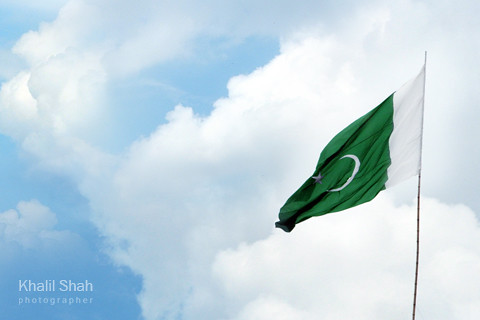

Pakistan has signaled interest in reshaping regional cooperation in South Asia by expanding a trilateral initiative with Bangladesh and China into a broader bloc. Deputy Prime Minister and Foreign Minister Ishaq Dar said the emerging cooperation could be widened to include additional countries and regions, arguing that economic and strategic collaboration should not be constrained by long standing rivalries. His remarks have reignited debate about whether South Asia could see an alternative to the largely dormant South Asian Association for Regional Cooperation, commonly known as SAARC.
The proposal follows trilateral talks held earlier this year between China, Pakistan, and Bangladesh, where diplomats discussed regional stability, development, and improving living standards. Pakistani officials have emphasized that the initiative is not aimed at any third country, though the context is difficult to ignore. SAARC has been effectively stalled for nearly a decade due to persistent tensions between India and Pakistan, with its last summit held in 2014. Analysts say Pakistan’s suggestion reflects frustration with SAARC’s paralysis and a desire to explore flexible, issue based partnerships instead.
Regional dynamics have added urgency to the discussion. Relations between India and Pakistan remain strained following renewed military tensions earlier this year. At the same time, ties between Bangladesh and India have deteriorated sharply since the removal of former Bangladeshi Prime Minister Sheikh Hasina, who fled to India and was later convicted in Bangladesh on crimes against humanity charges. These developments have created space for Islamabad and Dhaka to reassess their diplomatic alignments, with China emerging as a common partner.
SAARC, established in 1985, was designed to promote economic growth, social progress, and cultural cooperation across South Asia. Despite representing more than two billion people, the bloc has delivered limited economic integration. Intra regional trade accounts for only about five percent of South Asia’s total commerce, far below levels seen in Southeast Asia. Efforts to improve connectivity, including proposals for regional transport and rail agreements, have repeatedly stalled due to political disagreements, particularly between India and Pakistan.
Experts remain divided on whether Pakistan’s proposal can translate into a viable regional framework. Some analysts argue that smaller, focused groupings could offer practical benefits in areas such as trade, climate resilience, and infrastructure, especially for smaller South Asian states. Countries like Sri Lanka, Nepal, Maldives, and Bhutan may show interest in exploratory cooperation if participation does not carry significant political costs in relations with India.
Others caution that enthusiasm is likely to be limited. India remains the region’s largest economy and a central trading partner for most South Asian nations. Any initiative perceived as excluding or counterbalancing India could face resistance from governments wary of economic or diplomatic fallout. Observers also note that bilateral and trilateral arrangements have increasingly replaced broad regional platforms, as they tend to offer clearer incentives and faster results.
Ultimately, Pakistan’s proposal reflects a broader shift toward flexible regional diplomacy at a time when traditional institutions are struggling. Whether a new South Asian grouping without India can gain traction will depend on its ability to deliver tangible economic value while navigating the region’s complex geopolitical realities. For now, analysts suggest the idea is more aspirational than operational, but it underscores growing momentum to rethink how South Asia cooperates in an increasingly polarized regional environment.

Comments are closed.