
90% of Aravalli Region Remains Protected, Centre Rejects Claims of Dilution: Bhupendra Yadav

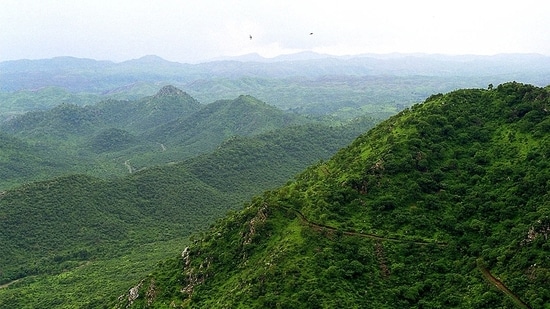
Union Environment, Forest and Climate Change Minister Bhupendra Yadav on Sunday firmly rejected allegations that the Centre has weakened protections for the Aravalli hills, clarifying that nearly 90% of the Aravalli landscape continues to remain under protected zones.
Addressing concerns raised by environmental activists and opposition parties, the minister stated that no relaxations have been granted and that misinformation was being widely circulated, particularly on digital platforms.
Clarification on the 100-Metre Definition
Yadav explained that confusion had arisen around the interpretation of the “100-metre” definition used to identify Aravalli hill formations.
“Some people wrongly assume this refers to the top 100 metres of a hill. In reality, it refers to the entire spread of the hill—from top to base. Even gaps between hill ranges are considered part of the Aravalli system,” he said.
With this scientific definition in place, Yadav reiterated that around 90% of the Aravalli area qualifies as protected land, spanning Delhi, Haryana, Rajasthan, and Gujarat. A related legal petition has remained under judicial consideration since 1985.
Mining Remains Strictly Regulated
The minister underlined that mining activities remain tightly controlled, especially in ecologically sensitive zones.
The total Aravalli area is approximately 1.47 lakh sq km
Only 217 sq km (about 2%) is eligible for mining
Any mining activity requires:
Mining is completely prohibited in the Delhi Aravalli region
Green Aravalli Initiative Continues
Yadav highlighted the government’s commitment through the Green Aravalli Programme, which has been underway for the past two years to restore forest cover, protect biodiversity, and strengthen climate resilience in the region.
“We are deeply committed to conserving the Aravalli ecosystem. A misleading narrative is being created that does not reflect the facts,” he added.
Political and Environmental Reactions
Opposition parties, including the Congress and Samajwadi Party, have criticised the Supreme Court ruling linked to the new definition, warning of ecological risks.
Samajwadi Party chief Akhilesh Yadav described the Aravallis as a natural shield for Delhi-NCR, linking their protection to air quality, biodiversity, and public health.
Environmental activists have also staged protests in regions such as Gurugram and Udaipur, expressing concerns that the revised definition could disrupt ecological balance in one of the world’s oldest mountain ranges—estimated to be over 3.2 billion years old.
Despite the criticism, the Centre maintains that the legal framework, scientific definitions, and conservation measures remain robust and unchanged.

Comments are closed.