

For centuries, one of humanity’s most debated questions has been the existence of God: Is there a divine being, or is it simply a concept created by humans to cope with life’s hardships?
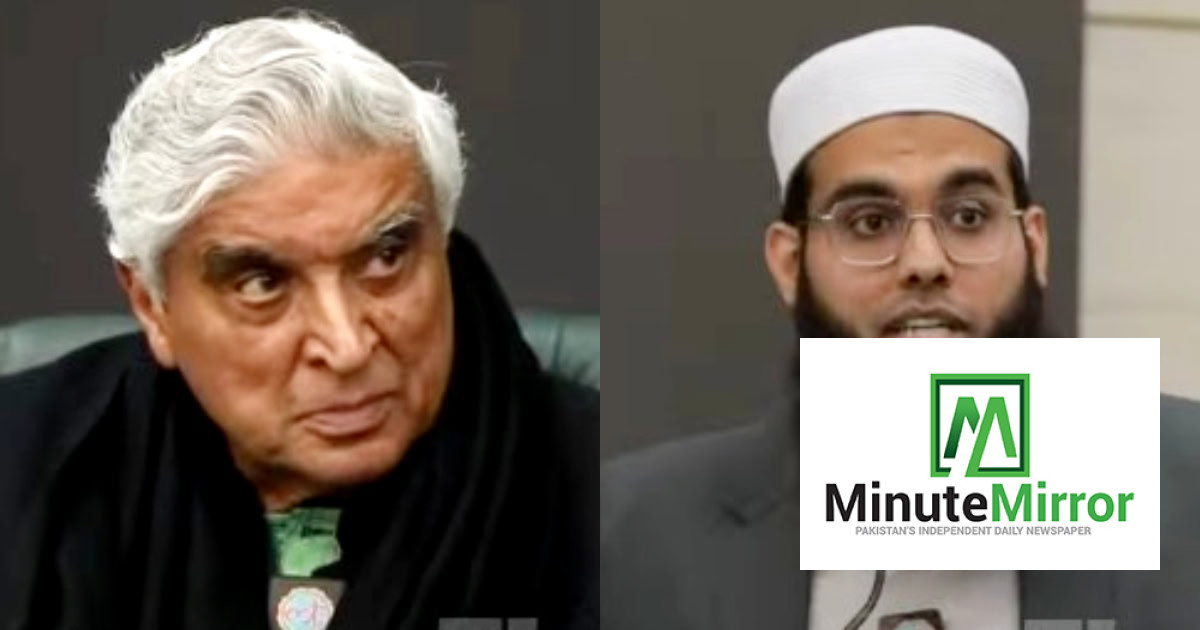
On Saturday, this age-old question was the subject of a public debate held in New Delhi, India, titled “Does God Exist?”. The debate featured renowned Bollywood lyricist and writer Javed Akhtar and Indian religious scholar Mufti Shamail Nadwi, founder of the Wahy-e-In Foundation.
Javed Akhtar, widely regarded as one of India’s leading intellectuals, has repeatedly expressed his disbelief in God and religion on various platforms. The debate was moderated by Indian journalist Saurabh Dwivedi from The Lallantop.
The discussion was originally scheduled after a controversy earlier this year when some hardline Muslim groups protested Akhtar’s participation in a seminar at the Urdu Academy in West Bengal, causing the academy to postpone its four-day literary program. Mufti Shamail Nadwi’s organization was among the groups opposing Akhtar. However, Mufti Shamail clarified that his foundation had welcomed Akhtar to Kolkata and invited him to the debate, and had not pressured the academy to cancel the event.
During the debate, Akhtar raised the issue of the deaths of thousands of children in Gaza, questioning how an all-powerful God could allow such suffering. He said, “You are omnipotent, present everywhere, yet you see children being torn apart in Gaza. And you want me to worship you? If you exist, then why intervene?” He further added that the world is filled with injustice, cruelty, and oppression, questioning why prayers are answered selectively.
Mufti Shamail responded by emphasizing that the majority of people believe in God, asking Akhtar if a majority can determine moral and ethical truths. When Akhtar cited the absence of dinosaurs in religious texts as a point of criticism, Mufti Shamail countered that educational textbooks also do not include everything, and that this does not negate the larger purpose of faith.
Social media quickly reacted to the debate. Some criticized Akhtar for his arguments, calling them oversimplified or resembling a school-level atheist’s perspective, while others supported him, arguing that his questions highlighted real issues of suffering and injustice.
In a post-debate statement, Mufti Shamail Nadwi called the discussion a “milestone”, praising the civil and educational tone of the debate. He added that people with differing views should engage in dialogue over coffee rather than conflicts, and allow the public to decide for themselves.
We welcome your contributions! Submit your blogs, opinion pieces, press releases, news story pitches, and news features to opinion@minutemirror.com.pk and minutemirrormail@gmail.com

Comments are closed.