
‘Unusual’ activism from UN to America, whose agenda in Bangladesh murder case? Questions raised on anti-India stance

student leader in bangladesh Sharif Osman Hadi Condolence messages issued by diplomatic missions of the United Nations, America, European Union, Germany and Western countries like France on his death have created a stir in international politics. Former Foreign Secretary of India and senior diplomat Kanwal Sibal has strongly objected to these ‘unusual’ sentiments and has called it beyond diplomatic standards.
Kanwal Sibal, while posting one after another on the social media platform In such a situation, the activism of Western missions on the murder of a student leader raises many questions.
‘Unusual’ reaction in diplomatic circles
Kanwal Sibal wrote that the murder of Osman Hadi. Diplomatically, it is unusual that the missions of the US, EU, Germany and France in Bangladesh are giving so much political importance to the murder of a student leader who does not seem to have any obvious significance in the bilateral or international context. He says that this reaction does not match the normal diplomatic behavior and the possibility of some special agenda behind it cannot be ruled out.
Anti-India stance and mention of ‘Inquilab Manch’
The former diplomat also underlined the anti-India stance of Sharif Usman Hadi. According to Sibal, Hadi and his organization ‘Inquilab Manch’ have been continuously making statements against India and have even been making claims on the northeastern regions of India. He wrote that “He had deep hostility towards India and was claiming the north-eastern region of India. In such a situation, a special message is being given to India in the regional context.”
Special question on America’s post
Sibal particularly questioned the American response, saying that it reflected the “interest” of Western countries in anti-India groups. Citing the statement made by Hadi’s organization after his death, he wrote that Allah has accepted the great revolutionary Usman Hadi as a martyr in the struggle against Indian domination. According to Sibal, “Looking at this post, it seems that America had a vested interest in this openly anti-India group.”
Mourning over pro-Sharia organization, Western double standards?
The former Foreign Secretary also raised the question of whether mourning an individual associated with an organization that calls for the implementation of Sharia law is compatible with Western claims of democracy and minority rights. He wrote that mourning a person whose organization talks about implementing Sharia in Bangladesh is completely contrary to the claims of democracy and minority rights in Bangladesh.
Sibal further alleged that Hadi’s supporters burnt buildings associated with Bangladesh’s founder Sheikh Mujibur Rahman and tried to negate the country’s freedom struggle. ‘Do Western embassies approve of all this? Is this not another example of the double standards and hypocrisy of the West?” He raised the question.
Community note on UN post, serious allegations
The community note added by In this, Sharif Osman Hadi was described as a “radical Islamist” and his supporters were accused of being involved in violence against minorities. The note said that his followers were lynching civilians and burning them alive. The community note questioned why the United Nations is focusing on such “terrorists” while it remains silent on attacks on civilians.
How did the murder happen?
Sharif Usman Hadi was shot in the head by masked assailants while campaigning in Dhaka’s Bijainagar area on December 12. Later he was taken to Singapore for treatment, where he died. Hadi was a key face of the student movements last year that ousted Sheikh Hasina-led Awami League government from power. He was also a candidate in the general elections scheduled for 12 February.
Violence after death, India also on target
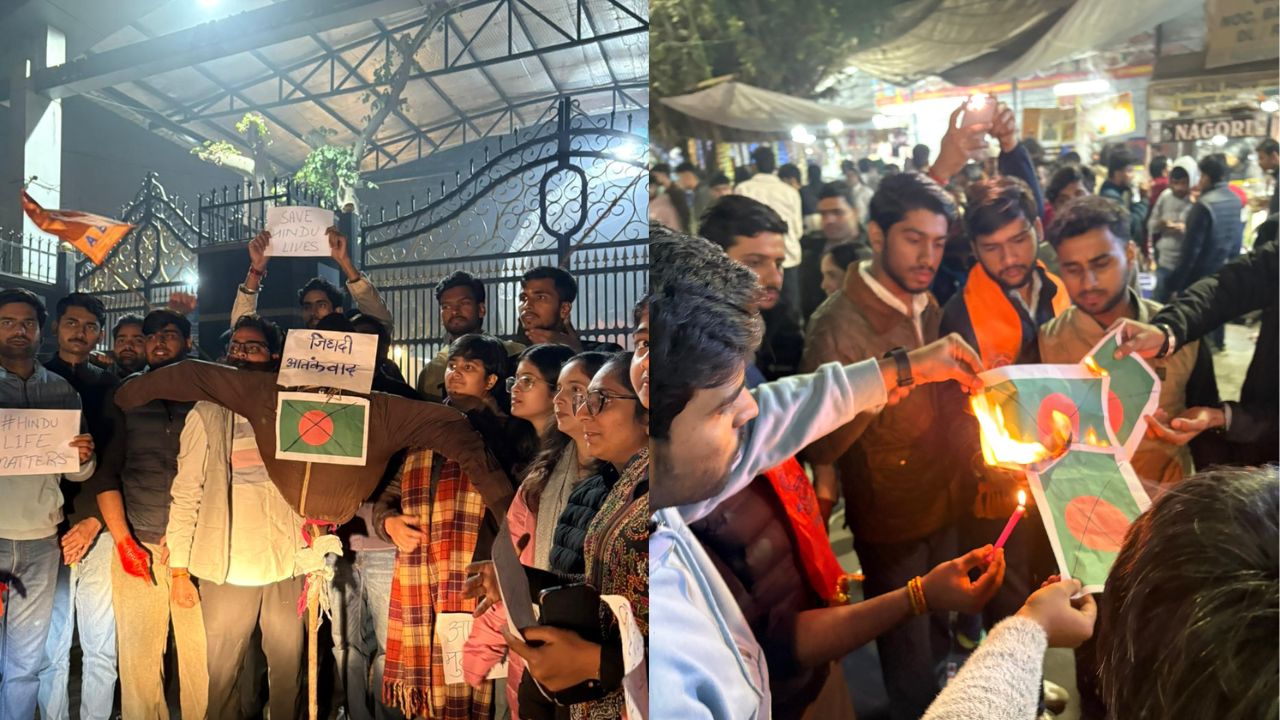
After Hadi’s death, incidents of violence and vandalism were reported in many parts of Bangladesh. Stones were pelted at the residence of the Indian Assistant High Commissioner in Chittagong. In Mymensingh city, 25-year-old Hindu youth Dipu Chandra Das was lynched and his body was burnt on charges of alleged blasphemy.
Question resonating in international politics
This entire incident has sparked a new debate regarding the policies of western countries, internal politics of Bangladesh and India-Bangladesh relations. Kanwal Sibal’s questions have made the issue more acute whether this is human sympathy or a strategic message given in regional politics.

Comments are closed.