


Early this December, Natalie, 29, flew from Singapore to HCMC as soon as she got word of the latest Vietnamese fashion drops. In just one day she spent over US$1,000 on a wardrobe update.
On her previous visits to Vietnam, her main goal was to explore the local scenery and cuisine, but this time set a new mission upon discovering the “Vietnam haul” trend, an online sensation in which international visitors show off their affordable but high-quality buys in Vietnam. “I’ve travelled to Vietnam several times this year, and each time I spent at least $1,000 on clothes”, she says.
While initially joining the trend for fun, Natalie admits she was “shocked” to see in person how cheap Vietnamese clothing was, given its impressive quality. Her purchases in HCMC cost around $10–50 per item, all designed in a trendy streetwear style and made from comfortable materials.
The recent promotion of Vietnamese fashion by many international celebrities only heightened her infatuation with it. Natalie says 80% of her wardrobe is made up of Vietnamese brands.
Natalie, 29, spent more than US$1,000 on fashion purchases while visiting Vietnam in 2025. Video from @Nataliechiie/TikTok
Krizia Sigua, 24, expresses awe for the diversity in Vietnamese fashion garments. The Filipina has splurged on corset dresses and silk gowns, each costing up to $80. “I even scoured stores tucked away in small alleys for rare finds”, she says.
For her, affordability is the biggest selling point of Vietnamese apparel. She says a tailored corset could cost $100–135 in the Philippines, but an item of similar quality can be found in Vietnam at half the price. “The price point here is shockingly low given the product quality.”
Natalie and Krizia are not the only people under the “Vietnam Haul” influence. Over the last month, thousands of social media users globally have posted with the hashtags #vietnamshoppinghaul #vietnamhaul #vietnameselocalbrands, attracting millions of views online and turning Vietnamese fashion into the latest must-try local specialty.
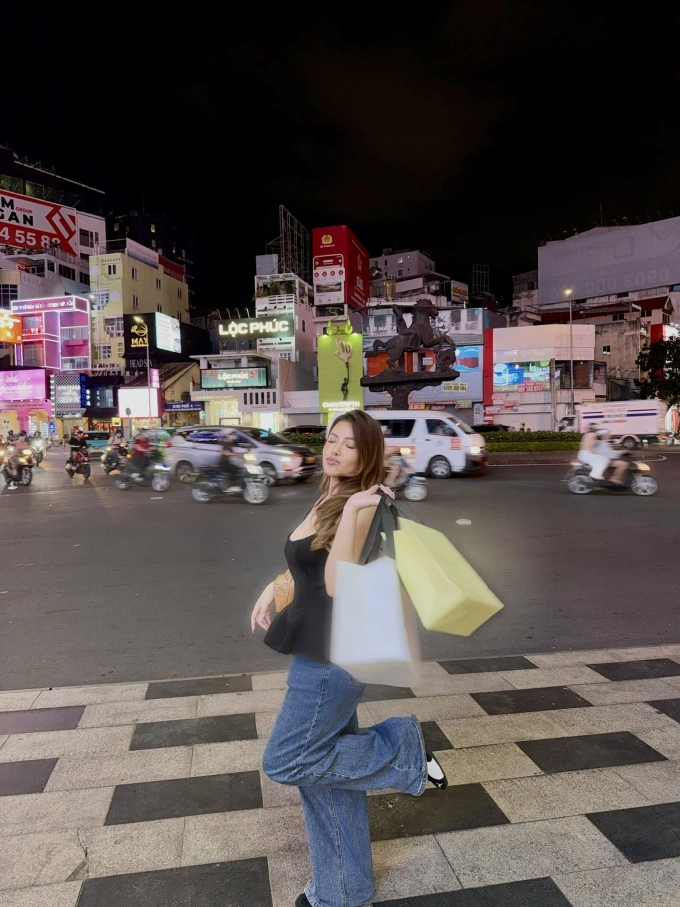 |
Krizia Sigua, 24, gives in to the “Vietnam Haul” trend in HCMC, 2025. Photo courtesy of Krizia Sigua |
According to Le Bach Tung, founder of fashion brand Bunny Hill, the number of foreign customers has tripled from a year ago. The majority of the new clientele are from Singapore, Thailand, Malaysia, and the Philippines.
With the recent boom in revenue from this demographic, Bunny Hill is considering starting consignment stores to enter the global market in a sustainable manner.
Nguyen Nhat Hoang of Degrey shares a similar observation: the fashion brand’s foreign demographic has increased by 35–40% and expanded to include Korean and Japanese shoppers aged 18–30.
He says foreign customers are becoming increasingly interested in brands with unique identities instead of simply seeking cheap, mass-produced items as they did in the past. “The ‘Vietnam Haul’ phenomenon is having a positive impact on the entire Vietnamese textile and apparel industry.”
However, as demand increases, the biggest challenge for local brands is not selling but maintaining quality. Hoang notes that it is of utmost importance for brands to ensure that production standards (e.g. for materials and seams) are not at all compromised throughout the manufacturing process, especially for high-volume orders.
Another top priority, he says, is fine tuning international client services. To Dr Tran Van Quyen, an international wool consultant, the trend proves that local brands have made outstanding progress in design and commercial skills.
Compared to mid-sized fashion businesses in Korea or Italy, Vietnamese brands have a major competitive advantage in price, and the youthful design teams behind them are seasoned with experience in established fashion capitals and quick to catch global trends, he says.
“International clients have expressed great satisfaction with the in-store service provided by Vietnamese brands, crediting their positive experience and willingness to buy to [the staff’s] impressive communication skills and friendliness.”
This surge in worldwide interest resonates well with the rapid growth of the Vietnamese textile industry. Textile exports are expected to reach $46 billion this year to rank second globally. The domestic fashion retail market is also vibrant with an estimated size of $3.5 billion, according to FiinGroup.

Krizi Sigua, 24, reviews fashion items from Vietnamese brands. Video Credit: @Caliwbu/TikTok
Nguyen Tien Dat, vice president of the Hanoi Tourism Association, highlights the role of social media in these impressive growths. Trends like “Vietnam is calling” and influencers’ advocacy for Vietnamese brands have enhanced demand and contributed greatly to the 20 million international tourists coming to Vietnam between January and November 2025.
But this fascination with Vietnam has gone beyond clothing.
Mocica, a 22-year-old American tourist, says she is captivated by photos of Vietnamese scenery and cuisine.
“I have already bought an aodai and taken lots of pictures as mementos for my time here in Vietnam. I’m hoping I can make this country my home one day.”

A foreign tourist sharing her Vietnamese fashion haul. Video from Naploes/TikTok

Comments are closed.