

The 38-year-old now has a fortune of $16.2 billion, down 41% from August when he was even richer than Jack Ma, co-founder of e-commerce giant Alibaba, according to U.S. magazine Forbes.
Shares of Hong Kong-listed Pop Mart have plunged 40% to around HKD200 ($25.7) in the period.
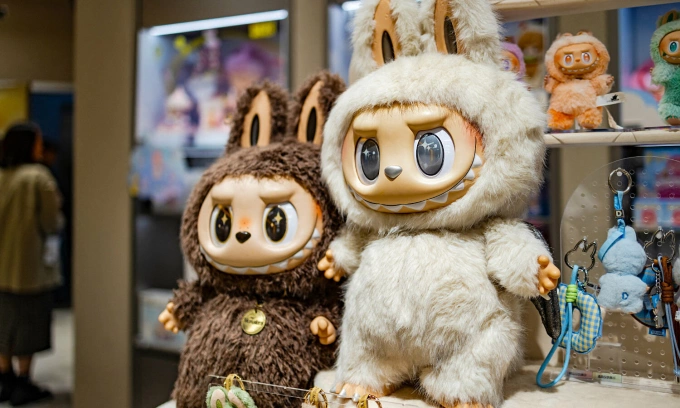
Pop Mart Labubu counter in Yangzhou, Jiangsu, China, on October 30, 2025. Photo by NurPhoto via AFP |
The year ahead could bring significant challenges for Pop Mart, as revenue growth is expected to slow to about 30%, compared with an estimated 200% in 2025, according to Jeff Zhang, a Hong Kong-based equity analyst at Morningstar.
While a high base effect from this year is a factor, Zhang also points to weakening demand in Greater China and slower growth overseas as Labubu prices decline in secondary markets.
On China’s resale platform Dewu, transaction prices for the latest Labubu 4.0 series have dropped about 30% to roughly CNY115 ($16.3) apiece since their release in late August.
The figures indicate a slowdown, a contrast to earlier forecasts by Pop Mart executives. Wang has predicted that Pop Mart could “easily” reach CNY30 billion in sales in 2025 after revenue tripled year on year to CNY13.9 billion in the first half.
One reason to expect slower growth is Pop Mart’s strategy, said Mark Tanner, Shanghai-based managing director of market research firm China Skinny.
The company has been increasing supply as it seeks to become a Disney-like entertainment brand, rather than relying on scarcity-driven marketing, he says.
Labubu dolls – collected by celebrities including Rihanna, Kim Kardashian and Lisa from K-pop group Blackpink – once caused long queues at stores worldwide, with some shoppers even fighting to secure limited releases.
“I get the impression Pop Mart is intentionally becoming increasingly accessible to build scale,” Tanner said.
The company now manufactures 50 million dolls a month, up from 10 million earlier in the year, according to a Deutsche research note published earlier this month.
The note also pointed to signs of “fashion fatigue,” as consumers are no longer rushing to buy the more readily available Labubus.
“This is evidenced by decreasing foot traffic and a lack of queues in most overseas stores, except for new openings or select cities.”
Morningstar’s Zhang says a long-rumored film collaboration with Sony would be “a natural move to expand Labubu’s global influence.”
He added that Pop Mart will likely refer to the playbook of legacy peers such as Disney and Sanrio to diversify into other sectors, including entertainment and media related products.

Comments are closed.