
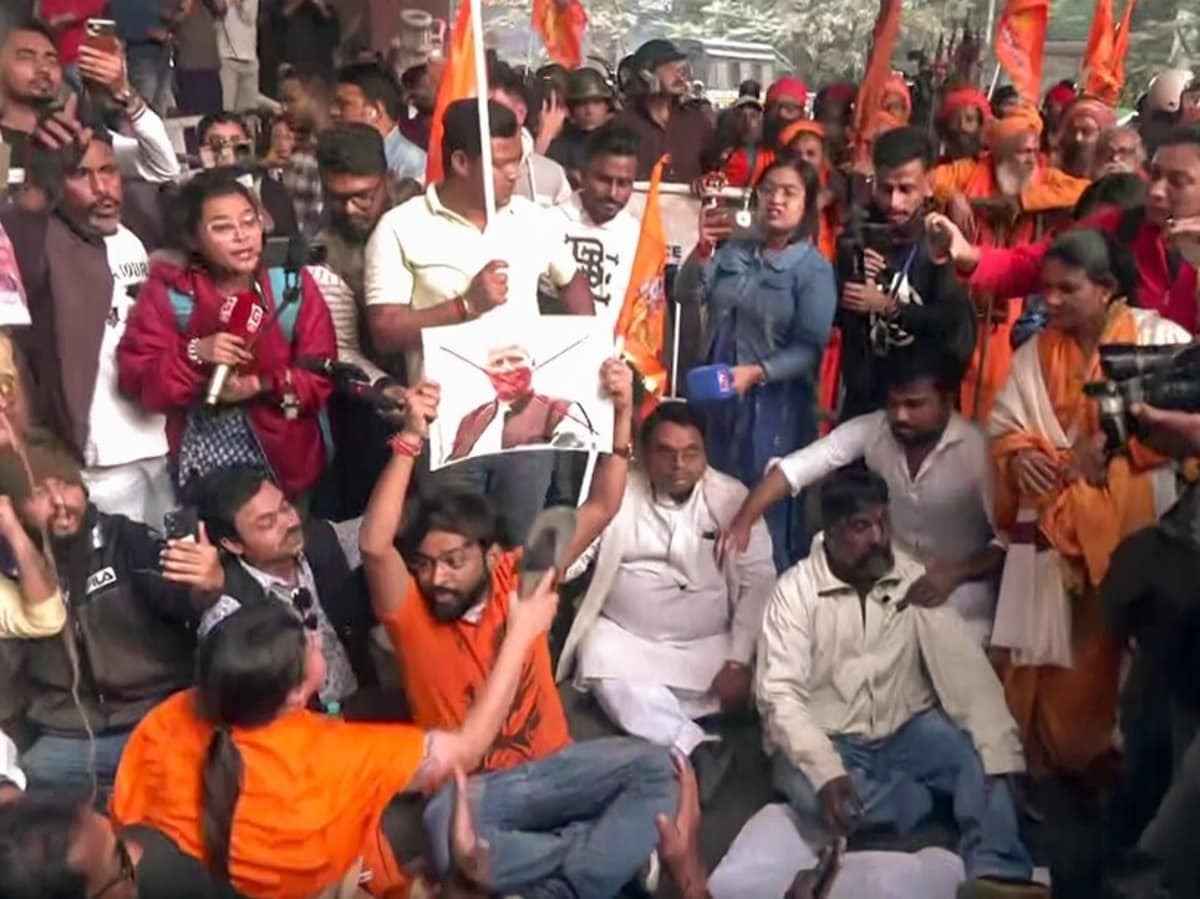
Kolkata boiled over the situation in Bangladesh: Thousands of people took to the streets, asked sharp questions to the government

News India Live, Digital Desk: It is said that if there is a fire in the neighbor’s house, then its heat reaches one’s own house. Today a similar scene is being seen on the streets of Kolkata. The way minorities are being attacked in Bangladesh, ISKCON temples are being targeted and people like Dipu Das are being killed, has broken the patience of the people of West Bengal. Why is the ‘City of Joy’ angry? Kolkata, always known for its sweetness and culture, is angry today. Thousands of people have come out on the streets against the ongoing violence in Bangladesh. Be it children, old people or young people, there is only one thing on everyone’s lips that the atrocities being committed on our brothers and sisters in Bangladesh should be stopped. People say that they cannot watch the show silently. Crowds of protesters blocked many main roads, bringing the city’s pace to a halt. Placards in hands and slogans on tongues, the atmosphere is so hot that even the police started sweating. It is not just a protest, it is a relationship of pain. There is only a border line between West Bengal and Bangladesh, but culture, language and heart strings are connected to each other. When a temple is attacked there (Bangladesh) or someone is killed because of his religion, its hurt is felt here. The protesters say that the Indian government should now move beyond “strong condemnation” and take some concrete steps. The crowd gathered in support of ISKCON. There is a lot of anger among the people, especially the people associated with ISKCON and the arrest of Chinmoy Krishna Das. People are demanding that the Indian government put diplomatic pressure on Dhaka and ensure that the Hindus living there remain safe. Many organizations have even warned that if the attacks do not stop, this movement will become more violent. These demonstrations in Kolkata have reached Delhi to put pressure on the Indian government. This has now become a matter not only of foreign policy but also of domestic sentiments. Now everyone’s eyes are on how the Indian government calms this public anger and what message it gives to Bangladesh.

Comments are closed.