
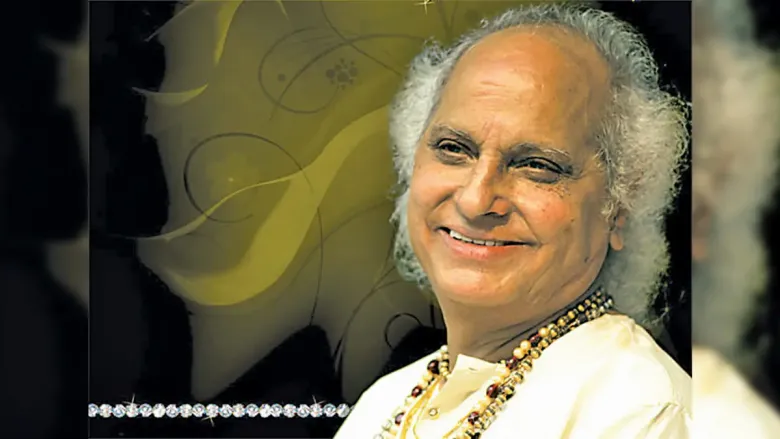

Osho Philosophy: It was in 1965 that I had heard that Osho speaks openly on every aspect of life. I also got curious and slowly started listening to his tapes. What touched me the most was his ‘clarity’. You are instantly impressed by that clarity. Their magic falls upon you. And there is no pressure from their side whether you agree with them or not. Many people find Osho’s words controversial. These things seem controversial because we have learned something else since childhood, read something else in books and hear something else from Osho. Controversy creates panic and people start wondering what is right and what is wrong. Whatever Kabir has said, Osho keeps saying it, it will have no effect. If Osho proves Kabir wrong then we will be forced to think. Everyone can make two and two four, but if you say that two and two can also be five, then you have created a controversy but have also shaken people up. That’s why I don’t consider controversy bad. From that a new discovery is born.
When you listen to Osho for the first time, you are shaken to your core. Osho lays everything out in front of us like two and two are four. It gives us such inner clarity that we can see things in our own light. This is Osho’s biggest contribution that he does not give us any ready-made theory, he awakens the clarity within us. Osho chose in his words and subjects whatever would create controversy. But silently within, he kept giving the same message which would create ‘Satyam Shivam Sundaram’. Not only did he awaken beauty within individuals, he also gave the alchemy to make the world around them beautiful. I consider this to be the real religion. For example, I call the ‘drain and park’ built behind the Osho Commune a religious act. What was a dirty drain has been turned into such a beautiful garden. That garden is such that looking at it it seems that every plant, every stone there is in harmony. Therefore, overall its effect is as if a melodious ghazal has been sung. How would religion be different from this? Osho did the same thing with humans also that every person should be in harmony. Osho sows such seeds of harmony on the ground of our inane taunts that only songs keep sprouting in life.
I am a Pandit (by name) and I am not. Because I have no knowledge of the scriptures and I don’t have much attachment to words. Yes, I am definitely familiar with the mood, I am familiar with the heart and love – and through these I have come to know Osho and his family. I have understood the entire personality of Osho only through music. Like music, they too had ascents and descents, they embellished all the notes, and dispersed the vast oceans of void. I always aspired to see Osho, but I did not have the privilege of meeting him physically. After understanding Osho, we start to feel that we had just arranged our meeting, had prepared our ears to listen, when you became silent. But no, perhaps it is not right to say this. Because then the proclamation of Ishavasya is – to become complete from the complete, and to remain complete after taking the completeness of the complete. In that sense, what does it matter whether I meet him on the physical level or not? What even matters to anyone else? For me, any statement of Osho has a special significance. Because his biggest characteristic is that there is attention associated with his every statement. There is no attempt to explain anything, there is a tireless effort to get something done. Something that can make every person’s life ‘Utsav Amar Jaati, Anand Amar Gotra’. I have been to Osho Commune many times.
I got a glimpse of Osho in his garden, with his friends in the commune, in the silence of his mausoleum. In the commune, it felt as if it was morning and the sounds of Gujri Todi were hovering around, and in the evening, the trees of the garden were swaying to the sounds of Marwa. An empty music would surround me all the time and a strange silence would deepen within. When I sing there, I too become vocal through silence, remain in silence and dissolve in silence. And then only silence remains completely. Does this silence bear any resemblance to the completeness of Ishavasya or is it just a coincidence that I, an illiterate man, am writing the introduction of Ishavasya today? Whatever may be the truth, I am still experiencing a vibrant silence, a void within me. They are the spring of life. Her sweetness is felt everywhere.

Comments are closed.