
Time For New Delhi To Choke Bangladesh? As Dhaka Requests Rice Import, Indian Traders Seek Ban On Export | India News

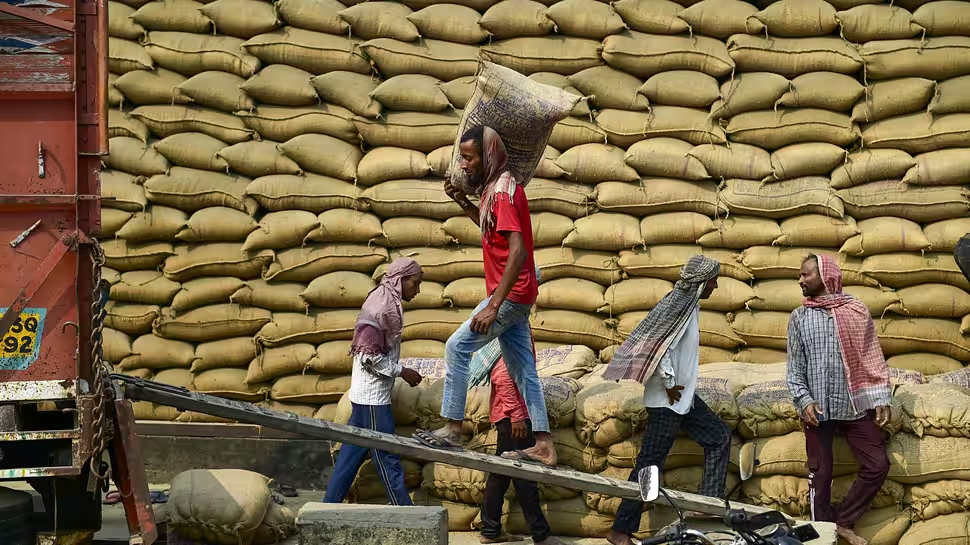
Bangladesh is not only struggling to establish peace ahead of its general elections, but it has also failed in establishing law and order while fomenting an anti-India narrative in the country. Amid all the hate that Bangladeshi leader militants are spewing against India, Dhaka has sought 55,000 tonnes of rice to have enough stock.
Bangladesh may be engaged in a diplomatic standoff with India, but worsening ground realities have forced it to reconsider its stance. The interim government led by Mohammad Yunus has realized that ignoring the supply of affordable essentials from India could further destabilize the country’s already fragile economy. The government’s treasury does not have enough funds to rely on expensive rice imports from Pakistan, leaving Dhaka with little choice but to turn back to India.
In reality, Bangladesh’s dependence on India goes beyond rice alone. It has long relied on India for at least five essential food and consumer items, and in times of crisis, Dhaka has repeatedly sought supplies from across the border.
Add Zee News as a Preferred Source
According to Bangladeshi daily The Daily Star, the government has decided to import 50,000 tonnes of rice from India at a price of around $355 per tonne. This compares favorably with Pakistan’s offer, which reportedly quoted $395 per tonne for the same quantity. Bangladeshi officials have acknowledged that sourcing rice at such competitive rates is not possible even from Vietnam.
Looking ahead, Bangladesh plans to import at least 9,00,000 tonnes of rice during the 2025–26 period in batches of 50,000 tonnes. The objective is to build strategic reserves and keep domestic prices under control.
Meanwhile, a section of Indian rice exporters has urged the government to halt rice shipments to Bangladesh in light of recent attacks on Indian interests there. Their concerns intensified after the Assistant High Commissioner’s office in Chattogram was targeted last week.
Exporters argue that the deteriorating situation has put Indian consignments at risk. They also point out that Bangladesh had earlier banned the export of raw jute, a move that forced several Indian jute mills to scale down operations.
Angered by the recent developments, these exporters question whether New Delhi should continue supplying rice when Indian citizens and institutions are allegedly being targeted in Bangladesh.
Experts feel that the government must take up the anti-India rhetoric issue with Dhaka and make it clear that friendship cannot come at a cost of compromise of sovereignty and the Yunus government must shut down such non-state actors trying to foment trouble in India.

Comments are closed.