
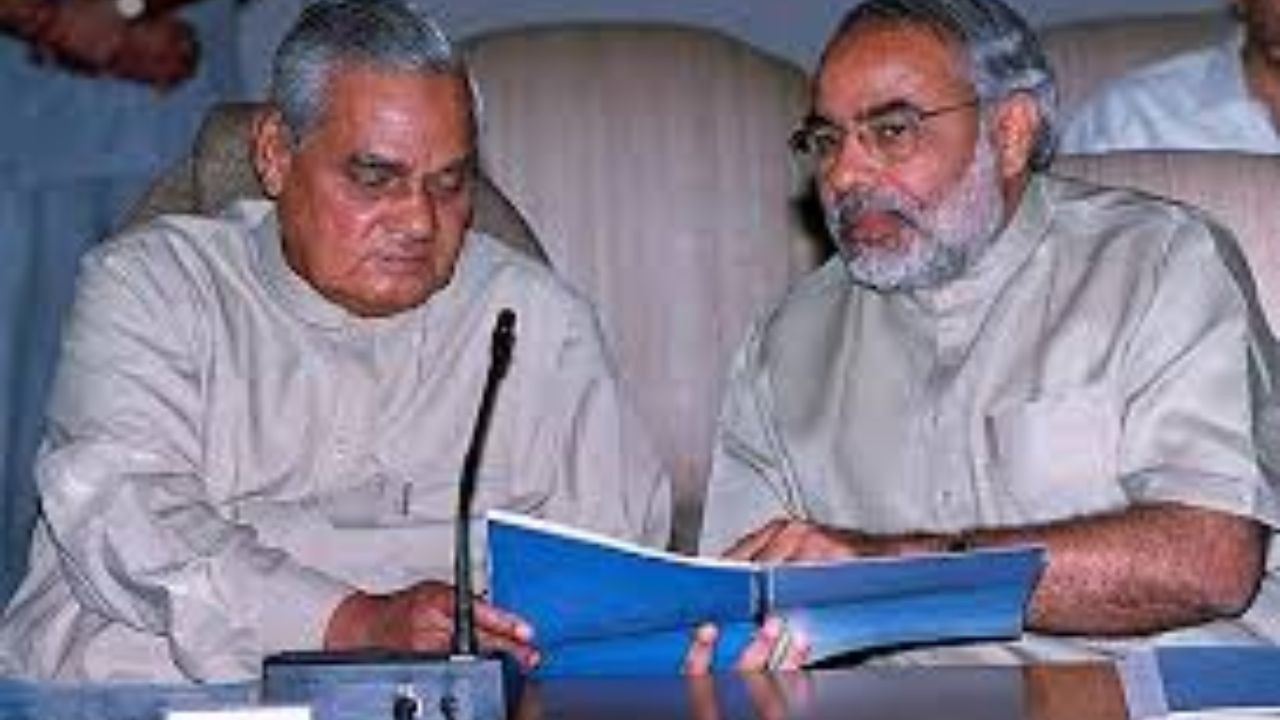

New Delhi: The birth anniversary of former Prime Minister of India Atal Bihari Vajpayee is celebrated every year on 25 December. Vajpayee, born on 25 December 1924, was not only a skilled politician but also a visionary leader, who prepared India for the challenges of the 21st century. He was the first non-Congress Prime Minister of the country, who completed his tenure. Many major reforms initiated under his leadership strengthened the economic, social and infrastructure of modern India.
Sarva Shiksha Abhiyan: Strong foundation of education
Sarva Shiksha Abhiyan, started in the year 2000, was a historic initiative of the Vajpayee government. Its objective was to provide universal primary education to children aged 6 to 14 years. This scheme led to a step towards connecting about 20 crore children with education and reduced the number of children dropping out of school by about 60 percent in four years. Later, this initiative became the foundation of the Right to Education Act.
Tax Reforms: Introduction of Modern Tax System
The Vijay Kelkar Task Force formed in 2002 suggested major changes in India’s tax system. The foundation of expansion of PAN card, improvement in tax administration and digital tax framework was laid in this period. These reforms later paved the way for decisions like GST, e-tax network and abolition of wealth tax.
National Pension System and Interest Rate Reforms
The Vajpayee government launched the National Pension System (NPS) in 2004, which implemented a contributory pension system for government employees. Along with this, economic discipline was strengthened by linking interest rates to government bonds, due to which inflation remained under control.
Revolution in telecom and aviation sector
The new telecom policy of 1999 laid the foundation of mobile and internet revolution in India. Competition increased, call rates decreased and the country moved towards the digital age. At the same time, the way for private participation was opened in the civil aviation sector, due to which airports like Delhi, Mumbai and Bengaluru became world class.
Big decisions in power and energy sector
Electricity generation, transmission and distribution were separated through the Electricity Act 2003, which encouraged private investment. Along with this, the concept of ultra mega power plants came to the fore. For energy security, oil-gas investment in foreign countries and blending of ethanol in petrol also started in this period.
Competition and reforms in the insurance sector
LIC’s monopoly was ended by establishing IRDAI in 2000. With the entry of private companies, competition in the insurance sector increased, services improved and consumers got more choices.
Road network: pace of development
The Vajpayee government’s Golden Quadrilateral Project and Pradhan Mantri Gram Sadak Yojana connected urban and rural India. Better roads gave new impetus to trade, employment and rural economy.
architects of modern india
These reforms carried out under the leadership of Atal Bihari Vajpayee are still the basis of India’s development journey. His policies not only gave immediate results, but also laid the foundation of a strong and self-reliant India for the coming generations.

Comments are closed.