
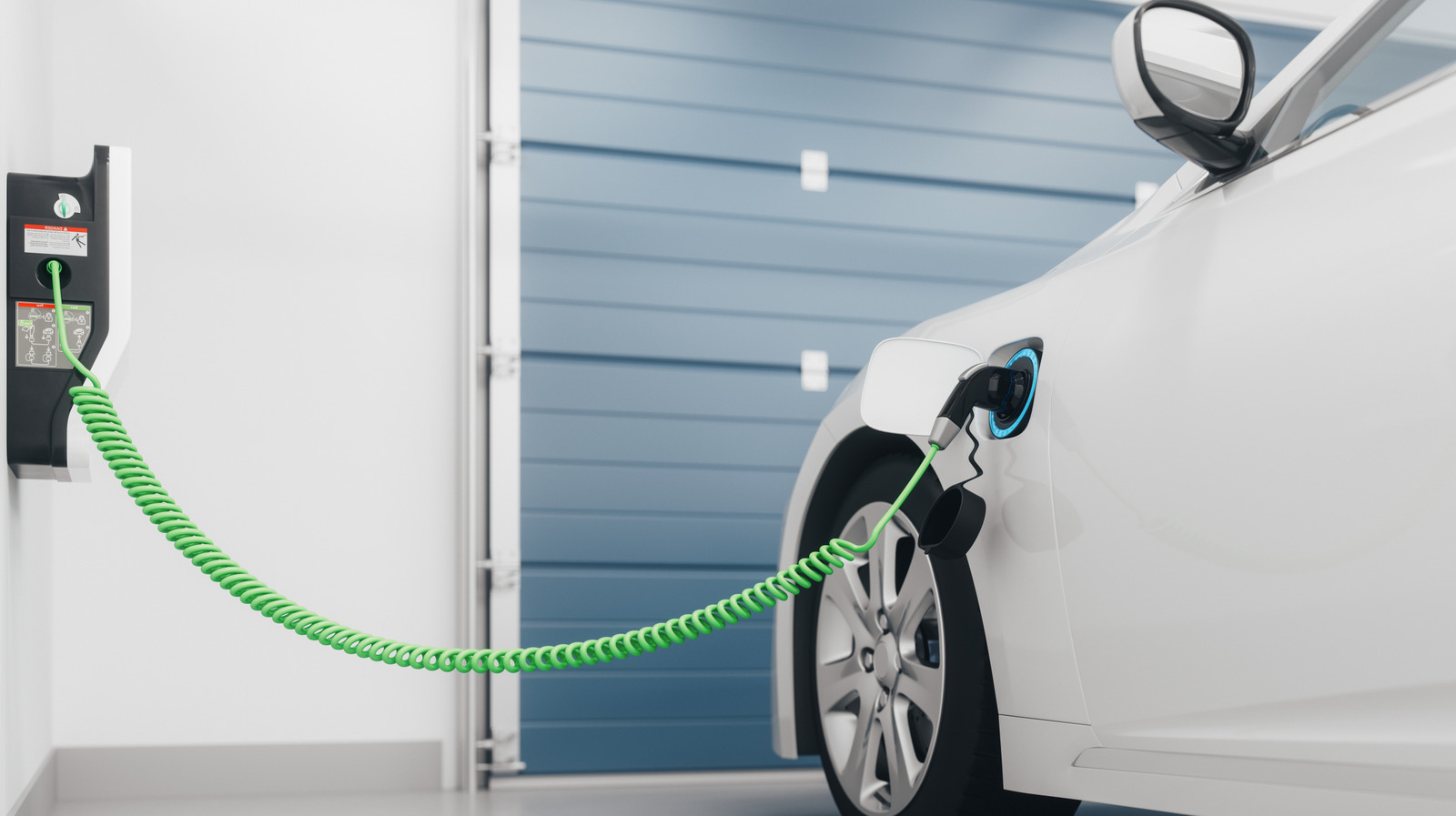

The perks to owning an electric vehicle are numerous and go beyond the obvious reduced fuel expenses and zero emissions. They are quiet and fast, with almost instant acceleration due to instant torque. They often require less maintenance because electric motors have fewer moving parts than the motors in internal combustion engine vehicles, and of course, you have the knowledge that you’re helping to reduce our dependence on fossil fuels and combating climate change. But did you know that you can also use some electric vehicles to power your home?
It’s called vehicle-to-home (V2H) charging, and not every EV offers this feature. It sounds a bit like something out of “The Jetsons” or a Pixar movie, but it’s technology that we’re already living with! EVs have massive batteries that could provide backup power to your home during a storm or simply as less expensive energy during those peak hours when your electric company is charging top dollar. Only electric vehicles with something called bi-directional charging, with both the appropriate hardware and software, are capable of performing this feat, and it’s often an optional add-on. Bi-directional charging is available on Ford’s F-150 Lightning, Kia’s EV9, the Hyundai IONIQ 9, Acura’s 2026 RSX, the 2026 Chevy Bolt, and a handful of others.
Vehicle-to-home charging is exactly what it sounds like: you essentially tap into the energy from your EV’s batteries just like you would a home generator, but without burning any gasoline. A new study by the University of Michigan and Ford Motor Co. found that the process has the potential to save owners thousands of dollars.
The potential of V2H

Most automakers advertise V2H as something you can fall back on in an emergency, powering your home if the lights go out due to a storm or blackout. The University of Michigan studyhowever, focused on how EV owners can both save money and reduce emissions by providing power to homes on a daily basis. Drivers can buy electricity when it’s both cheaper and cleaner, such as during the day when solar power is available, and store it in the car’s battery for use at a later time.
The study found that V2H could save EV owners 40% to 90% of their charging costs over the lifetime of their vehicle, because they’d be saving on their electric bill at other times of the day. V2H can also reduce greenhouse gas emissions from your household’s electric use by up to 250%.
V2H is still a relatively new concept, and Parth Vaishnav, assistant professor at the U-M School for Environment and Sustainability, admits that “the discussion around V2H has been largely about its possibility and benefits in principle.” Many EVs are not capable of bidirectional charging, and the study did not consider the cost of the equipment necessary for V2H. But the possibility of a far-reaching impact is there, turning what is viewed by some as a downside to EV ownership — having to charge the vehicle — into a major plus.

Comments are closed.