
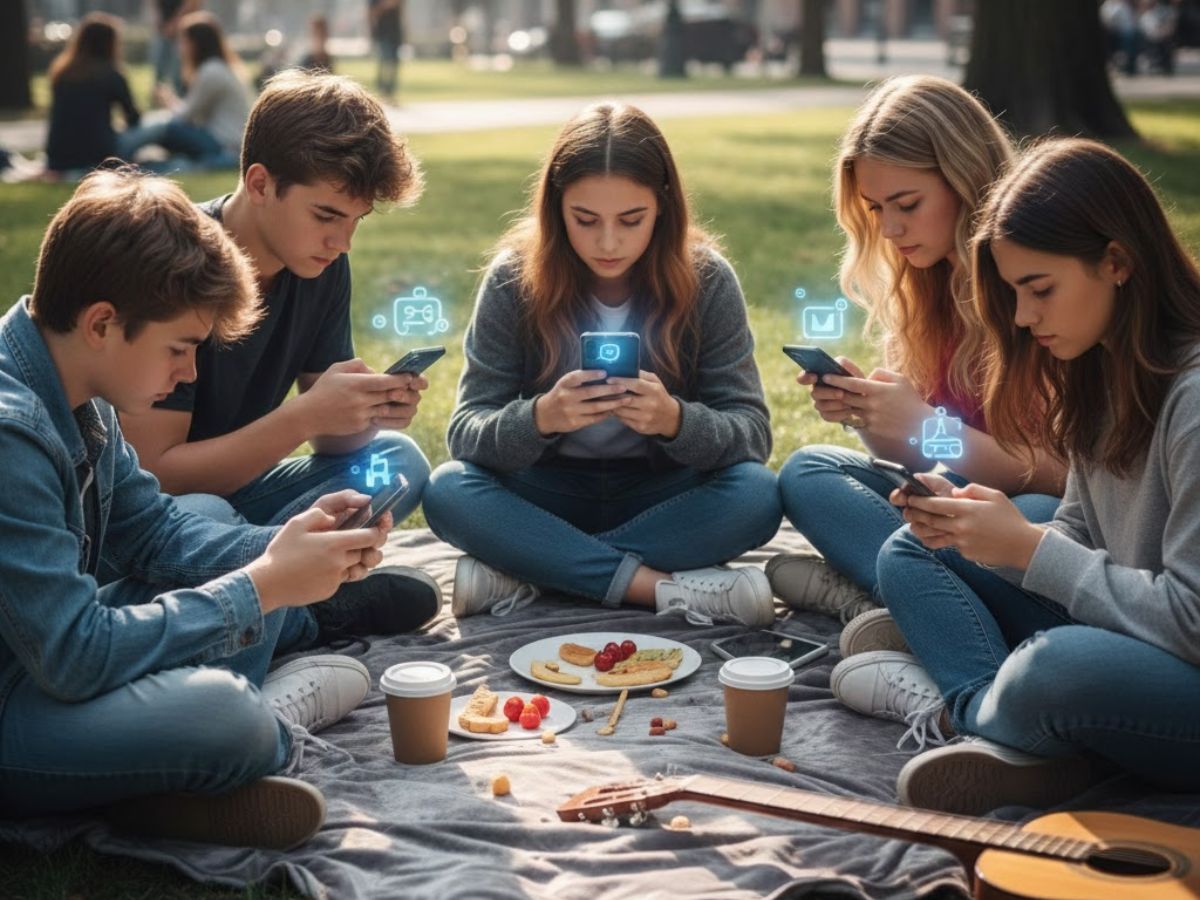

Social Media Ban: In Australia, children under 16 years of age have now been banned from using major social media services like TikTok, X, Facebook, Instagram, YouTube, Snapchat and Threads.
They cannot create new accounts and existing profiles are being deactivated.
This ban is the first of its kind and other countries are keeping a close eye on it.
Why is the Australian government banning social media for people under 16 years of age?
The government says it will “reduce the negative impact of design features of social media that encourage[young people]to spend too much time on screens and expose them to content that may harm their health and well-being”.
A study conducted in early 2025 found that 96% of 10-15 year old children used social media and seven out of 10 of them had been exposed to harmful content. This included misogynistic and violent material, as well as content promoting eating disorders and suicide.
One in seven also reported experiencing grooming behavior from adults or older children, and more than half said they had been the victim of cyberbullying.
Which social media platforms are included in the Australian ban?
Ten platforms are currently included: Facebook, Instagram, Snapchat, Threads, TikTok, X, YouTube, Reddit, and streaming platforms Kik and Twitch.
The government evaluates potential sites based on three main criteria:
- Whether the sole or “significant purpose” of the platform is to enable online social interaction between two or more users.
- Does it allow users to interact with some or all other users?
- Does it allow users to post material?
YouTube Kids, Google Classroom, and WhatsApp are not included because they are not considered to meet these criteria.
People under the age of 16 will still be able to view most content on online platforms that do not require an account.
Critics have demanded the government to extend this ban to online gaming sites like Roblox and Discord, which are not currently included in it.
How will the Australian ban be enforced?
Children and parents will not be punished for violating this ban.
Instead, social media companies could face fines of up to A$49.5m (US$32m, £25m) for serious or repeated breaches of the rules.
The government says companies should take “appropriate steps” to keep children away from their platforms, and use a number of age assurance technologies.
These may include government ID, facial or voice recognition, or so-called “age estimation,” which analyzes online behavior and interactions to estimate a person’s age.
Platforms cannot rely on users to self-certify or parents to vouch for their children.
Meta, which owns Facebook, Instagram and Threads, started blocking the accounts of teenagers on December 4. He said anyone who has been removed by mistake can provide a government ID or video selfie to prove their age.
Snapchat has said that users can use bank account, photo ID or selfie for verification.
Will an Australian social media ban work?
Some fear that age assurance technologies could unfairly block adults, while failing to identify underage users.
The government’s own report found that facial assessment technology is the least reliable for teenagers.
Questions have also been raised regarding the amount of the possible fine.
“It takes about an hour and 52 minutes for Meta to generate A$50 million in revenue,” former Facebook executive Stephen Sheeler told AAP news agency.
Critics also argue that the limited scope of the ban weakens its ability to protect children, even if properly enforced.
Dating websites have been excluded, along with gaming platforms, as well as AI chatbots, which recently made headlines over allegations of inciting children to commit suicide and having “sexual” conversations with minors.
Some people argue that it would be more effective to teach children how to use social media.
Commentators also predict a surge in the use of VPNs – which hide a user’s location, as happened after the introduction of age control rules in the UK.
Communications Minister Annika Wells admitted that the ban may not be “completely fair”.
Communications Minister Anika Wells admitted the ban may not be “completely fair”.
What about data security?
Critics have also raised concerns about the large scale data collection and storage required to verify users’ ages.
In Australia, as in much of the world – there have been several major data breaches in which sensitive personal information was stolen, published or sold.
But the government says the law includes “strong protections” for personal data.
These include the condition that it can be used only for age verification and will have to be destroyed later, and breaking the rules will result in “severe punishment”.
How have social media companies responded?
When the ban was announced in November 2024, social media companies were surprised.
The companies argued that it would be difficult to implement, easy to circumvent, time-consuming for users, and would threaten their privacy.
The post Lockdown on social media for children, how will the new rule work? appeared first on Latest.

Comments are closed.