
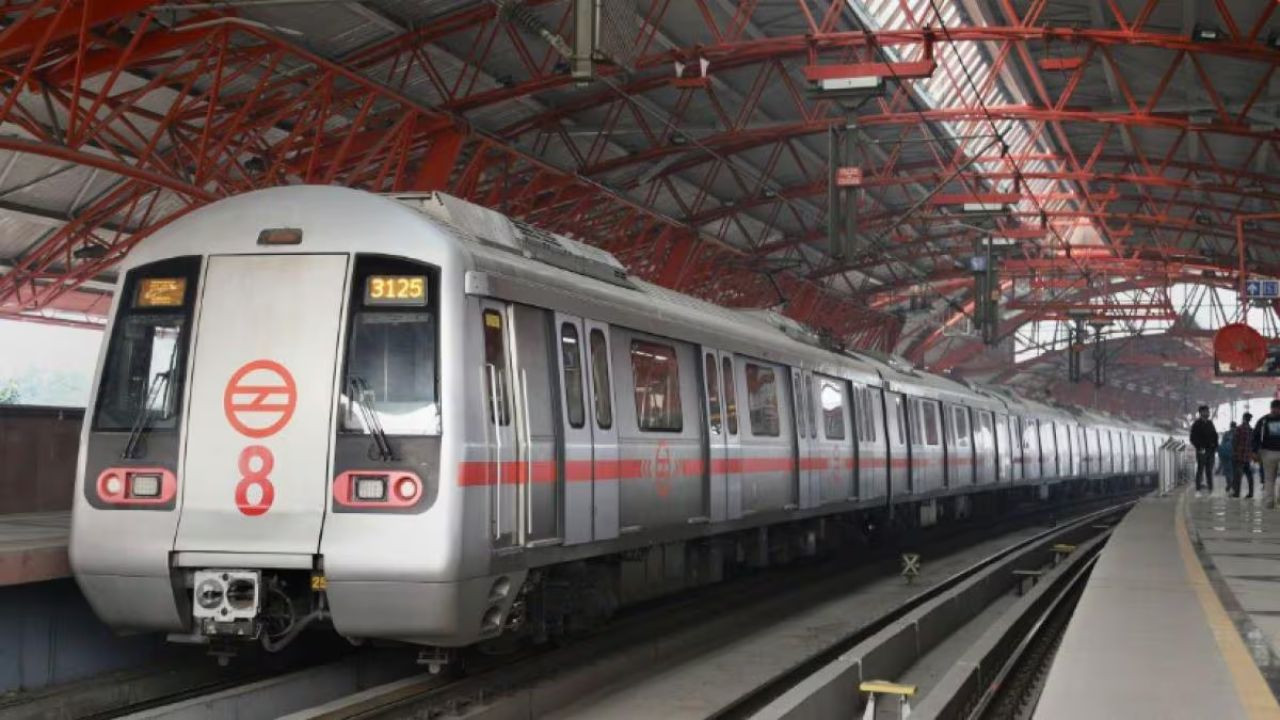
Delhi Metro turns 23: The journey started on 24 December, Atal Bihari Vajpayee became the first passenger.

Delhi Metro completed 23 years of its service on 24 December. This journey, which started in the year 2002, is today counted among the most reliable and modern public transport systems of Delhi-NCR. Starting from the first corridor of just 6 kilometers long, Delhi Metro has today become the lifeline of the capital and the surrounding areas.
When did the first train of Delhi Metro run?
Every day lakhs of passengers travel safely, fast and economically through metro to reach their destination. The first train of Delhi Metro ran on 24 December 2002 between Shahdara and Tis Hazari. On that historic day, former Prime Minister of the country Atal Bihari Vajpayee became the first passenger. In the initial phase, this project was being seen as a big experiment, but with time it not only won the trust of the people, but also made its place among the best metro networks in the world.
Today the Delhi Metro network has spread over 394 kilometers. Apart from Delhi, it also includes NCR cities like Noida, Ghaziabad, Faridabad, Gurugram and Bahadurgarh. With 12 different lines and 289 stations, the Metro has connected the entire region with a robust transport infrastructure, making everyday commuting much easier.
Delhi Metro has not only changed the journey, but has also made an important contribution in reducing the major problems of the city like traffic jams and increasing pollution. Lakhs of people are reducing the number of vehicles on the roads by adopting metro instead of private vehicles. This has not only saved fuel but also reduced carbon emissions, due to which Delhi Metro is also known as ‘Green Metro’.
Continuous improvement in metro facilities
Metro facilities have been continuously improved with time. While in the initial days passengers had to stand in queues at the ticket counter, now there are options like smart cards, mobile apps and digital payments. Work is also being done to make ticketing completely paperless and easier in the future.
Safety and convenience are among the priorities of Delhi Metro. CCTV cameras, ladies coaches, clean stations, lifts and escalators, as well as special arrangements for physically challenged passengers make it suitable for all classes of passengers. Services like Airport Express Line have further strengthened its international identity.
Despite challenges like Corona epidemic, Delhi Metro did not stop the pace of development. Work on new corridors and expansion projects is going on under Phase-4. In this journey of 23 years, Delhi Metro has become not just a means of transport but an important part of the lives of the people of Delhi and will continue to give a new direction to the pace of the city in the coming years.

Comments are closed.