
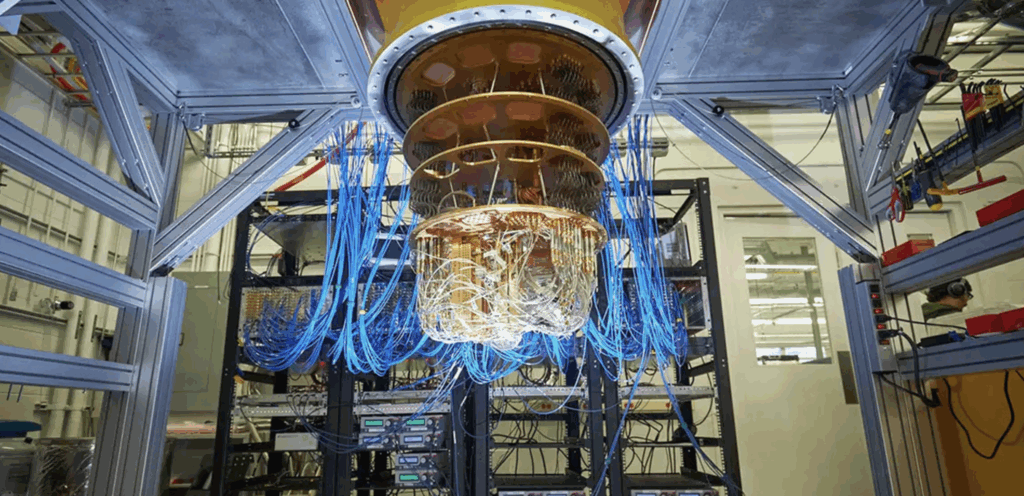

Andhra Pradesh has announced an ambitious goal: to produce quantum computers within the next two yearswith at least 85% of components sourced or manufactured locally. This initiative is part of the state’s vision to become a major hub for cutting-edge technology and semiconductor innovation in India, driving scientific advancement and high-tech manufacturing.
What Quantum Computing Means
Quantum computers use the principles of quantum mechanics to process information far more efficiently than traditional computers. Unlike classical bits, quantum bits (qubits) can represent multiple states simultaneously, enabling the machine to solve certain complex problems much faster. These capabilities make quantum computing especially valuable for areas like cryptography, drug discovery, materials science, financial modelling, optimisation, and artificial intelligence.
Globally, quantum computing is still in its early stages, with only a handful of nations and tech companies leading research and development. Andhra Pradesh’s plan signals India’s intent to play a more prominent role in this advanced field.
The State’s Vision and Targets
The Andhra Pradesh government has set a clear target: design, develop, and manufacture quantum computers locally within two years. Crucially, the state aims to ensure that at least 85% of the components — like processors, control systems, cooling units, and integration hardware — are sourced or fabricated in India.
By focusing on local components, the initiative aligns with broader national priorities of technology self-reliance, reducing dependency on imported critical hardware, and fostering indigenous technological ecosystems.
Why This Matters for India
If successful, the project would mark a significant leap forward for India’s high-tech industry. Quantum computing could empower researchers and businesses to tackle problems that are currently beyond the reach of conventional supercomputers. Some key advantages include:
- Boosting research capability in science and engineering
- Enhancing cybersecurity and encryption techniques
- Accelerating innovation in pharmaceuticals and materials development
- Improving data analytics and machine learning applications
A local quantum ecosystem can also attract investment, talent, and global partnerships, positioning India as a noteworthy player in future technology sectors.
Challenges on the Road Ahead
Building quantum computers is technologically demanding. Challenges include qubit stability, error correction, ultra-low temperature requirements, and specialised manufacturing processes. Achieving high local content will require developing a skilled workforce, semiconductor fabs, specialised packaging facilities, cryogenics expertise, and robust supply chains.
Collaboration between government, academia, and private technology firms will be crucial to overcoming these challenges.
Conclusion
Andhra Pradesh’s vision to produce quantum computers with predominantly local components represents a bold step toward India’s technological self-reliance. If executed successfully, the initiative could accelerate innovation, create high-value jobs, and place India on the global frontier of quantum research and manufacturing within two years.
Image Source

Comments are closed.