
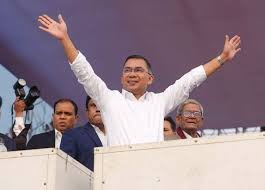
Tariq Rahman’s first big vision after returning home: Will the spirit of 1971 again change the fate of Bangladesh?

News India Live, Digital Desk: When a leader returns to his country’s soil after a long time, he not only has a tide of emotions but also has a solid hope for the future of his country. Acting President of Bangladesh Nationalist Party (BNP) Tariq Rahman has also done something similar after his return. He not only made his stance clear regarding the future direction of the country, but also remembered those historical moments of 1971 which laid the foundation of this country. The connection between 1971 and today. Tariq Rahman mentioned the liberation war of 1971 in a very measured tone. He says that the passion and fight that was for ‘freedom’ at that time, today’s fight is to save ‘democracy and human rights’ in the same way. He termed the current protests by students and the general public as ‘second freedom’ and explained that the country can no longer live under the shadow of a single dictatorial ideology. This emotional connect is actually an attempt to make the common people realize that the time for change has come. What is the vision of the new Bangladesh? Mere memories do not feed the stomach nor run the country, and Tariq Rahman knows this very well. He made it clear that his coming time will not be for licking the cream of power, but for institutional reforms. Some of the main parts of his plan are as follows: Free elections: Creating a transparent system in the country where public votes have real value. Protection of minorities: Establishing an inclusive society by eliminating recurring fears. Economic reforms: Focusing on basic issues like employment and inflation, which are the biggest needs of the country at this time. Not just speeches, talk of hope. Often leaders make big claims from the stage, but this time Tariq Rehman There is a seriousness visible in his words. He said that instead of the old politics of revenge, he wants a new beginning where every Bangladeshi can live with pride. According to him, the Constitution and institutions of the country should be so strong that in the future no single person should ever consider himself above the law. The challenges are not over yet, all the schemes and the provisions of 1971 are in place, but the real test will begin now. With the kind of hustle and bustle there is on the streets of Bangladesh, only the coordination between Tariq Rahman and Mohammad Yunus will decide the future direction. Can a secure and modern Bangladesh really be built on the basis of the sentiments of 1971? This is a question to which the whole of South Asia is searching for answers. In the end, these words of Tariq Rehman are not just being seen as a party’s agenda but a ray of hope for a country struggling with crisis.

Comments are closed.