
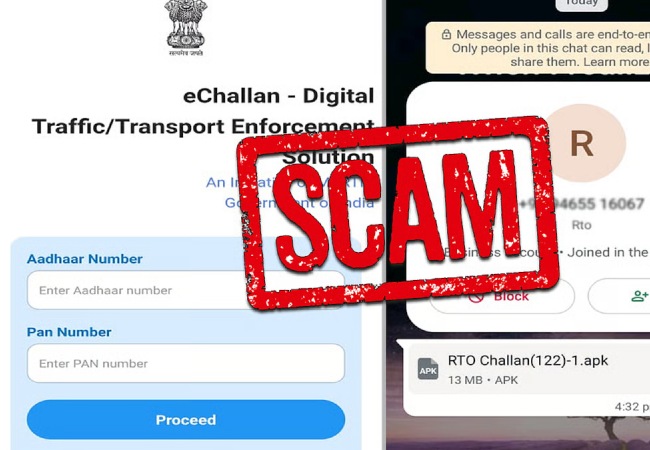
Fake E-Challan: Have you received the message of e-challan on your phone too? Take these precautions before clicking?

New Delhi. There is an alarm bell for vehicle owners in India. According to a new report, cyber criminals are running a big fraud in the name of e-challan. Scammers are using fake websites and phishing links to steal people’s sensitive financial information, especially credit and debit card data. A new report by cyber security firm Cyble Research and Intelligence Labs (CRIL) has revealed that more than 36 such fake websites are currently active which are targeting Indian drivers.
Read :- Veer Bal Diwas: CM Yogi said – History is made only by those who have the spirit of sacrifice and renunciation.
How does this scam work?
This fraud takes advantage of people’s fear and their trust in the government system. Through these websites, an SMS is sent to the victim claiming that their traffic challan is pending. The messages often contain threats of cancellation of driving license or legal action so that the person panics and takes immediate action. The message contains a short link. On clicking it, the user reaches a website which looks exactly like the real Regional Transport Office (RTO) or e-challan portal. As soon as the vehicle number is entered on the website, information about fake violations is shown. Generally the amount of fine is kept small so that people pay it without thinking too much.
Data theft in the name of payment (danger of card cloning)
The biggest identity of this scam is its payment method. UPI and net banking facilities are available on genuine government websites. But these fake portals deliberately offer only credit and debit card payment options. Complete information like card number, CVV and expiry date is asked from the user. Even if the payment fails, the system repeatedly asks to enter the card details. Its purpose is not to deduct money, but to steal your card data so that later a huge amount can be withdrawn from your account.
Read :- Video- Suicide attempt in Mecca’s Masjid Al-Haram in Saudi, Chief Imam appealed to the people to respect its sanctity.
‘Local’ tricks to win trust
The report has found that scammers are sending SMS from Indian mobile numbers to win people’s trust. Some links even pretend to be linked to big banks like State Bank of India (SBI), which makes the scam seem even more real. Investigation has also revealed that the same criminal network is not only running e-challan but also running fake websites in the name of courier services like DTDC and Delhivery and banks like HSBC.
How to protect yourself?
Cyber security experts have given some important suggestions for the public. Do not click on the link given in any message from an unknown number, even if it mentions a heavy penalty. If you feel that your challan has been issued, then check directly by visiting the official website of the government, parivahan.gov.in or the traffic police website of your state. If any website is asking for card payment only and there is no option of UPI, then be alert immediately. Immediately report any suspicious message or website to the cyber crime portal (cybercrime.gov.in).

Comments are closed.