
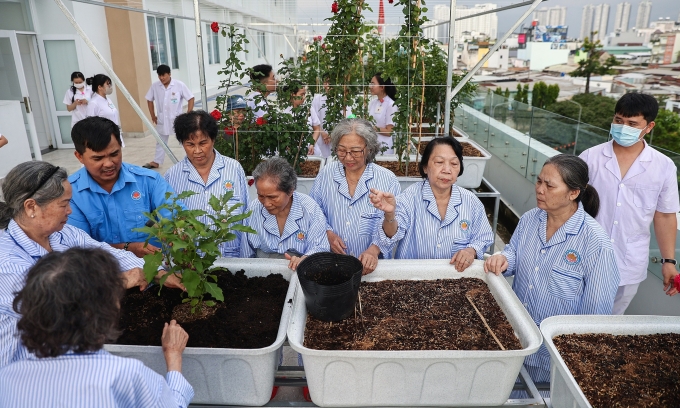

Elderly residents take part in day-care elder services at the HCMC Hospital for Rehabilitation and Professional Diseases. Photo by Read/Quynh Tran
Ho Chi Minh City is aging far faster than expected, but its eldercare system is struggling to keep pace.
The city now has more than 1.7 million seniors, yet only 36 care facilities serving just over 3,500 people, a fraction of demand.
The city adds nearly 35,000 new elderly residents every year, the Department of Health said on Dec. 26. While the number of seniors grows, most available services remain limited to traditional centralized nursing homes, with few options for home care, day-care or palliative support. The system is also described as fragmented, understaffed and lacking professionally trained caregivers.
Officials warn that this rapid demographic shift is no longer a distant concern. Changing family structures, smaller living spaces and a rise in chronic non-communicable diseases mean long-term care and dementia support will continue to soar.
HCMC entered the aging phase in 2017, later than the national average, but now has the largest elderly population in Vietnam. By late 2025, the number of residents aged over 60 could reach 1.6 million, around 11% of the population. Across Vietnam, seniors are expected to hit 18 million by 2030, equivalent to one in every six citizens.
To respond, the city is drafting a development plan for 2025–2030 to build a multi-tier care network, from home-based and day services to rehabilitative nursing homes and end-of-life care, aiming to reduce hospital pressure while matching care with patient needs.
The proposal also calls for standardized service quality, formal training and certification for caregivers, and sustainable financing mechanisms, including controlled socialization and long-term care insurance to ensure access for vulnerable groups.
Experts say a well-structured eldercare system could not only safeguard social welfare but also unlock economic potential through the “silver economy.” They recommend prioritizing community-based care, building a trained workforce and creating financial models that ease the burden on families.

Comments are closed.