

Highlights
- Real-time AI translation is becoming natural, emotional, and human-like across voice, text, and video
- Immersive real-time translation is becoming quicker, more precise, and more human-like.
- Affordable devices, web-based applications, and access to global Communication tools through mobile apps and devices are enabling everyone to connect globally with others and meaningfully contribute to a globalized workforce, including businesses and organizations.
- By 2026, AI might make “lost in translation” a thing of the past.
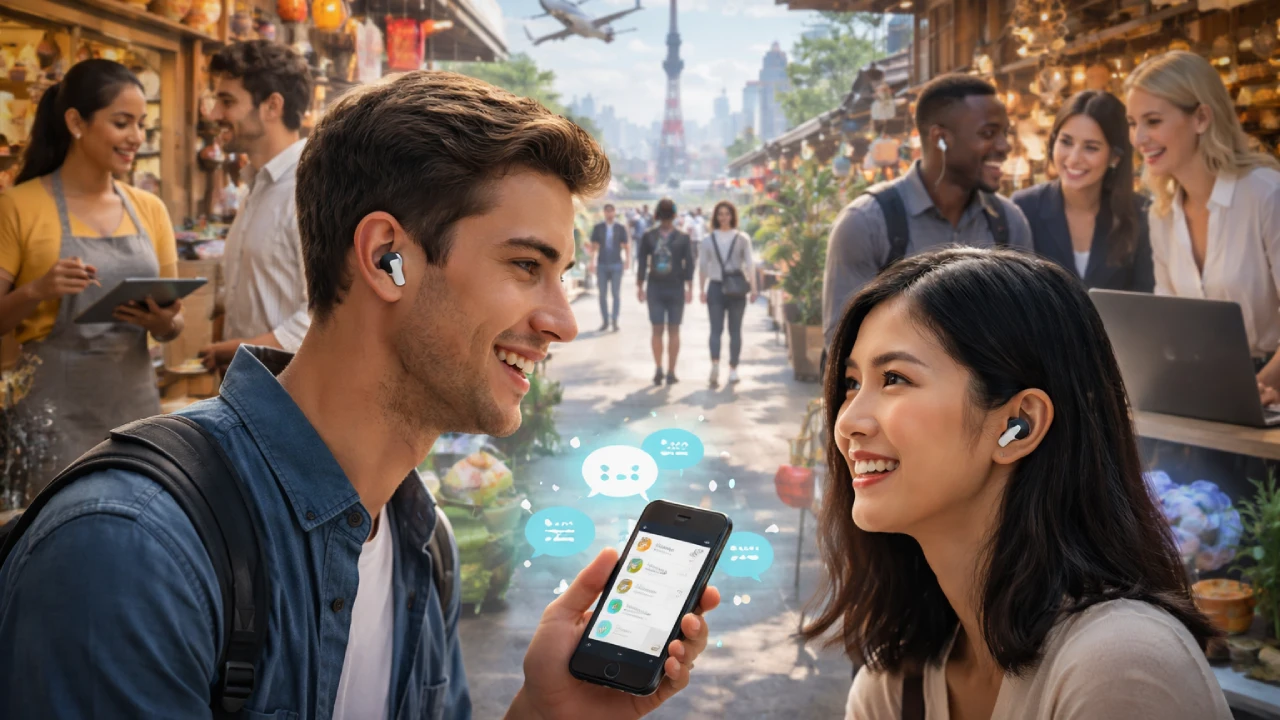
Imagine arriving in Tokyo; you’re fluent in English, but now, at that moment, communicating in Japanese over the phone, with no translator or reference materials. Just you and your phone or earpiece doing the magic. That’s where we’re heading, all thanks to real-time AI translation software.
Artificial intelligence will continue to bridge cultural gaps in ways we’ve never experienced before – whether by facilitating international companies to make profitable contracts or by helping respectful families connect while travelling.
Whether you’re a small- to mid-sized business, a burgeoning business-savvy entrepreneur, or an international traveler, artificial intelligence continues to democratize global connectivity by creating seamless environments for individuals to engage with others around the globe.
So, how will the technology evolve? What’s changing? Who’s at the head of the curve? And perhaps most importantly, how will this impact you?
Real-Time Voice Translation Technology: How AI Makes Conversations Instant and Natural
For many years before the introduction of the new technology, the translation tools were inferior. The user experience was frustrating because they could not pick up on accent tones and produced emotionless, lifeless interpretations of what was spoken or written.
With the introduction of new advancements in Artificial Intelligence (AI) translation by organizations such as Google, Microsoft, and OpenAI, the way we interpret voice is no longer limited to machine learning algorithms.
AI translation now recognizes over 100 languages, supports different dialects, and captures the emotional intonation of the user’s speech.
Real-world examples include:
- Tools such as the Timekettle WT2 Edge enable real-time, unscripted conversations.
- Human-like accuracy without prior language education or translator support.
So, if you want to communicate with individuals who do not live in your country, or if you will be traveling soon, it would be advantageous to begin using an AI translation tool for speech recognition and contextualized communication.
Using these translation tools will not only save you time by eliminating the need to answer emails, but also eliminate the risk of miscommunication with someone speaking a different language.
Will translation eventually be able to convey a message as a human would? Or will it continue to require human knowledge to provide an accurate translation?
AI Emotional Translation: Can Machines Understand Tone, Humor, and Emotion?
That’s the big question. Accurate communication goes beyond words – it’s also about tone, intent, and emotion. AI systems are advancing here, too. Tools are learning to pick up sarcasm, humor, and empathy, making digital translations more natural.
For example, a French customer saying “Pas mal!” might mean “Not bad,” but contextually, the person could be expressing genuine appreciation. Older AI models missed that nuance – newer multilingual models, trained on massive global datasets, don’t.
Startups like DeepL and Meta’s SeamlessM4T focus heavily on emotional nuance. These applications are improving cross-cultural communication for international businesses and even social media interactions.
But how does this emotional awareness impact businesses and daily life, especially for the average person?
AI Translation for Small Businesses: How Local Entrepreneurs Go Global with Real-Time Language Tools
What’s exciting about digital technology is that tiny and medium businesses, as well as individuals working independently, all have access to similar tools through mostly free or nearly free (less than $5) software applications.
For example, there could be artisans in Mumbai selling to people in Spain, or a barber in Texas who takes appointments from visitors from Japan via instant translation powered by AI.
Travel agencies in India currently use WhatsApp chatbots to provide instant access to their clients’ messages in different languages, based on customer requests, and many companies around the world are using AI-powered chat solutions to offer multilingual chat services.
One example of this technology is Shopify, which enables independent merchants to use chat features with linguistically diverse clients worldwide.
So if everyone can talk to everyone, what does that mean for travel and tourism next?
AI in Travel and Tourism: Real-Time Translation Apps Transform Global Adventures
What’s exciting about digital technology is that tiny and medium businesses, as well as individuals working independently, all have access to similar tools through mostly free or nearly free (less than $5) software applications.
Examples:
- Artisans in Mumbai are selling to people in Spain.
- A barber in Texas is taking appointments from visitors from Japan using AI translation.
- Travel agencies in India are using WhatsApp chatbots for multilingual customer support.
- Shopify enables independent merchants to engage global clients in real time.
This accessibility means that communication barriers are shrinking fast – allowing even small players to compete internationally.

Do you think this indicates a level of confidence on the part of governments and government officials in translating “machines” in sensitive conversations and diplomatic situations?
Everyday AI Translation Tools: How Middle-Class Families and Workers Connect Across Languages
The beauty of modern AI is accessibility. Most translation tools are already available within smartphones, messaging apps, and browsers, making them usable even by non-technical people.
Consider these real-world scenarios:
- A migrant worker using an AI app to understand their employer in another country.
- Parents speaking with teachers from different linguistic backgrounds.
- Middle-class students collaborating internationally on projects via AI subtitles.
This democratization of communication lets people participate more freely in global conversations – socially and professionally.
Don’t hesitate to use translation aids in regular life – meetings, customer chats, and social posts. Every conversation you bridge builds understanding and opportunity.
Given all these advancements, can AI truly “kill” language barriers by 2026? Or will humans always need that final interpretive touch?
Can AI Translation Software Truly Remove Language Barriers by 2026?
The short answer: probably not completely – but close. AI will make 95% of cross-language communication practically effortless, especially for common languages. The remaining 5% – involving complex idioms, deep cultural nuances, or emotional undertones – will still need human effort.
That said, by 2026, you’ll likely:
- Talk to anyone worldwide using your phone or earbuds.
- Read and watch content in your preferred language instantly.
- Run a business or campaign that connects globally without hiring translators.
For middle-class individuals, freelancers, and small business owners, this era means equal access to global opportunities. The line between “local” and “global” communication may all but vanish.

Final Thoughts
AI is changing who gets to talk. From a student in Delhi attending a class in Madrid to a vendor in Mexico selling to a buyer in France, everyone’s world is expanding.
“Language,” once the oldest barrier, might soon become our newest bridge.
What do you think – will real-time translation make us truly “global citizens,” or will we still crave the human touch of understanding?

Comments are closed.