
Trump’s tariff bomb, Russia-Pak dispute and H-1B tension: tough test for India-US relations in 2025

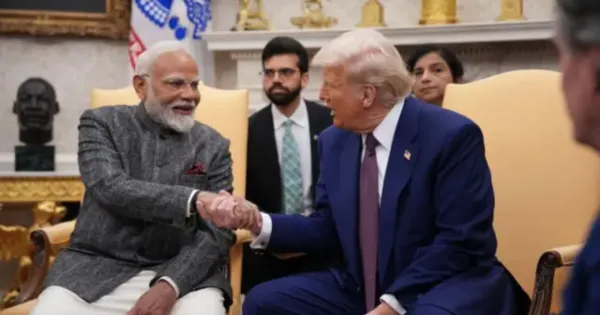
New York/Washington. Punitive tariffs, conflict with Pakistan, and harsh immigration policies have marked a tumultuous year in relations between the US and India in 2025, marking the first time in decades that bilateral ties have been tested and strained. Prime Minister Narendra Modi’s visit to the US to meet US President Donald Trump and the signing of a 10-year defense framework agreement between the two countries was seen as the highest level in relations.
This year started very well for relations between the US and India and Modi visited Washington in February and held the first bilateral meeting with Trump in his second term at the White House (the official residence and office of the US President). Within weeks of Trump being sworn in as the 47th US President, Modi was the fourth foreign dignitary to meet him after the leaders of Israel, Japan and Jordan.
Trump and Modi announced plans to negotiate the first phase of a mutually beneficial, multi-sector bilateral trade agreement (BTA) in 2025, with the aim of more than doubling trade to US$500 billion by 2030. A month before this, Foreign Minister S. Jaishankar had participated in Trump’s swearing-in ceremony on January 21, representing the Indian government, sitting in the front row at the US Parliament House (US Capitol) and a few hours later, the new Foreign Minister Marco Rubio hosted a meeting of foreign ministers of the member countries of the Quadrilateral Security Dialogue (Quad), including Jaishankar. But as the months passed, bilateral relations which were growing at full speed faced hurdles in the form of differences over tariffs and trade. While addressing the joint session of the Parliament, Trump criticized India and other countries and said that they impose high tariffs on American products.
Trump described India as a “high-tariff country” and his trade adviser Peter Navarro called India the “tariff king”. Terming April 2 as ‘Liberation Day’, Trump imposed retaliatory tariffs on countries around the world and announced 26 percent duty on India. However, Trump has said on various occasions that a trade deal with India will be done “soon”.
US Vice President J.D. Vance visited India and held extensive talks with Prime Minister Modi. During this period, both countries made “significant progress” towards a mutually beneficial bilateral trade agreement. Vance and Modi announced the terms of reference for a bilateral trade agreement between the US and India. While Vance was in India, a terrorist attack took place in Pahalgam on April 22, in which 26 civilians were killed. In response, India launched ‘Operation Vermillion’ targeting terrorist infrastructure in Pakistan and Pakistan-occupied Kashmir. On May 10, the fourth day of the military confrontation, Trump suddenly announced on his ‘Truth Social’ page that America had “established a ceasefire” between India and Pakistan.
Trump has repeated his claim more than 70 times since May 10 that he resolved the conflict between India and Pakistan and that he used trade to end the war. In June, Modi and Trump were scheduled to meet on the sidelines of the G-7 leaders’ summit in Canada, but Trump returned early to Washington. However, the two leaders spoke on phone for 35 minutes on June 17. Foreign Secretary Vikram Misri said Modi gave a clear message to Trump that there was no discussion “at any time” and at any level after ‘Operation Sindoor’ on an India-US trade agreement or any proposal for US mediation between India and Pakistan. Trump has been critical of India’s purchases of Russian oil and in August he imposed an additional 25 percent duty on Indian imports, raising total tariffs on India to 50 percent. American lawmakers have criticized the tariffs imposed on India by Trump.
The Trump administration has stepped up a crackdown on both legal and illegal immigration and imposed new and tougher restrictions on visas such as H-1B. Despite these complexities in India-US relations, there were some areas of cooperation between the two sides that were particularly notable this year. The US extradited 2008 Mumbai terror attacks accused Tahawwur Hussain Rana to India, demonstrating cooperation against terrorism.
Furthermore, the US declared ‘The Resistance Front’ as a foreign terrorist organization. The two countries also signed a 10-year defense framework agreement in October. Washington committed to working closely with New Delhi in ensuring a free and open Indo-Pacific. Defense Minister Rajnath Singh and US War Secretary Pete Hegseth signed the framework agreement for the ‘US-India Major Defense Partnership’ agreement after wide-ranging talks in Kuala Lumpur amid efforts by both sides to improve ties. Despite challenges in bilateral relations, the talks between Trump and Modi underlined the strategic importance of the relationship.
Modi recently said he had a “very warm and productive conversation” with President Trump and they reviewed progress in bilateral relations and discussed regional and international developments. Modi said, “India and America will continue to work together for global peace, stability and prosperity.” Trump, who described Modi as a “very good friend” and “a great Prime Minister”, has hinted that he may visit India next year.

Comments are closed.