
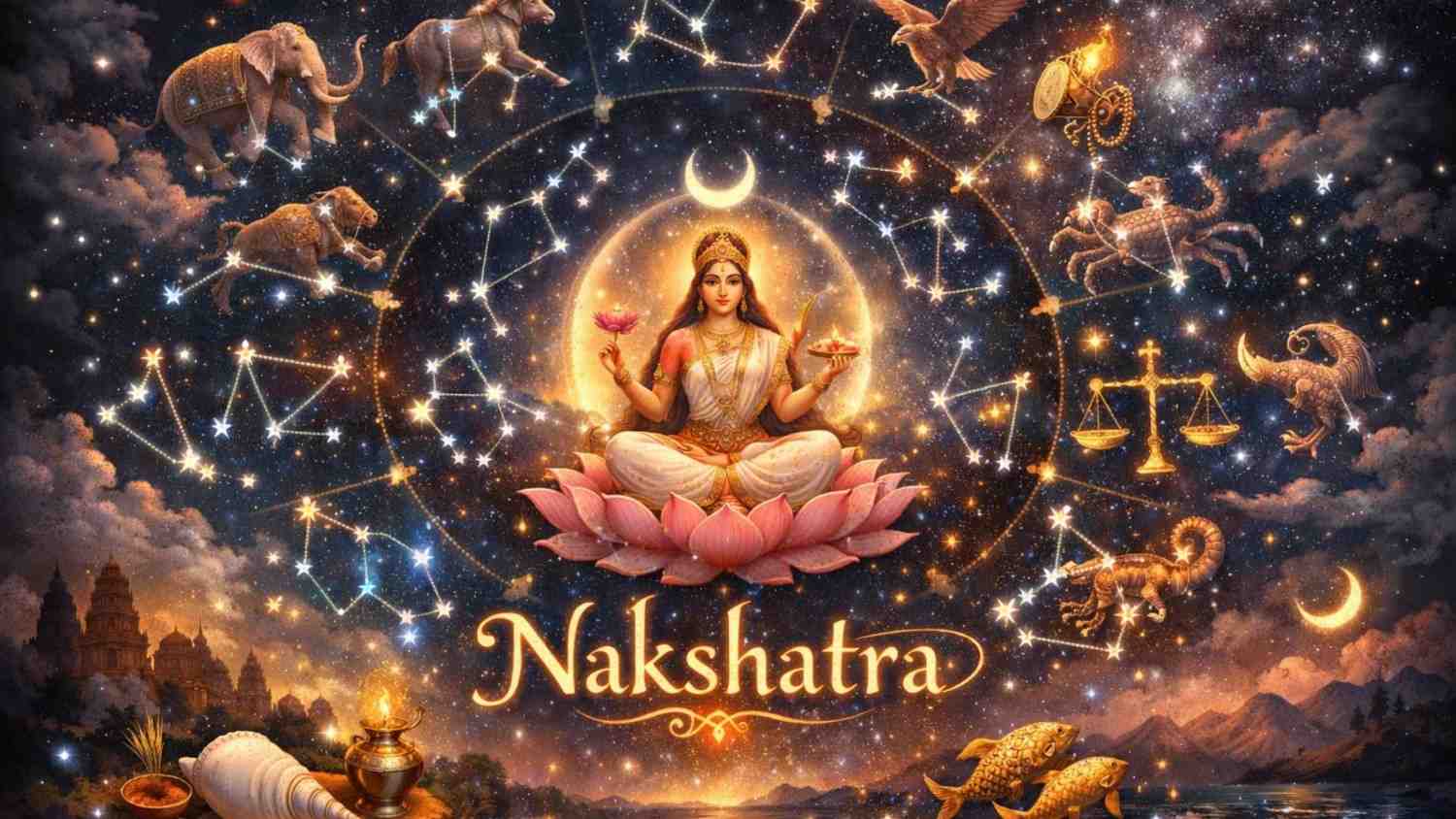

In Vedic astrology and astronomy, constellations are considered to have special and deep significance. The word ‘Nakshatra’ is made up of two parts – Na (not) and Kshatra (destruction), that is, that which never gets destroyed and remains stable forever. According to astrology, the concept of constellations has been prevalent since the Vedic period. In the Puranas, they are described as the daughters of Daksh Prajapati, who were the wives of the Moon. Understanding the origin of constellations and their types is an important subject of astrology.
It is believed that the constellations are part of the cosmic system and astrological calculations, which have an impact on our lives. The birth Nakshatra of a person is determined based on his birth time and place, which reflects many aspects related to his nature and life.
Also read- What are Mahadashas in astrology, why do people consider it bad?
mythological and scientific basis
According to mythology, the constellations are considered to be the daughters of Prajapati Daksha. Daksh married his 27 daughters to Chandrama. Among all his wives, Chandrama loved Rohini Nakshatra the most and spent most of his time with her. Other sisters complained about this to their father Daksh. Enraged, Daksh cursed the moon to ‘decline’. Later, due to the intervention of Lord Shiva, the Moon was freed from this curse. Due to this, the size of the moon decreases and increases (full moon and new moon), which we call Krishna Paksha and Shukla Paksha.
astronomical base
According to scientific grounds, the Moon completes one revolution around the Earth in approximately 27.3 days. When the 360° circle of the sky is divided into 27 equal parts, each part is called a ‘constellation’. The length of a constellation is 13° 20′ i.e. 13 degrees 20 minutes.
How many types of constellations are there?
To determine the auspicious time in astrology, the constellations are divided into these seven categories:
- Rohini, Uttara Phalguni, Uttarashada, Uttar Bhadrapada – Auspicious for permanent works like building a house or planting trees.
- Swati, Punarvasu, Shravana, Dhanishtha, Shatabhisha- to buy a pit or a pit.
- Bharani, Magha, Purvaphalguni, Purvashadha, Purvabhadrapada- for destructive or difficult tasks.
- Vishakha, Krittika- for works related to fire.
- Hasta, Ashwini, Pushya- To start business or treatment.
- Mrigashira, Revathi, Chitra, Anuradha – for art, music and friendship.
- Mool, Jyestha, Ardra, Ashlesha- for tantra-mantra or victory over the enemy.
on the basis of order
- Dev Gana: Calm and virtuous in nature.
- Human beings: Having normal human emotions.
- Rakshas Gana: Courageous and fierce in nature.
Also read-Why do people do Kalpavas in Magh, which gods’ month is this?
names of 27 constellations
The order of constellations in the sky is as follows:
Ashwini, Bharani, Krittika, Rohini, Mrigashira, Ardra, Punarvasu, Pushya, Ashlesha, Magha, Purvaphalguni, Uttaraphalguni, Hasta, Chitra, Swati, Vishakha, Anuradha, Jyeshta, Mool, Purvashadha, Uttarashadha, Shravana, Dhanishtha, Shatabhisha, Purvabhadrapada, Uttarabhadrapada, Uttarabhadrapada, Uttarabhadrapada, Uttarabhadrapada,
There is also a 28th Nakshatra called ‘Abhijit’. It is considered very auspicious and is calculated in special Muhurtas, but mainly only 27 Nakshatras are seen in horoscope analysis.
Note: The things written in this news are based on religious and local beliefs. We do not confirm this.

Comments are closed.