
Friendship with Pak-China, made Dhaka a hideout for ISI; Ganga water treaty was called a slavery deal; How were Khaleda Zia’s relations with India?

First woman Prime Minister of Bangladesh Khaleda Zia The demise of is a bigger event than the passing of an individual. His demise after a long illness at the age of 80 is a farewell to the era when the politics of South Asia was swinging between dictatorship, mass movement and restoration of democracy. Khaleda Zia remained less in power and more in struggle and this became her biggest identity.
Khaleda Zia’s connection with India was not just diplomatic, but linked to birth and memory. He was born in 1945 in Jalpaiguri (then undivided Bengal). Her full name was Khalida Khanum Putul, which people fondly called Putul. After partition his family moved to Dinajpur. This background makes him a living link to the shared history of India and Bangladesh. A leader whose identity was decided before the border was built.
Read now on WhatsApp also, click to subscribe
from compulsion to leadership
Khaleda Zia never chose politics as a career. After the murder of her husband Ziaur Rahman in 1981, circumstances pushed her forward. Joining BNP, she gradually took command of the party and emerged as a leader who knew how to transform personal tragedy into public struggle.
Became the face of anti-Ershad movement
Khaleda Zia became the face of a seven-party alliance against the military rule of General Hussain Muhammad Ershad. Despite repeated detention, arrest and pressure, he continued the movement. This period gave him the image of an “uncompromising leader” who compromised not on power but on principles.
Return of democracy in 1991
Khaleda Zia created history by becoming Prime Minister by popular vote in 1991. He restored parliamentary democracy and implemented the caretaker government system, which laid the foundation for fair elections. Steps like VAT, banking reforms and access to education give his first term a reformist identity.
Out of power, then back again
After losing power in 1996, Khaleda Zia remained in the role of opposition and returned with a huge majority in 2001. By promising strictness against corruption and terrorism, she proved that she was not only a movement leader but also a strong player in electoral politics. During both his tenures, he made friendship with Pakistan and China instead of enmity with India. He gave shelter to ISI in Bangladesh and expanded its network.
India trip 2012
Whenever Khaleda Zia came to India, she used to mention Jalpaiguri in her speeches or informal conversations. The same city where he was born. During his 2012 visit to India, he said in a closed-door meeting in Delhi that “India is not just a neighboring country for me, it is a part of my memories.” This matter seemed more important when she was not in power, but had come to India as an opposition leader. Khaleda Zia had called the Ganga water sharing treaty signed in 1996 as a ‘slavery deal’.
Met PM in 2015
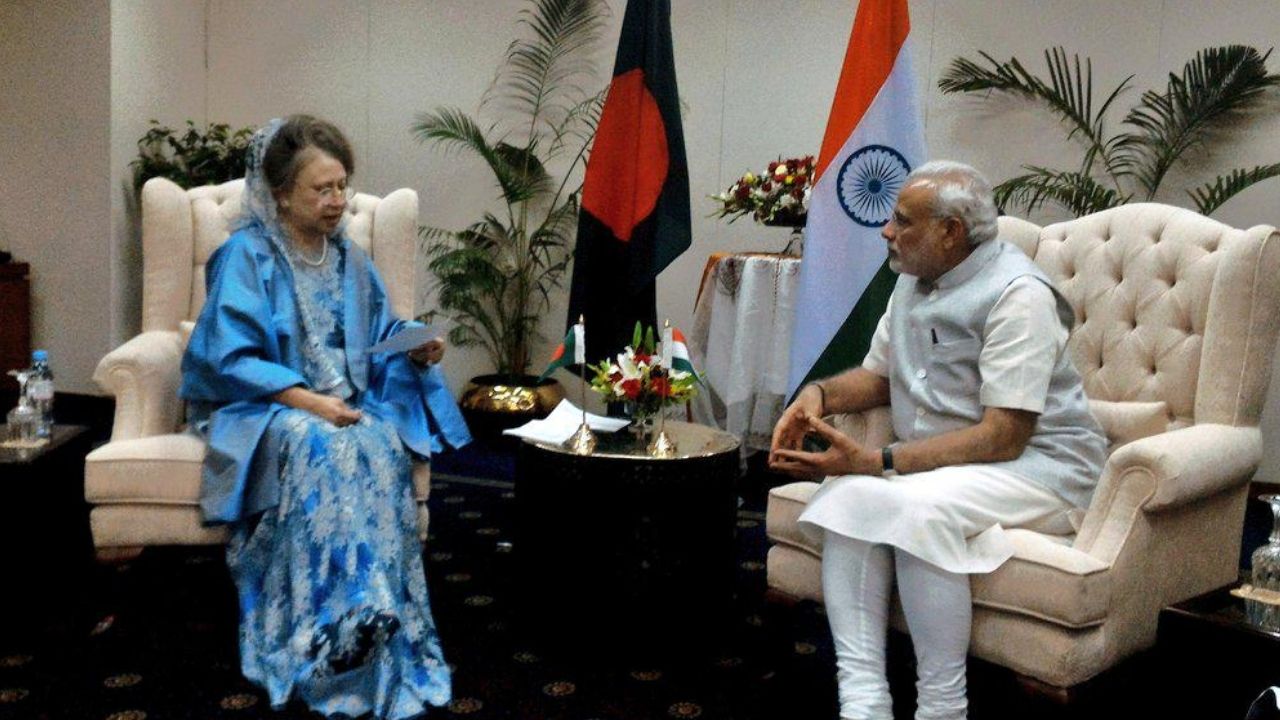
Khaleda Zia’s relationship with India remained intact both in power and in opposition. From his visits to India in 2006 and 2012 to his meeting with Prime Minister Narendra Modi in 2015, his stature was important not only in domestic but also in regional politics. She was an alternative but influential voice in India-Bangladesh relations.
The inheritance is on the shoulders of the son
Jail in corruption cases in 2018, followed by prolonged illness and conditional release, all limited his active politics. Despite this, he had expressed his desire to remain active till the 2026 elections. Now his legacy rests on the shoulders of his son Tariq Rehman, while Khaleda Zia will be recorded in history as a leader whose life was more a story of struggle than power.

Comments are closed.