
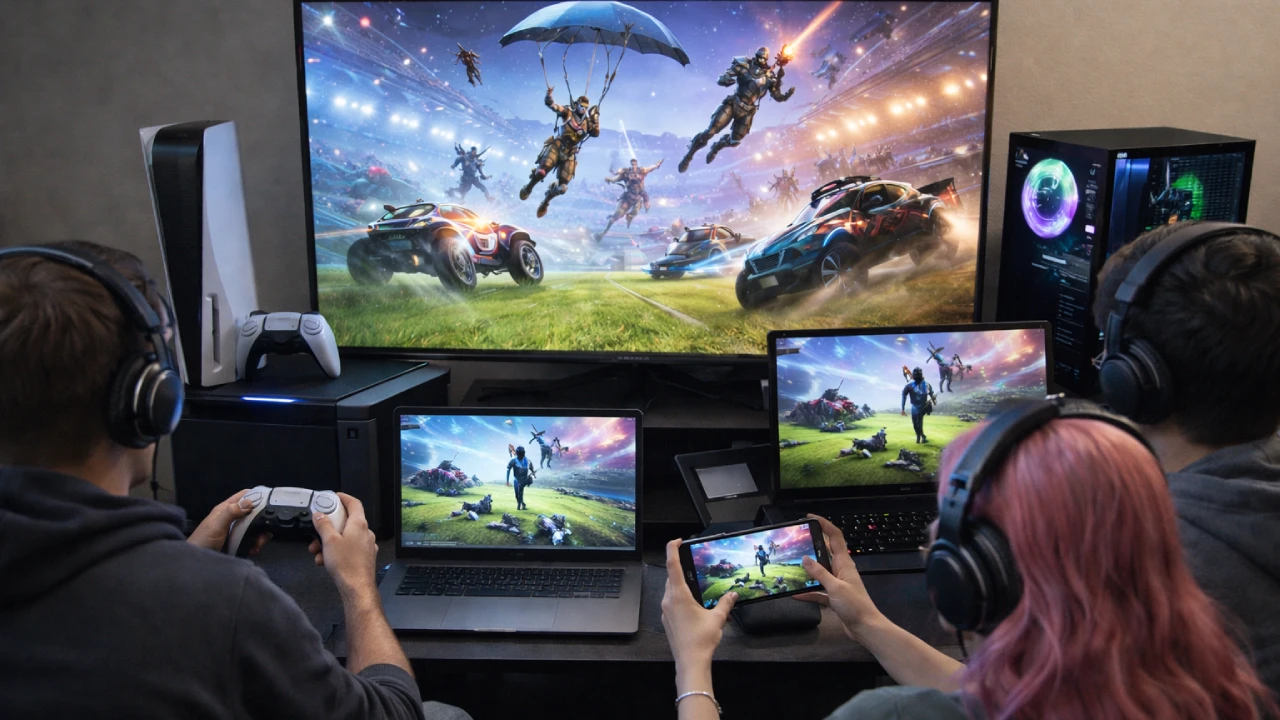
Is Crossplay the Ultimate Standard Now? How Open Ecosystems Are Positively Redefining Multiplayer

Highlights
- Crossplay has shifted from novelty to industry standard, uniting players across consoles, PC, and mobile.
- Live cross-platform events redefine multiplayer, fostering shared moments and global community connection.
- Unified economies and cloud gaming promise seamless progression, removing hardware barriers entirely.
The interactive entertainment arena is going through a massive change, as it is now moving from the previously closed-off and exclusive hardware ecosystems to a single and welcoming digital space. The whole scenario where the gamers were able to connect with each other irrespective of the different gaming systems they used, such as consoles, PCs, and mobile phones, has changed pretty quickly and is now a reality.
The transition that has brought about this playing together, or crossplay as it is commonly referred to, has become more than just a tech breakthrough; however, it is a roundabout expression of this very change in the industry’s attitude that has put crossplay at the forefront of new multiplayer releases, with its coming as an expected feature. The major aspect of this new open ecosystem is the fact that it is changing the very nature of multiplayer gaming, putting community connection above hardware exclusivity.
The End of Siloed Ecosystems
For decades, the gaming world was defined by separation, a historical reality where platforms like Sony’s PlayStation, Microsoft’s Xbox, and the PC operated as isolated environments. This segregation meant that players were limited to competing with or teaming up with others who owned the same hardware, leading to frustrations among friends divided by platform restrictions. Console makers traditionally maintained tight control over their user bases, encouraging loyalty within their respective walls. Developers attempting to bridge these gaps often encountered roadblocks due to platform policies and existing technological limitations.
On the other hand, the online gaming market saw a great number of players who started to demand a more user-friendly and open experience, which led to the elimination of platform walls. The game publishers, for their part, recognised the business potential of a unified player base and that a larger community would always keep online games relevant and thus, strengthen matchmaking.
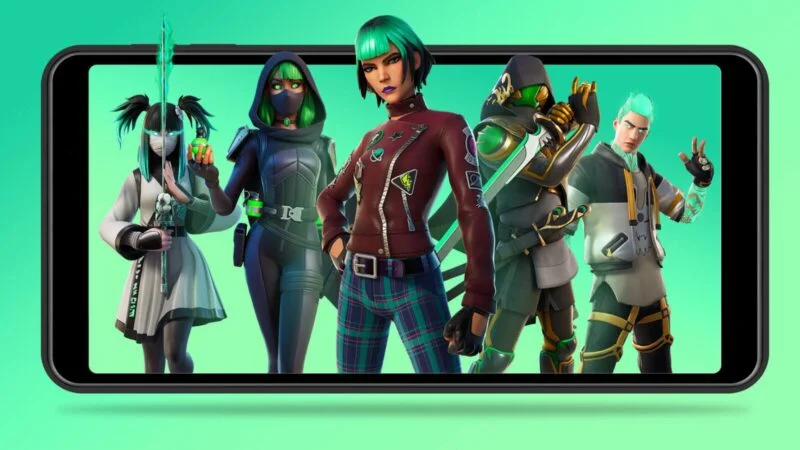
The decisive moment was marked by the huge success of the online games. Titles such as Minecraft: Bedrock Edition, Rocket League, and particularly Fortnite, were instrumental in showcasing not only the immense potential of connecting gamers across the various platforms but also proving that the cross-platform functionality was both technically possible and commercially viable at scale.
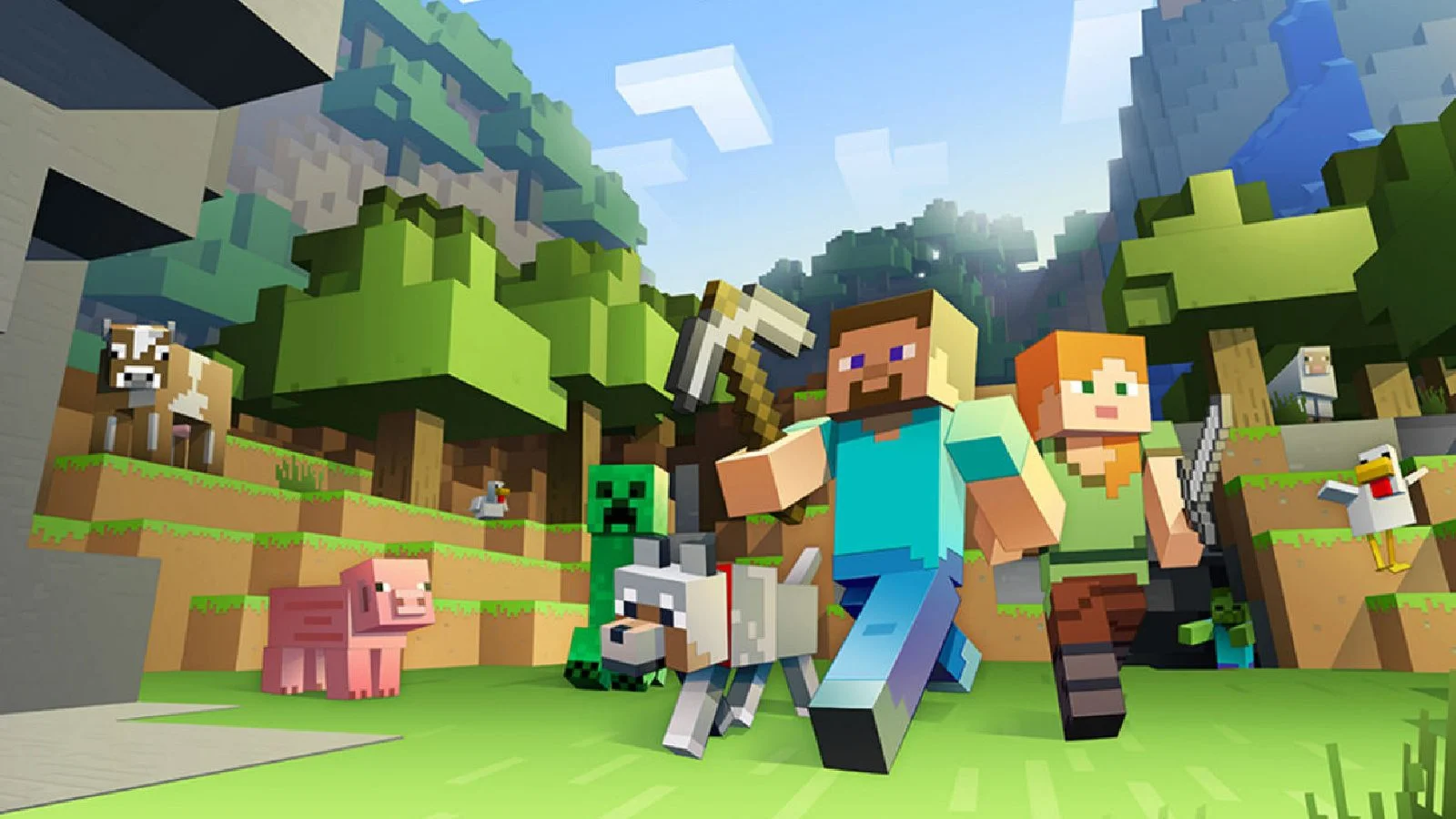
The success of these game titles all over the world brought to light the necessity of comprehensive multiplayer gaming environments. The demand for such environments pressured the gaming companies to change their strategies, one of the examples being Sony’s announcement about cross-play in Fortnite in 2019, which indicated the transition of the cross-platform play from a possibility to a demand. Nowadays, the industry has almost made it a rule to include crossplay in new multiplayer games, while those games that release without it will have to face criticisms.
The Redefinition: Cross-Platform Live Events
The true shift in the industry mindset, however, came when developers recognised that mere convenience does not sustain a community. The bigger change arrived when studios began treating recurring cross-platform live events as a fundamental part of the main design, rather than an afterthought. These live moments bring everyone into the same slice of time, united by a shared purpose.
In the biggest contemporary games, this model is already visible, with cross-platform tournaments running on a single timetable and utilising a single leaderboard. In these moments, scattered audiences transform into a single crowd, bridging former divides as a console player squares off against a high-end PC user, or a mobile player joins mid-match between other daily activities. The core appeal is the shared moment, which, when repeated on a schedule, builds momentum across platforms, making the game feel consistently alive.
Creative ambition has grown alongside the technology, moving past simple bonus drops to include seasonal arcs, themed content, or collaborative challenges that function without friction across different devices. Players can start an activity on PC in the morning and carry it on later from a mobile device, with every action feeding the same overarching thread.
Navigating Technical and Design Hurdles
While the momentum behind crossplay is undeniable, integrating diverse platforms is not without significant challenges, requiring developers to overcome both technical complexity and design imbalances.
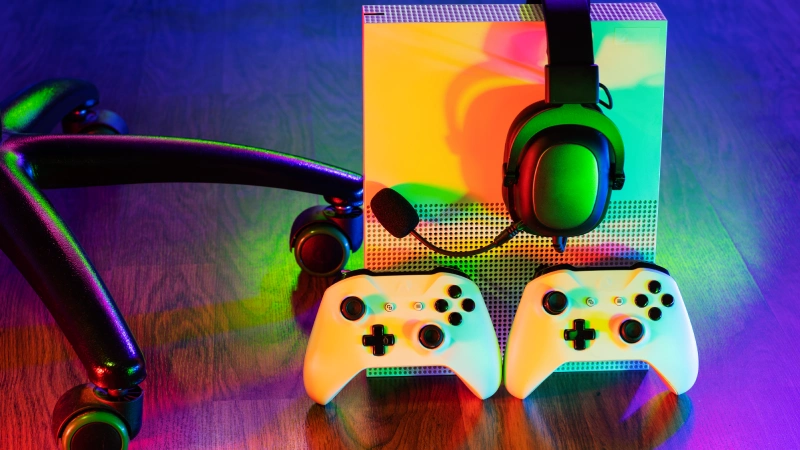
One major concern involves balancing gameplay, as different input methods can create uneven advantages. For instance, players on a high-end PC using a mouse and keyboard often possess faster aim compared to controller users. Developers must delicately manage these disparities by implementing solutions such as adjusting aim assist for controller players or creating matchmaking algorithms that consider hardware differences, though achieving fairness without isolating users remains difficult.
The Future of Unified Gaming
One of the main points is the development of cross-platform economies, where the user is allowed to take along their progression, purchases, levels, and rewards no matter where they log in. This is a great change because players now get to control their accounts across different platforms. Cloud gaming services could be a factor that drives the integration even further.
The reason is that if the games are streamed from the cloud, then the device used for this purpose will not matter that much, which consequently means that the hardware barrier could be completely removed. Players will only need to log in and get connected to others instantly because showing up when the moment counts is what is really important, and not the hardware used to access it.
In short, the turn of the industry is finished: cross-platform gaming is not a feature to ponder anymore, but the very foundation on which the modern multiplayer experiences are built. The popularity of this trend is a pointer to a new age that fosters the mixing of gamers, enhances the connection among people, and borders on the traditional ones. By uniting the differences that separate systems, crossplay changes gaming from a bunch of disconnected experiences into a worldwide community, which is characterised by shared moments in time.

Comments are closed.