
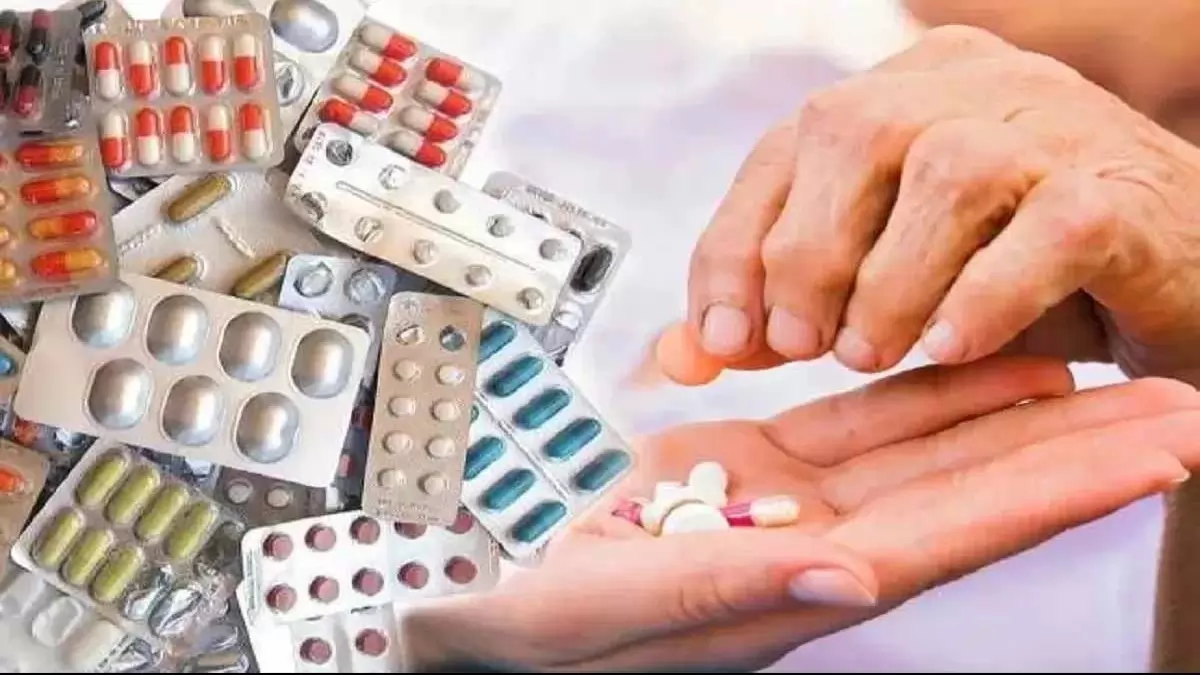
Big action by Central Government on more than 100 mg Nimesulide, immediate ban on manufacturing and sale

digital desk- Taking a major decision related to public health, the Central Government has banned the manufacture, sale and distribution of all oral medicines containing more than 100 mg of Nimesulide with immediate effect. This decision has been taken under Section 26A of the Drugs and Cosmetics Act, 1940 following the recommendations of the Drugs Technical Advisory Board (DTAB). The notification issued by the Health Ministry clarifies that high-dose nimesulide can be seriously harmful to humans and its safer alternatives are already available in the market. Nimesulide is a non-steroidal anti-inflammatory drug (NSAID) used to treat fever, pain, and inflammation. However, this medicine has been in controversy for a long time regarding the potential liver toxicity i.e. the risk of damaging the liver. Many international studies have revealed that its consumption in excessive amounts can even cause liver failure. For this reason, strict restrictions have already been imposed on the use of this medicine in many countries.
What will be the scope of the ban?
This ban of the government will apply only to oral formulations with dosage more than 100 mg made for human use. There are currently no restrictions on low-dose nimesulide formulations and other alternative medicines. The Health Ministry says patient safety is paramount and it is not appropriate to keep risky drugs on the market when safer alternatives exist.
What will be the impact on pharma companies?
After this decision, pharmaceutical companies producing and marketing Nimesulide based medicines will have to stop production immediately. Besides, instructions have also been given to recall the affected batches present in the market. However, market analysts believe that its financial impact on large pharmaceutical companies will be limited, as nimesulide represents a small part of the total NSAID market. At the same time, smaller pharma companies, whose sales were more dependent on this drug, may face revenue pressure.
Such steps have been taken earlier also
This is not the first time that the Central Government has used Section 26A to ban high-risk drugs. Even before this, many fixed-dose combination medicines have been banned in the interest of public health. The government aims to make the pharmaceutical market safe and protect patients from unnecessary risks. The government is promoting bulk drug parks and active pharmaceutical ingredient (API) manufacturing to strengthen the domestic pharmaceutical industry. Under this, an investment of Rs 4,763.34 crore has been made in about three and a half years till September 2025. This will not only improve the quality of medicines but will also reduce dependence on imports.

Comments are closed.