

- Here are 10 cooking habits that can ruin a recipe or even pose safety risks.
- Tips cover preheating, prepping food and selecting the right pans and dishes.
- Learn safe ways to blend hot liquids and keep your kitchen bacteria-free.
Some habits can be tough to break. When it comes to cooking, you may have some bad habits that you’re not even aware of. Some may keep your meal just short of perfection, while others may actually be hazardous to your health. Below are 10 common bad cooking habits we think are worth breaking, covering both prep work and actual cooking.
1. You Don’t Properly Preheat Your Cooking Surface
When you’re hungry, “Preheat the oven or grill” may seem like a step someone added just to annoy you, but it’s necessary. Baking or roasting in an oven that hasn’t been properly preheated will throw off the cooking time or may cause your food to cook unevenly or even burn. Ditto with the grill. Adding food to an improperly heated grill grate causes sticking and eventually burning.
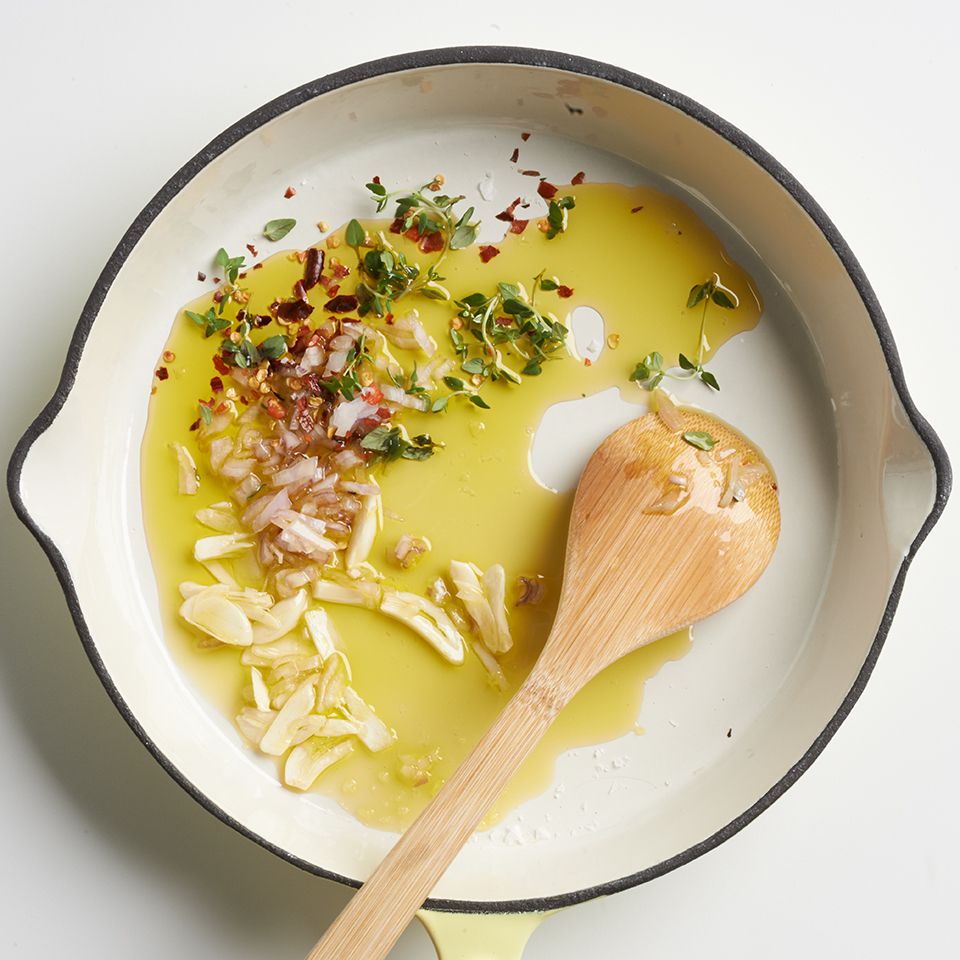
But beware, you can also overheat during a preheat, causing the oil to smoke. Most recipes start with heating oil in a pan. It usually takes a little time for the stove to warm up, so we pour the oil and then turn our backs on the pan to do something else while it heats. Before you know it, you see wisps of smoke, which means the pan is hot and ready for cooking, right? Wrong! Not only do many oils taste bad when heated to or past their smoke point, but when oils are heated to their smoke point or reheated repeatedly, they begin to break down, destroying beneficial antioxidants and forming harmful compounds. However, an oil’s smoke point is really a temperature range (olive oil’s is between 365°F and 420°F), not an absolute number—it depends on the type of oil and many factors that affect an oil’s chemical properties. You can safely and healthfully cook with any oil by not heating it until it’s smoking. To get your oil hot enough to cook with, just heat it until it shimmers.
2. You Dip and Sweep the Flour
When measuring flour, plenty of people fill their measuring cup by dipping it into the bag, leveling it off and dumping it into the bowl. This is a common mistake. Here’s why it doesn’t work: The dipping motion packs the flour into the cup, giving you more than you really need. The result? Dense baked goods.
How to do it right: The correct way to measure flour is to lightly scoop it into the measuring cup with a spoon and level it off at the top.
3. You Overfill Your Pan & Stir the Food Too Much
Sometimes cooking requires a little patience. It may be faster to fill your pan to the brim with ingredients, but doing so can actually slow the cooking process and give you a big pile of mush at the end. If you want to sauté, filling your pan too full will cause the food to steam and not give you the crispy results you are looking for. The same goes for cooking meat. Shoving too much meat into the pan lowers the temperature too quickly, which can cause sticking and a host of other problems. Your best bet is to cook in batches. The extra time you put into it will make your meal much better.
Another way to ensure your food gets properly crispy is to avoid the temptation to overstir. It’s tempting to stir your food constantly to prevent burning, but stirring too much can be a bad thing. It prevents browning—a flavor booster you get by letting your food sit on a hot surface—and it breaks food apart, making your meal mushy. Resist the urge to stir constantly unless the recipe specifically tells you to do so.
4. You Don’t Let Your Meat Rest
You’re hungry, and you want to dig into that steak you just pulled off the grill. Wait! Let your meat rest before you cut into it. By resting, the juices redistribute through the meat, and you’ll get juicier results. Cut it too soon, and all the juice runs onto your cutting board and doesn’t end up in your meat. Rest smaller cuts of meat for shorter times (say 5 to 10 minutes or so), and rest larger roasts for longer (up to 20 minutes for a whole turkey, for example).
5. You Rinse Meat Before Cooking
Rinsing meat off in your sink may get rid of the slime factor, but it contaminates your sink with bacteria that could potentially cause foodborne illness. Instead, pat your meat with a paper towel to remove any unwanted residue.
6. You Use Nonstick Pans on High Heat with Metal Utensils
Turn down the heat when using nonstick pans. High temperatures can cause the nonstick lining to release PFCs (perfluorinated chemicals) in the form of fumes. Certain PFCs have been linked to liver damage and developmental problems. Check with your pan manufacturer to see what temperatures they recommend.
Another thing to keep in mind when using nonstick cookware is to avoid metal utensils. You can inadvertently scratch the pan’s surface, which could lead you to ingest PFCs from the nonstick lining. Use wooden or heat-safe rubber utensils when using nonstick pans.
7. You Cook or Store Acidic Food in Reactive Pans
Aluminum is often used in cookware because it’s a great conductor of heat, but isn’t so good in your food. How would it get there? Cooking or storing acidic foods in reactive pans, such as aluminum and cast-iron, can eat away at the metal and impart an off-color and/or off-flavor to your food. Use a nonreactive pan (stainless-steel, enamel-coated or glass) when cooking with acidic foods like lemon juice or tomatoes to prevent the food from reacting with the pan.
8. You Blend Hot Liquids (Without Removing the Stopper)
You only have to blend hot liquids and have them explode all over you and your kitchen once, because the aftermath is fairly memorable. Most blenders come with a removable stopper on the top. If you’ve ever been assaulted by hot liquids from your blender, it’s probably because you didn’t remove the stopper before blending. Steam from the hot liquid creates pressure that literally blasts off the lid if the stopper is in place. To ease the pressure, remove the stopper and cover the hole with a folded towel to prevent a mess before blending.
9. You Put Pyrex Dishes Under the Broiler
Pyrex pans are great for making casseroles, but use a metal pan if your recipe requires broiling—even for a short amount of time. Pyrex pans are not designed to withstand the heat from a broiler. If they get too hot, they shatter, and you’ll have to start the recipe from scratch and have a big mess to clean up in your oven.
10. You Overmix Batter
When you’re making batter for baking (or anything with large amounts of flour), you want everything to be well combined. And to combine, you mix. But too much mixing isn’t good. The mechanical action of the mixing causes gluten to form in the flour, making baked goods tough. So gently mix until the batter is uniform, then turn off your mixer.
The Bottom Line
This article highlights 10 common bad kitchen habits that many of us fall into from time to time. Whether we’re pressed for time and taking shortcuts, or haven’t considered why these habits are problematic. With a bit of knowledge and awareness, we can avoid kitchen mishaps related to equipment and recipes. Achieving desired results—whether that’s crispy, delicious food, juicy meats or moist, tender cakes—becomes much simpler. Additionally, the article provides tips on kitchen safety that involve prepping poultry, blending hot liquids and cooking with Teflon or Pyrex.

Comments are closed.