


Some people just seem to have all the luck. But maybe it’s more than just the universe holding these individuals in her favor because they all seem to have certain traits in common that help them attract the things they want. According to Richard Wiseman, a psychology professor and author, it’s their actions and mindset that give lucky people all that good fortune.
During his 10-year study, Wiseman discovered that lucky people share certain traits. While lucky people always manage to be in the right place at the right time, landing amazing opportunities, and somehow dodging all of the chaos that life attempts to throw at them, it’s time to follow in their footsteps instead of just thinking that you were somehow born without a rabbit’s foot in your pocket.
Here are 4 traits all the luckiest people share:
1. They leap at opportunities
Rasica | Shutterstock
“It is easy for people to exhaust the opportunities in their lives. Keep on talking to the same people in the same way. Keep taking the same route to and from work. Keep going to the same places on vacation,” Wiseman wrote in his study. “But new or even random experiences introduce the potential for new opportunities.”
Lucky people simply aren’t waiting around until everything feels perfect and lined up before they make their move. If they did that, golden opportunities would simply pass them by. Instead, they’re willing to step into uncertain situations where the outcome may not be guaranteed, but they’re able to trust themselves enough to know they can figure it out along the way.
2. They listen to their intuition
Wiseman found that unlucky people are typically more tense and anxious about life. As a result, they tend to be much more indecisive. But for lucky people, they can make quick decisions based on how much they trust themselves. They listen to their intuition. By trusting their gut, they leap at opportunities and expose themselves to learning more.
Author and life coach Margie Warrell, Ph.D, explained, “When it comes to the really big decisions in life, overanalyzing things can actually lower your odds of making the best decision. Studies have found that your brain discerns subtle, complex patterns that go beyond conscious understanding.”
People who trust their gut may not be able to explain why something feels right, but they just know that it’s worth exploring. Rather than waiting around for the proof to show them the way, they follow their curiosity to guide them toward the next step.
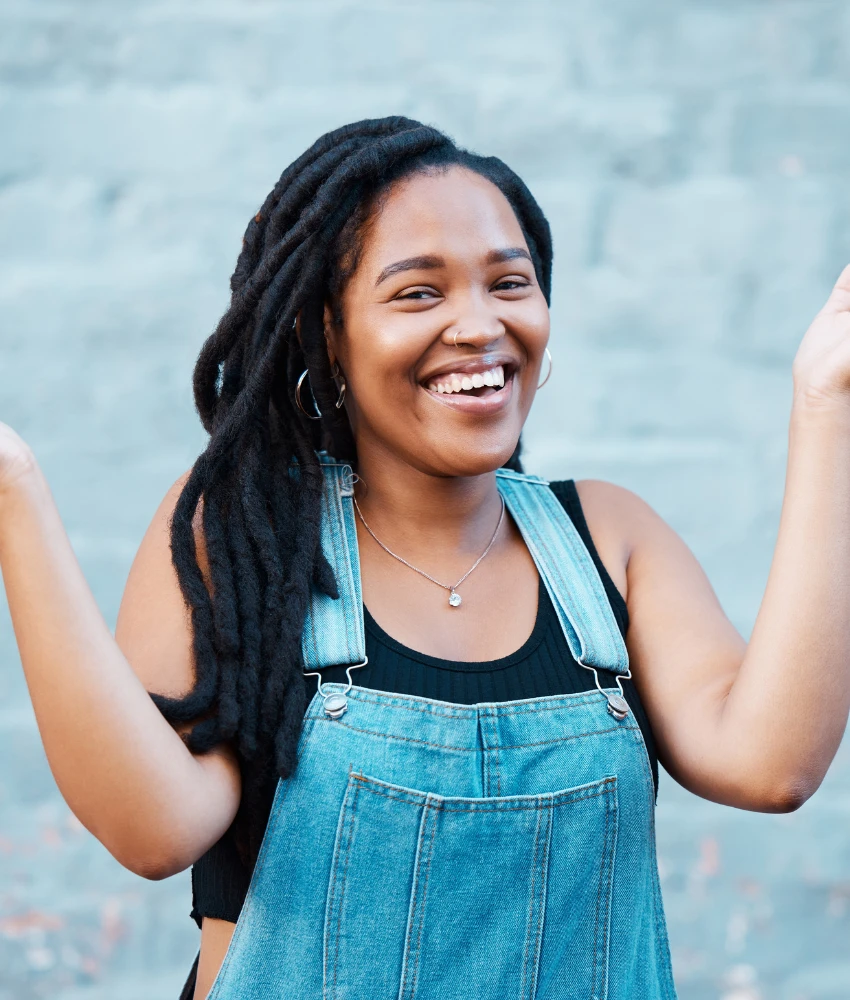
3. They are optimists
 PeopleImages | Shutterstock
In Wiseman’s research, he asked participants to imagine a scenario where they are waiting in a bank when “an armed robber enters the bank, fires a shot, and the bullet hits them in the arm.” He asked if this event meant they were lucky or unlucky.
“Unlucky people tended to say that this would be enormously unlucky and it would be just their bad luck to be in the bank during the robbery,” Wiseman wrote. “In contrast, lucky people viewed the scenario as being far luckier, and often spontaneously commented on how the situation could have been far worse. As one lucky participant commented, ’It’s lucky because you could have been shot in the head. Also, you could sell your story to the newspapers and make some money.'”
4. They are resilient
“They tend to imagine spontaneously how the bad luck they encounter could have been worse and, in doing so, they feel much better about themselves and their lives,” Wiseman explained. “This, in turn, helps keep their expectations about the future high and increases the likelihood of them continuing to live a lucky life.”
Even when things don’t go their way, lucky people are able to bounce back as if nothing happened. When something falls apart, they’re able to quickly adapt rather than spending that time panicking. It’s usually because they don’t just stick to one path. They’re perfectly fine deviating, as that allows them to find something new that they wouldn’t have been able to find if the first opportunity didn’t work out.
Nia Tipton is a staff writer with a bachelor’s degree in creative writing and journalism who covers news and lifestyle topics that focus on psychology, relationships, and the human experience.

Comments are closed.