
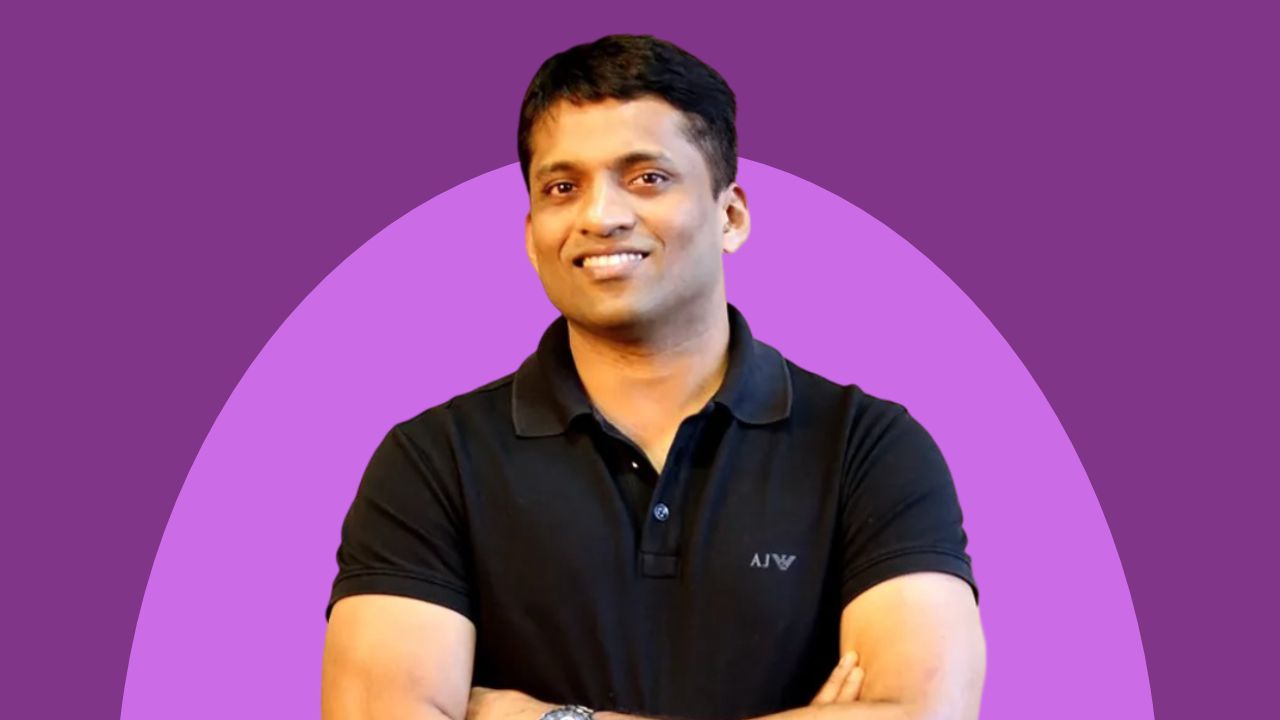

A US court has imposed a fine of more than $1 billion on Byjus founder Byju Raveendran. The Bankruptcy Court of Delaware has given this decision. The court has imposed the order on the petition of BYJUs Alpha and American company GLAS Trust. Raveendran has to return this money to BYJUs Alpha and GLAS Trust LLC.
BYJUs is the American subsidiary of Alfa Raveendran’s Byjus, which was formed in 2021. Its task was to raise a loan of $1.2 billion, which was taken from American banks and investors. GLAS Trust is the agent of these loan giving companies.
Now on November 20, the Bankruptcy Court of Delaware has ordered Raveendran to repay $ 1.16 billion. This decision was given because Ravindran was neither appearing in the court nor submitting the documents.
Read this also– How much has this fear that breathing becomes fatal increased the market of air purifiers?
How did this whole thing start?
In 2021, a company named BYJUs Alpha was formed. It was created to raise and manage a $1.2 billion loan for Byju’s from a consortium of global lenders.
In the year 2022, funds worth $533 million were transferred from BYJUs Alpha to Camshaft Capital, a Miami-based fund company. It was alleged that this was a fraudulent transfer. It was alleged that all this was done to hide the money so that the lender could not find out about it.
This matter came to light when $533 million was embezzled through UK company OCI Limited. The court filing states that this money was part of the loan given to BYJUs Alpha and since then questions were being raised about its misuse. However, OCI Chairman Oliver Chapman filed an affidavit in the court claiming that Raveendran intended to divert most of the $533 million to one of his Singapore companies.
After this transfer, further changes were made in investment interest through other companies associated with Byju’s. Delaware’s Bankruptcy Court Judge Brandon Shannon has held Ravindran Byju responsible for all this.
Read this also– What is the loss if ChatGPT goes down for X minutes?
What did the court say in its decision?
The transfer of funds was allegedly done twice. The first transfer took place in 2022, when $533 million related to BYJUs Alpha was transferred. At the same time, for the second time in 2023, $540.6 million was transferred. A total of $1.16 billion was transferred.
The court had repeatedly asked Raveendran to appear and also asked him for documents but he ignored them. After this, on August 11, the debtors filed a petition demanding a default judgment from the court.
Raveendran did not appear, so the court gave default judgment on 20 November. The court has ordered Raveendran to repay $ 1.16 billion (about Rs 9,800 crore). Besides, it has also been asked to give complete information about how and when the funds of BYJUs Alpha were used.
In the judgment, the court said, ‘The facts and circumstances of this case show that not answering the questions properly was a personal decision of Raveendran.’ The court has also rejected Raveendran’s argument that GLAS Trust had access to the documents the court was seeking through the books of BYJUs Alpha. The court said that there is nothing in the record to prove that GLAS Trust has access to the necessary documents.
Read this also–YouTube, Netflix or JioHotstar, who earns the most?
What will happen next now?
Raveendran’s lawyer McNutt said that this is a default judgment, which means that the court has given the decision without listening to Raveendran Byju.
He said, ‘We believe that the US court has made a mistake in its decision in this case and we will appeal against it. According to us, the court has ignored important things. Raveendran should be allowed to present his case but by expediting the trial he was not given the right to do so.
He claimed that the Delaware court’s decision also did not take into account that GLAS Trust knew that the loan proceeds from BYJU’s Alpha were not used by Raveendran or any of Byju’s founders for their personal benefit, but were used for the benefit of Think and Learn Private Limited (TLPL).
TLPL earlier had the control of Byju’s and was its parent company. However, now the control of TLPL is with GLAS Trust.

Comments are closed.