
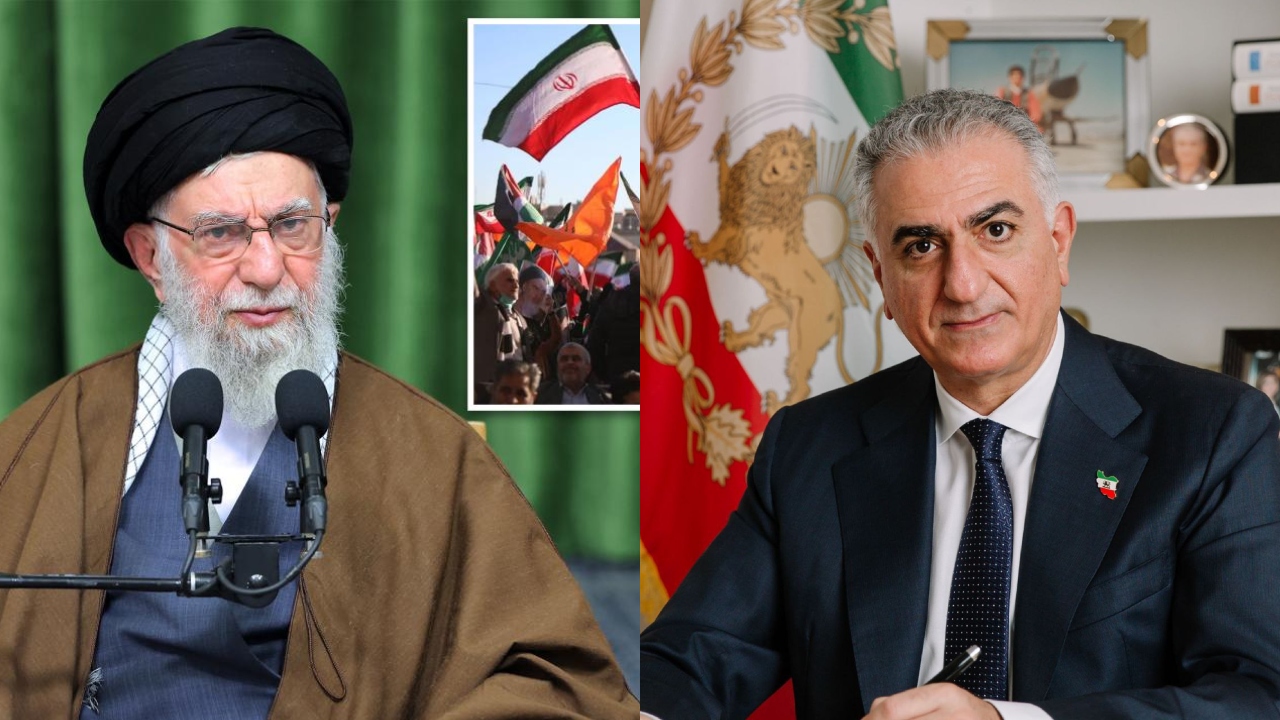
Why ‘Javid Shah Long Live’ slogan amid ‘Mullahs leave the country’ protests, will Khamenei be forced to leave power?

iran The ‘Mullah Go Back’ movement is no longer just an anti-government protest, rather it seems to be taking the form of an ideological rebellion. Amidst the slogans echoing on the streets there, one slogan in particular is attracting everyone’s attention. ‘Long Live the Shah’. This slogan is not just a remembrance of the past, but is being considered an open challenge against Khamenei’s religious authority. The question is arising whether the people of Iran have now started thinking beyond the Islamic Republic? Can Ayatollah Ali Khamenei really be forced to leave power?
Read now on WhatsApp also, click to subscribe
Protests are at their peak across the country against the rule of Iran’s Supreme Leader Ayatollah Ali Khamenei. Meanwhile, the protesters, enraged by the economic crisis, are demanding the removal of Maulvi rule and restoration of Shah’s monarchy. Not only this, the slogan ‘Long live Javid Shah’ is also being raised. The rule of the Shahs of the Pahlavi dynasty was toppled in 1979. Now the people there have become the voice of Iranian opposition against the theocratic rule that removed the monarchy. After 47 years, the people of Iran are now demanding his return.
By January 2, protests were reported in more than 30 cities, including Qom, a stronghold of Iran’s ruling clerical class. The unrest is the largest since protests following the death of Mahsa Amini in 2022, in which slogans were raised in support of the monarchy and those in support of the former Pahlavi king and his crown prince, Reza Pahlavi. The protesters say that ‘Mullahs should leave Iran.’
Demand for removal of Islamic rule
The protests were initially fueled by economic hardship, driven by a rapidly depreciating currency, which was trading at around 42,000 riyals against the United States dollar, and inflation as high as 42 percent. These protests have now turned into an open demand to withdraw from the rule of religion.
Khamenei abolished monarchy in 1979
It was during the Shah’s rule that the monarchy was ousted in 1979 by protests led by Ayatollah Ali Khamenei’s predecessor, Ruhollah Khomeini. As a result, a Shia religious leader system was formed in Iran, in which Ayatollah Khamenei was elected the supreme leader of the country.
Reza Pahlavi, crown prince of the long-deposed Pahlavi dynasty who lives in exile in the United States, has supported the protests. He praised the protesters for opposing the regime and appealed for unity to all while paying respect to those who died demanding more freedom.
Who is Reza Pahlavi?
Reza Pahlavi was born in 1960 in Tehran, the capital of Iran. He is the eldest son of Mohammad Reza Pahlavi, Shah of Iran, whose regime was overthrown in the 1979 Iranian Revolution. A supporter of liberal democracy, he is the founder and leader of the National Council of Iran, an exiled opposition group.
He advocates a free referendum to decide Iran’s future government system. Pahlavi was officially made crown prince at the coronation of his father in 1967. He has been active in the Iranian democracy movement and is a major critic of the Ayatollah-led Islamic Republic. He has repeatedly called for protests across the country and the removal of the current regime.
Why did the Pahlavi dynasty fall?
The Pahlavi dynasty ruled Iran from 1925 to 1979. It was started by Reza Shah Pahlavi, a British-trained military officer who came to power in 1925 after the Qajar dynasty weakened and was officially deposed. Reza Shah ruled until 1941, when a combined British and Soviet invasion during the Second World War forced him to abdicate the throne in favor of his son Mohammad Reza Pahlavi.
Iran emerged as a constitutional monarchy in 1946. Political life flourished for a short period, with major forces including the communist Tudeh Party and the National Front led by Mohammad Mosaddegh. Iran’s brief relationship with democracy ended in 1953, when Mosaddegh, who had become prime minister and moved toward nationalizing Iran’s oil industry, was ousted in a CIA and MI6-backed coup. Mohammad Reza Pahlavi was reinstated as the supreme ruler.
Mohammad Razor Pahlavi ruled as an increasingly autocratic monarch from 1953 to 1979. Oil revenues fueled rapid economic growth and closer relations with the United States and its allies. Major cities modernized rapidly, but development remained uneven and political freedoms were strictly restricted. The Shah’s extravagant lifestyle, highlighted by the expensive Persepolis celebrations of 1971, further increased discontent.
Meanwhile, growing opposition under the leadership of exiled cleric Ayatollah Ruhollah Khomeini gave rise to mass protests since 1978. The monarchy fell in 1979, paving the way for the establishment of an Islamic republic. The Shah and his family fled Iran, and Mohammad Reza Pahlavi died in exile in Egypt in 1980. His son, Reza Pahlavi, now crown prince and living in exile in the United States, is supporting anti-Ayatollah protesters in Iran. After 1979, people started hating the Pahlavi dynasty in Iran. Whereas the newly established Islamic Republic had popular support.
What changed in 47 years?
The Islamic Republic of Iran proved to be no less, but even more, repressive than the Pahlavi dynasty, which it had removed from power. The Ayatollah regime isolated Iran from the rest of the world, causing the country to suffer an economic collapse from which it has still not recovered. Iran’s rich cultural heritage was greatly damaged by the regime’s strict enforcement of Islamic rule and all its practices.
Will Khamenei be ousted from power?
What makes Iran’s Mullahs Quit Country Movement different from all the rest is this. There is overwhelming support among the protesters for the hated Pahlavi dynasty. Question: Will the protesters be able to overthrow the Khamenei government? One thing is absolutely clear, the Pahlavi dynasty has emerged as a face and force in the Iranians’ fight against theocratic rule.

Comments are closed.