
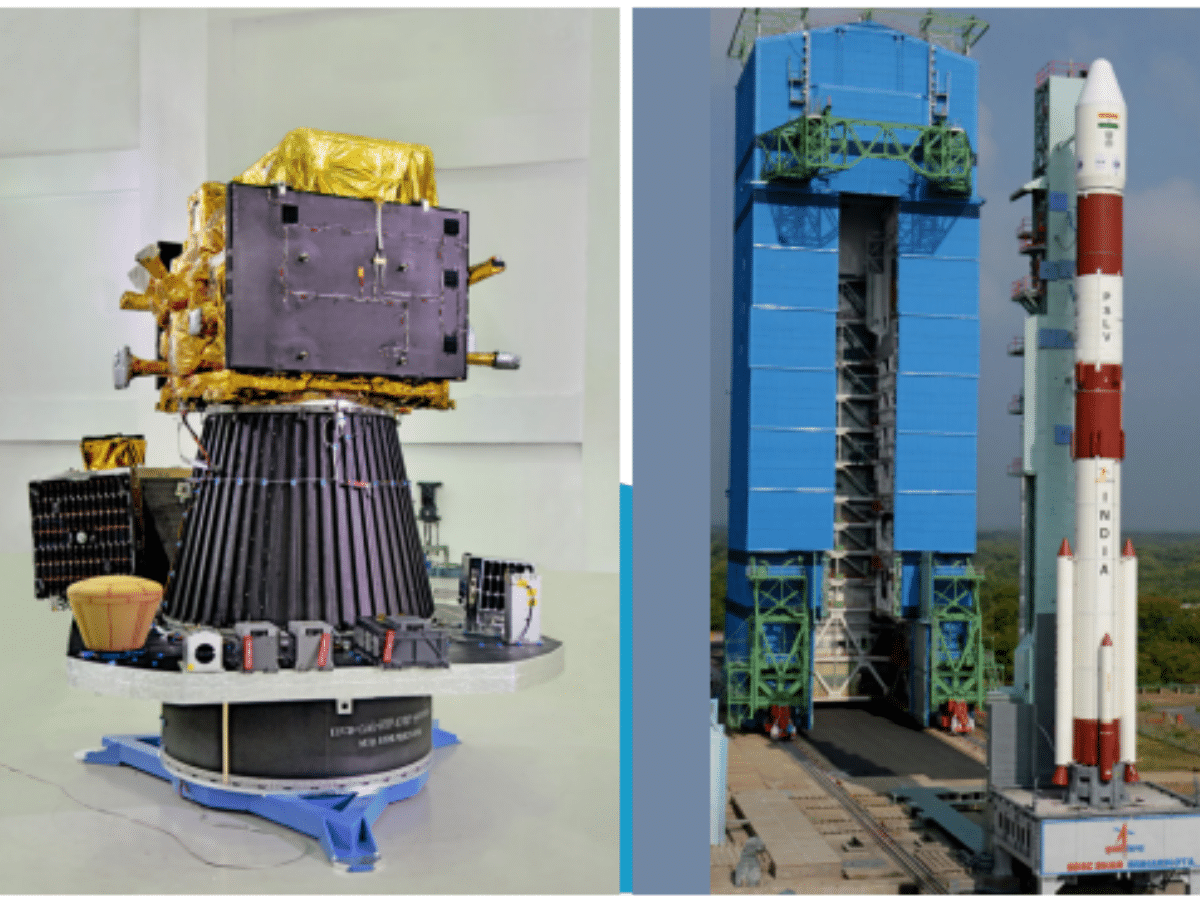

The Indian Space Research Organisation (ISRO) is set to begin its 2026 space mission calendar with the launch of PSLV-C62, scheduled for 10:18 am on Monday, January 12, from the Satish Dhawan Space Centre (SDSC) in Sriharikota, Andhra Pradesh.
The mission marks an important milestone for ISRO, as the Polar Satellite Launch Vehicle (PSLV) returns to flight following the abort of its previous mission in 2025 due to a technical anomaly.
The 260-tonne PSLV-C62 rocket will carry the EOS-N1 Earth Observation Satellite, also known as Anvesha, and place it into a sun-synchronous polar orbit a few hundred kilometres above Earth. According to ISRO officials, the 22-hour-and-30-minute countdown for the mission began at 12:48 pm on Sunday.
Multiple Satellites and In-Orbit Technology Demonstration
In addition to the primary payload, PSLV-C62 will deploy 14 co-passenger satellites for both Indian and international customers. These satellites have been integrated through NewSpace India Limited (NSIL), ISRO’s commercial arm, and are expected to be released within 17 minutes of lift-off.
More than two hours after launch, ISRO scientists will restart the rocket’s fourth stage (PS4) to demonstrate controlled de-boost and re-entry operations. As part of this experiment, the Kestrel Initial Technology Demonstrator, a 25-kg capsule developed by a Spanish startup, will re-enter Earth’s atmosphere. The capsule, along with the PS4 stage, is expected to splash down in the South Pacific Ocean.
Backbone of India’s Space Launch Programme
The PSLV-C62 mission will mark the 64th flight of the PSLV, a launch vehicle widely regarded as the workhorse of India’s space programme. Over the years, the PSLV has successfully launched several landmark missions, including Chandrayaan-1, Mars Orbiter Mission (Mangalyaan), and Aditya-L1, strengthening India’s position as a reliable and cost-effective spacefaring nation.

Comments are closed.